DJ Slang DJ Mixing Terms – All Explained
DJ slang is the informal language DJs use to describe mixing, scratching, tracks, equipment, and the culture around a performance. Terms such as beatmatching, BPM, crossfader, spinback, and trainwreck can sound confusing when you first hear them in a booth, club, livestream, or DJ tutorial. After years of working with music terminology and SEO content, I’ve found that the easiest way to learn this vocabulary is to connect each phrase to what actually happens during a set. This guide brings together DJ lingo, turntablism, mixing techniques, booth language, and music-production terms in plain English.
Whether you’re a beginner learning to DJ, a music fan trying to understand club conversations, or simply wondering what a DJ means when they say a track was “a trainwreck,” the terminology becomes much less intimidating once you see it in context. We’ll cover beatmatching, BPM, breaks, drops, cues, mixing, scratching, turntablism, spinbacks, throwing, and other common DJ terms with practical explanations rather than dictionary-style definitions alone.
DJ Slang DJ Mixing Terms – All Explained
DJ
DJ is short for disc jockey, meaning a person who selects and plays recorded music for an audience. In modern DJ culture, the role can involve mixing, beatmatching, scratching, sampling, effects, crowd reading, and performance. The term applies across radio, clubs, weddings, festivals, livestreams, and other music settings.
Disc Jockey
A disc jockey traditionally selected and played records, while today’s DJs commonly work with digital files, controllers, CDJs, laptops, or turntables. Although the technology has changed dramatically, the basic idea remains the same: selecting music and shaping how an audience experiences it.
Cans
Cans is classic DJ slang for headphones. A DJ uses headphones to preview, cue, and prepare an incoming track before sending it to the audience. You may hear someone say, “Put your cans on,” meaning to monitor the next record privately before making the transition.
Beatmatching
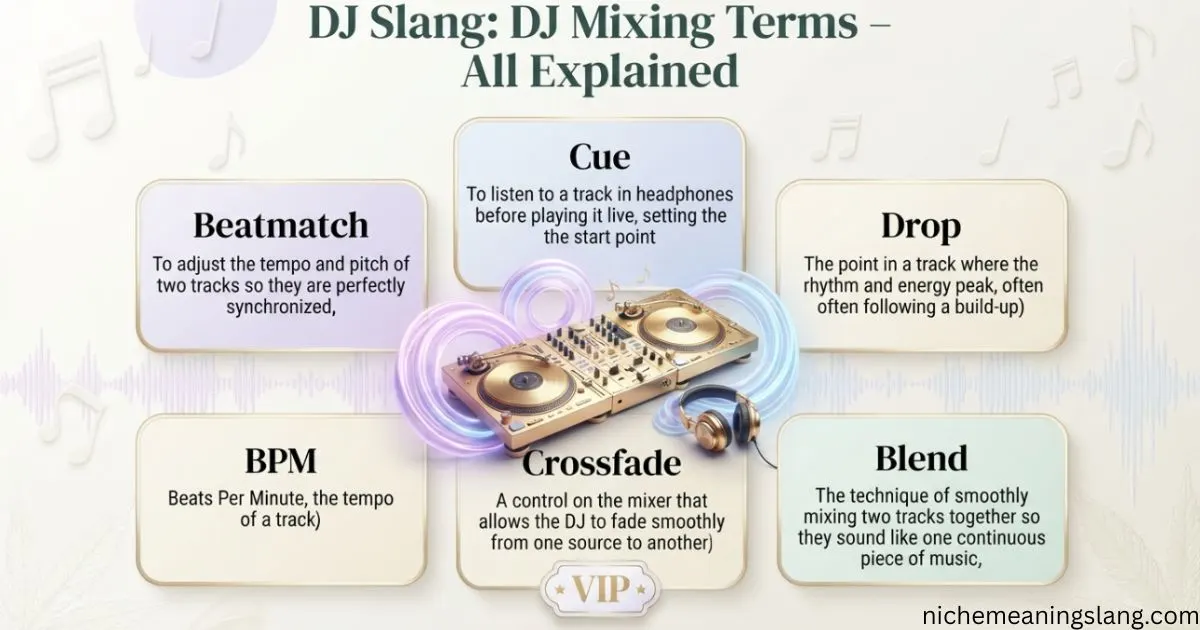
Beatmatching means adjusting two tracks so their beats play in time with each other. Traditionally, DJs used pitch controls and manual nudging; modern DJ software can automate much of the process with sync and beat-grid technology. It remains one of the foundational concepts behind smooth DJ mixing.
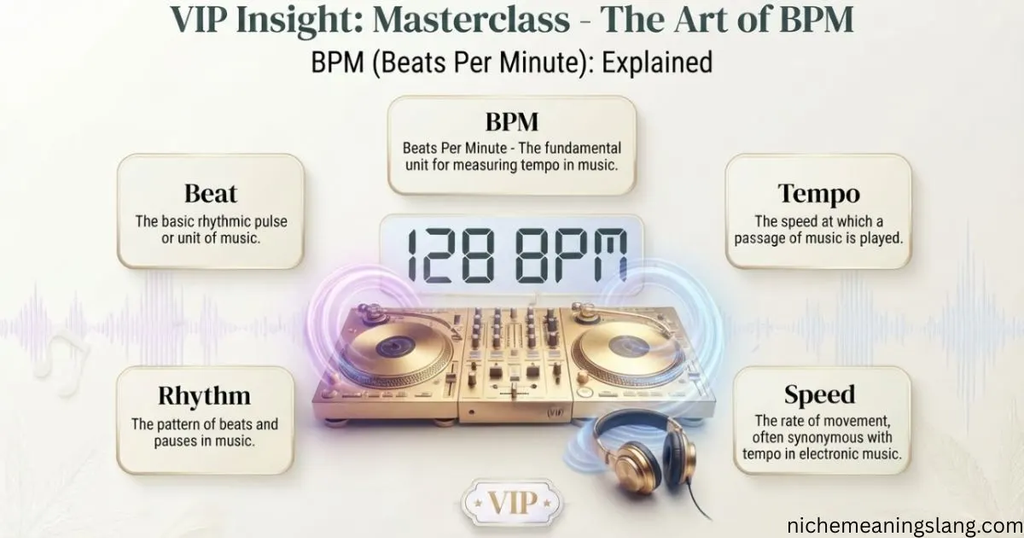
BPM (Beats Per Minute)
BPM means beats per minute, a measurement of musical tempo. DJs use BPM when comparing the speed of tracks and preparing transitions. If two songs have very different tempos, a DJ may adjust one using pitch control, tempo controls, or software before attempting a beatmatched mix.
Break
A break is a section of a track where the rhythm or instrumentation changes, often creating space for a transition or creative manipulation. In older hip-hop and turntablism culture, drum breaks became particularly important because DJs could isolate and extend energetic rhythmic sections for dancers.
Drop
A drop is the point where the main groove, bassline, or full rhythmic energy returns after a buildup or quieter section. In electronic dance music, the drop often creates the biggest surge of energy in a track. DJs may time a transition around it to maximize the audience’s reaction.
Mix
A mix can describe both the act of blending tracks and the resulting DJ performance. A DJ might say, “That was a clean mix,” referring to a smooth transition between songs, or call an entire recorded performance a mix. Context determines which meaning is intended.
Cue
Cueing is the process of preparing a track to begin at a particular point. DJs commonly use cue controls and headphones to locate the right starting position before the audience hears the song. A well-prepared cue helps a DJ make transitions at the intended musical moment.
Crossfader
A crossfader is the horizontal control on many DJ mixers that blends audio between channels. Moving it toward one side increases one source while reducing the other. Although often associated with scratching, crossfaders are also useful for quick cuts, transitions, and performance techniques.
Crab
The crab is an advanced scratching technique involving rapid finger movements on the crossfader. The name comes from the hand position used while performing the technique. It belongs more specifically to turntablism vocabulary than everyday club conversation, but experienced scratch DJs recognize it immediately.
Juggle (Beat Juggling)
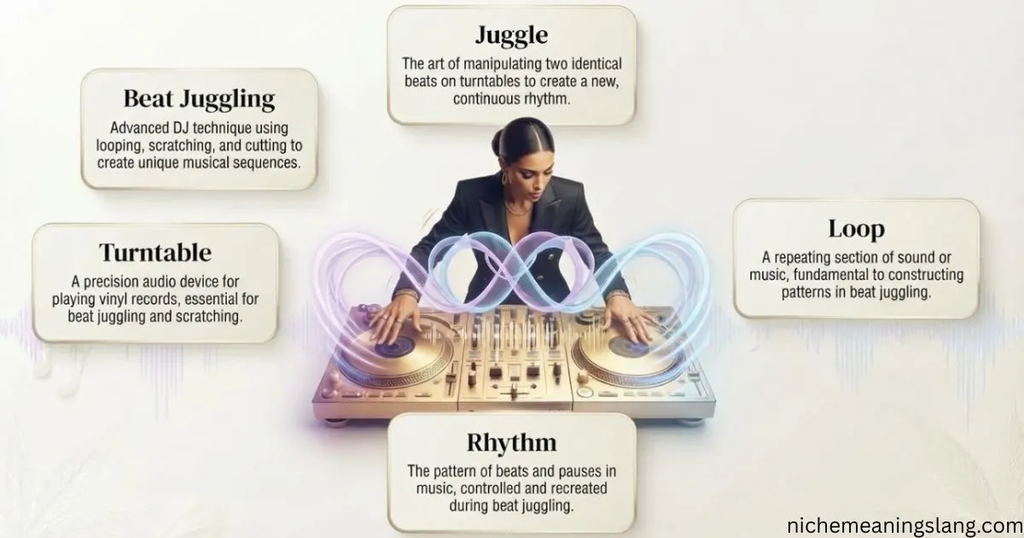
Juggle, or beat juggling, is a turntablism technique in which a DJ manipulates two copies of a recording to rearrange beats, phrases, or samples into new rhythmic patterns. It is associated particularly with scratch DJs and performance-oriented turntablism rather than ordinary track-to-track mixing.
Spinback
A spinback is a technique in which a record or playback source is rapidly moved backward, producing a rewind-like effect. It can be used as a dramatic transition, performance effect, or response to a strong crowd reaction. Related vocabulary includes rewind and backspin.
Throwing
Throwing describes giving a record a small push as it begins playing so it reaches the desired timing more quickly. The technique is especially associated with vinyl DJing and manual beatmatching. It illustrates how much traditional DJ vocabulary developed around the physical behavior of records and turntables.
Trainwreck
A trainwreck is what DJs call a badly mismatched transition where tracks drift out of time and their beats or musical elements clash. It is one of the less flattering pieces of DJ slang, but even experienced DJs can encounter one, particularly during difficult live transitions or unexpected technical problems.
Turntablism
Turntablism is the performance-focused art of using turntables and a mixer as musical instruments. Scratching, beat juggling, cutting, sampling, and other manipulations can transform recorded material into a live performance. The term is closely connected with hip-hop DJ culture and the development of advanced scratch techniques.
Conclusion
DJ slang is really a shorthand for an entire culture of mixing, performance, equipment, and musical interaction. Once terms like cans, BPM, beatmatching, cue, crossfader, drop, spinback, throwing, and trainwreck become familiar, conversations around DJing start making much more sense. The vocabulary also reveals how modern digital DJing still carries ideas developed through vinyl, turntablism, hip-hop, and club culture.
The key is not memorizing a giant dictionary. Listen for these terms in tutorials, DJ sets, interviews, and booth conversations, then connect each word with the technique or situation it describes. That is when DJ slang stops sounding like insider code and starts feeling like a natural part of the music.
FAQs
What is DJ slang?
DJ slang is the informal vocabulary DJs use to describe music, mixing techniques, equipment, performances, and DJ culture. Examples include cans for headphones, trainwreck for a poorly synchronized mix, spinback for a backward rewind effect, and throwing for giving a record a small push during playback.
What does “cans” mean in DJ slang?
Cans means headphones. DJs use headphones to monitor tracks privately, cue upcoming songs, and prepare transitions before sending audio to the main sound system.
What does “trainwreck” mean in DJing?
A trainwreck happens when two tracks lose synchronization during a mix, causing their beats to clash or sound noticeably out of time. It is generally used as a negative description of a poorly executed transition.
What does “spinback” mean?
Spinback describes quickly moving a record backward to create a rewind-style effect. It is associated with turntablism and DJ performance and is closely related to terms such as rewind and backspin.
What does “BPM” mean for DJs?
BPM means beats per minute. It measures a track’s tempo and helps DJs determine how quickly songs are playing when preparing beatmatched transitions.
What does “drop” mean in DJ music?
A drop is the point where a track’s main beat, groove, or bassline returns after a buildup or lower-energy section. DJs often use drops to create dramatic changes in energy during a set.
What does “B2B” mean in DJ slang?
B2B, or back-to-back, describes two or more DJs performing together and taking turns selecting tracks during the same set.
Related Slang Words

Ryan Mitchell is a language enthusiast and writer who explores slang, modern expressions, and everyday language. At nichemeaningslang, he helps readers understand slang meanings, usage, and context in a simple and easy-to-follow way.