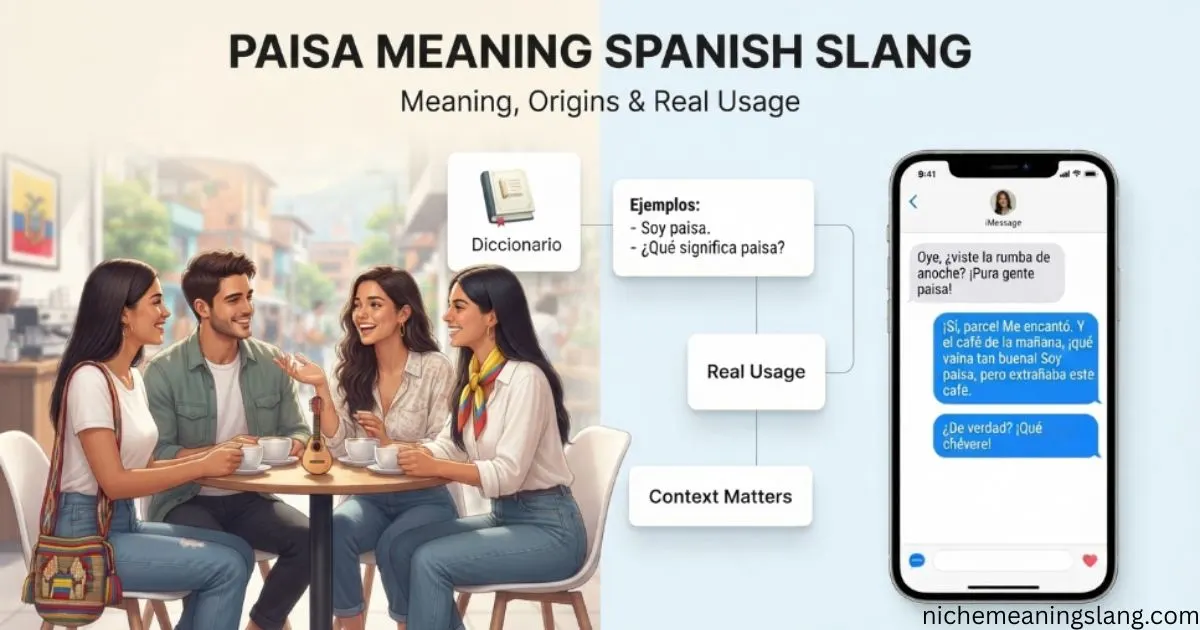
Paisa Meaning Spanish Slang Meaning, Origins & Real Usage
If you searched paisa meaning Spanish slang, the short answer is: paisa is an informal Spanish word whose meaning depends heavily on region. In Mexican and Mexican-American contexts, it can refer to a fellow countryman, someone from the same community, or a person with shared cultural roots. In Colombia, paisa most specifically identifies someone from the Paisa region, especially Antioquia and Medellín.
That regional difference is where many online explanations become confusing. After comparing Mexican slang, Colombian Spanish, Latino-American usage, and social-media examples, the clearest takeaway is simple: context matters more than the word alone. The tone can be friendly, familiar, humorous, or culturally specific, so understanding who says paisa and where they are from gives you the real meaning.
Paisa
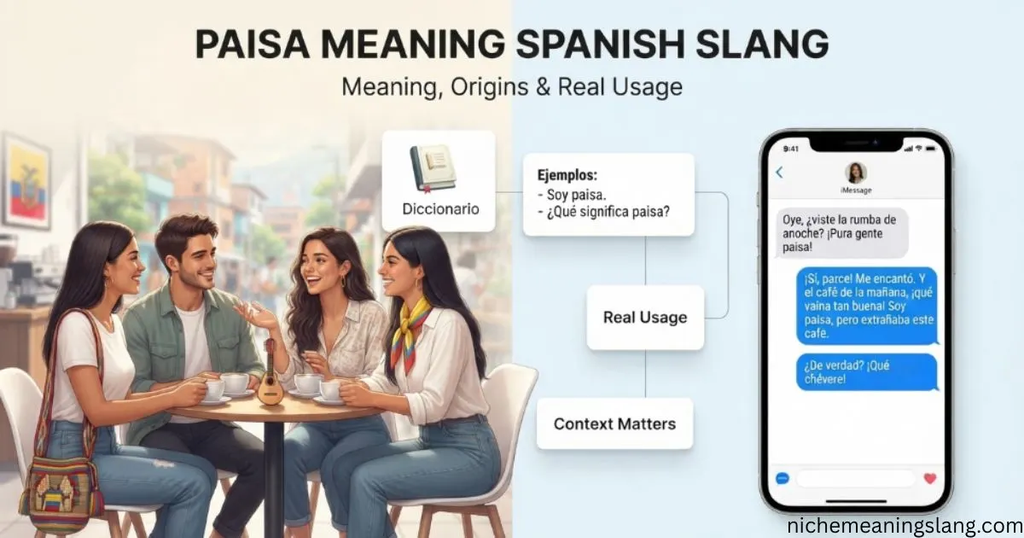
Paisa comes from the broader Spanish word paisano and functions as an informal regional term. Depending on the country, it can signal a fellow countryman, someone from the same hometown, or a person sharing a cultural background. In Colombia, it has the especially recognizable Antioquian meaning associated with the Paisa region.
That makes paisa an identity word as much as slang. In everyday conversation, it can communicate familiarity or shared roots without literally meaning “friend.” In Mexican-American settings, it may feel like a casual community label; in Colombian Spanish, it can identify a specific regional culture, accent, and heritage.
What does paisa mean in Spanish slang?
In Spanish slang, paisa generally means a person connected to the same country, place, or cultural community, but the exact sense changes geographically. In some Latin-American varieties, it can also carry the feeling of “fellow,” “countryman,” or close companion. The Colombian meaning is more geographically specific.
This is why translating paisa simply as “Mexican” or “friend” can create mistakes. A speaker might be emphasizing nationality, hometown, regional identity, or familiarity. If the conversation involves Medellín or Antioquia, the Colombian meaning becomes especially likely; if it involves Mexican-American culture, another interpretation may fit better.
What does paisa mean in Mexican slang?
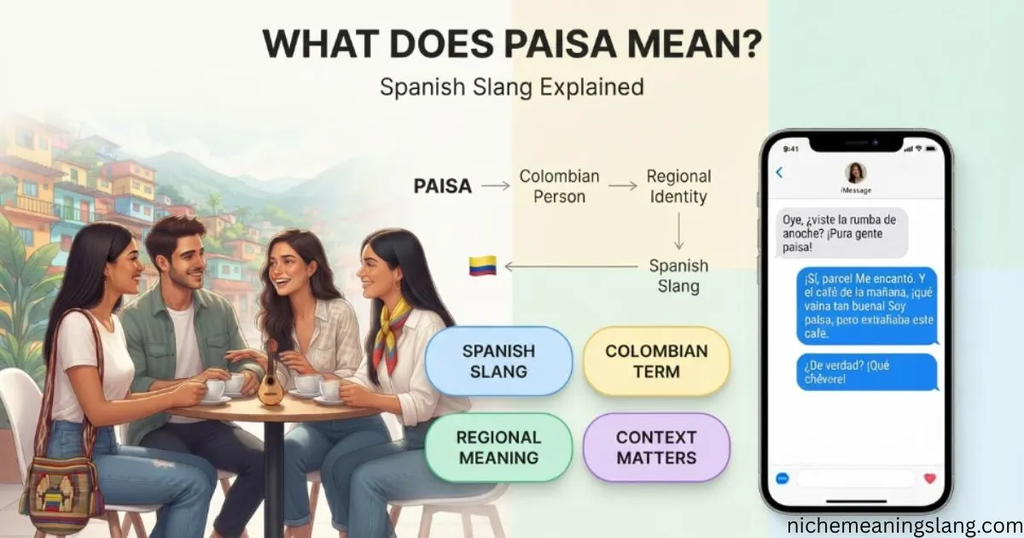
In Mexican slang, paisa commonly refers to a fellow Mexican, someone from the same hometown or region, or someone connected to Mexican cultural roots. The word can carry warmth and solidarity, particularly among people living away from their original community. It is generally an informal rather than formal expression.
Imagine two Mexican immigrants discovering they grew up in neighboring communities. One might casually call the other paisa to emphasize that shared connection. The emotional meaning is less about a dictionary translation and more about belonging, familiarity, cultural roots, and the feeling of recognizing “one of your own.”
What does paisa mean in Colombia?
In Colombia, paisa has a much more specific regional meaning. It commonly identifies someone from Antioquia and the broader Paisa cultural region, strongly associated with Medellín and neighboring areas. Colombian paisa identity can involve regional speech, traditions, food, history, and a recognizable cultural identity.
That distinction matters because an American reader may encounter paisa in Colombian music, travel content, or social media and assume it means “Mexican.” It does not. In Colombian usage, the word points toward a particular regional identity, making Antioquia, Medellín, Colombian Spanish, and Paisa culture important semantic entities.
What is the difference between paisa and paisano?
Paisano is the fuller Spanish form, while paisa is a shortened informal form used in several Latin-American varieties. Both can relate to the idea of a fellow countryman or person from the same place, but paisa often feels more conversational and regionally marked.
There is also an important Colombian distinction: paisa can identify someone from Antioquia or the Paisa region, whereas paisano has the broader “fellow countryman” sense. So replacing one with the other without considering regional context can subtly change what the speaker is communicating.
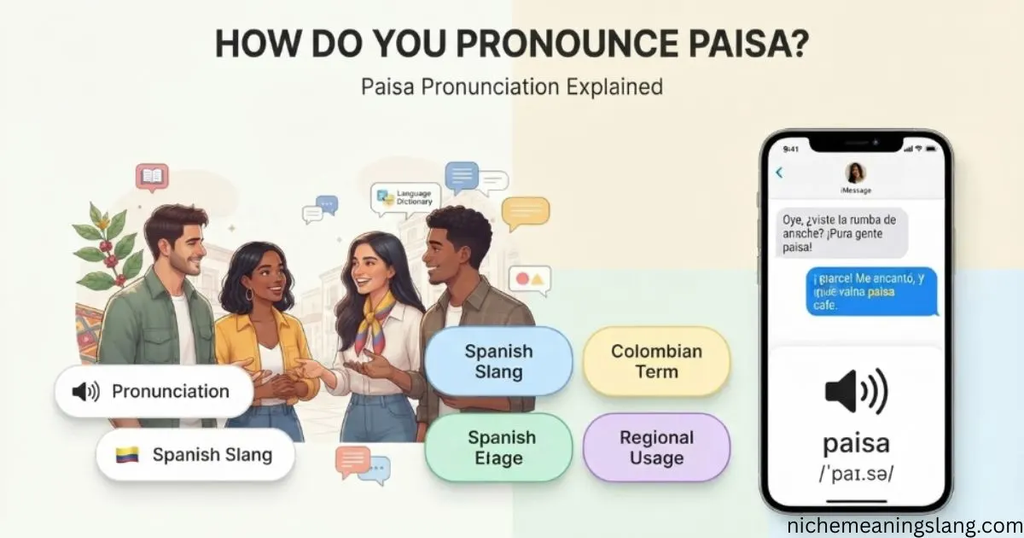
How do you pronounce paisa?
Paisa is commonly pronounced approximately “PIE-sah,” with the stress on the first syllable. The word has two syllables, and the pronunciation is straightforward for English speakers once the Spanish vowel sounds are understood. You may hear slight regional differences because Spanish pronunciation varies across countries and communities.
For English speakers, the easiest approximation is “pie-sah,” rather than treating the spelling like an English word. If you hear paisa in Colombian Spanish, Mexican-American conversation, or Latino social media, the pronunciation should still be recognizable even when the surrounding accent changes.
Is calling someone paisa offensive?
Not inherently. Paisa can be friendly, familiar, culturally proud, or simply descriptive, but tone and context determine how it lands. Calling a close friend paisa may communicate shared identity, while using it sarcastically toward a stranger can feel mocking or stereotypical.
The safest approach is to listen before copying the expression. Pay attention to the speaker’s country, relationship with the person, and tone. Slang is social language, not just vocabulary. A word that sounds affectionate inside one community may feel overly familiar or awkward when used by an outsider.
Is paisa used online?
Yes. Online, paisa appears in social-media captions, memes, cultural discussions, messaging, videos, and conversations about Mexican or Colombian identity. Digital communication makes regional vocabulary travel much faster, so Americans may encounter the word even when they are far from the community where its particular meaning developed.
The important clue is surrounding content. A post about Medellín, Antioquia, Colombian food, or Colombian culture likely points toward the Colombian meaning. A Mexican-American meme, family joke, or conversation about shared roots may point toward the Mexican or broader “fellow countryman” sense.
Conclusion
Understanding paisa meaning Spanish slang requires more than memorizing a single English translation. The word comes from the paisano family of expressions and can communicate shared place, nationality, familiarity, or cultural identity. In Mexico and Mexican-American contexts, it often has a community-oriented meaning; in Colombia, it is strongly associated with Antioquia and the Paisa region.
If you see paisa online, check the surrounding clues before interpreting it. Look for the country, city, cultural references, relationship between speakers, and tone. That small step prevents one of the most common slang mistakes: assuming a regional Spanish word has exactly the same meaning everywhere.
FAQs
The ranking pages repeatedly surface questions around Mexican meaning, Colombian meaning, offensiveness, pronunciation, paisa vs. paisano, and online use.
What does paisa mean in Spanish slang?
It is an informal regional term related to paisano, commonly referring to a fellow countryman, person from the same place, or culturally connected person. Its precise meaning varies by country.
What does paisa mean in Mexican slang?
It can refer to a fellow Mexican, someone from the same hometown or region, or someone sharing Mexican cultural roots.
What does paisa mean in Colombia?
In Colombia, paisa most specifically refers to someone from Antioquia and the broader Paisa cultural region.
Does paisa mean Mexican?
Not universally. In some Mexican-American contexts it can refer to a fellow Mexican, but the word has different regional meanings elsewhere.
What is the difference between paisa and paisano?
Paisano is the fuller word, while paisa is an informal shortened form. The exact usage varies across Spanish-speaking regions.
Is paisa offensive?
Not automatically. It can be friendly or affectionate, but tone, relationship, and regional context can change how it is perceived.
How do you pronounce paisa?
Approximately “PIE-sah.”
Related Slang Words

Ryan Mitchell is a language enthusiast and writer who explores slang, modern expressions, and everyday language. At nichemeaningslang, he helps readers understand slang meanings, usage, and context in a simple and easy-to-follow way.