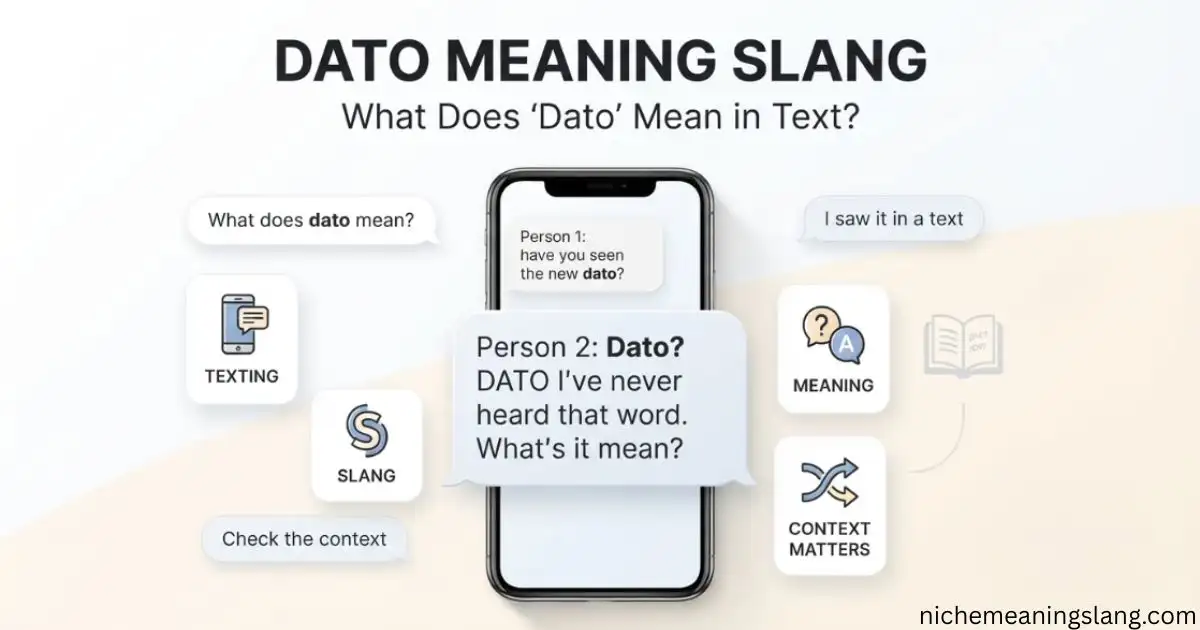
Dato Meaning Slang What Does “Dato” Mean in Text?
Dato can mean a piece of information, fact, or depending on online context a juicy piece of gossip or an interesting tidbit. In Spanish, dato is an ordinary noun meaning information, fact, or detail. In some English-language slang sources, it has developed a more playful meaning connected with gossip, rumors, and “tea.”
That difference is exactly why seeing dato in a text can be confusing. One person may use it in its Spanish sense, another may use it as internet slang, and some online communities may use it as a playful nickname or inside joke. The safest interpretation comes from the surrounding sentence, language, platform, and relationship between the people chatting.
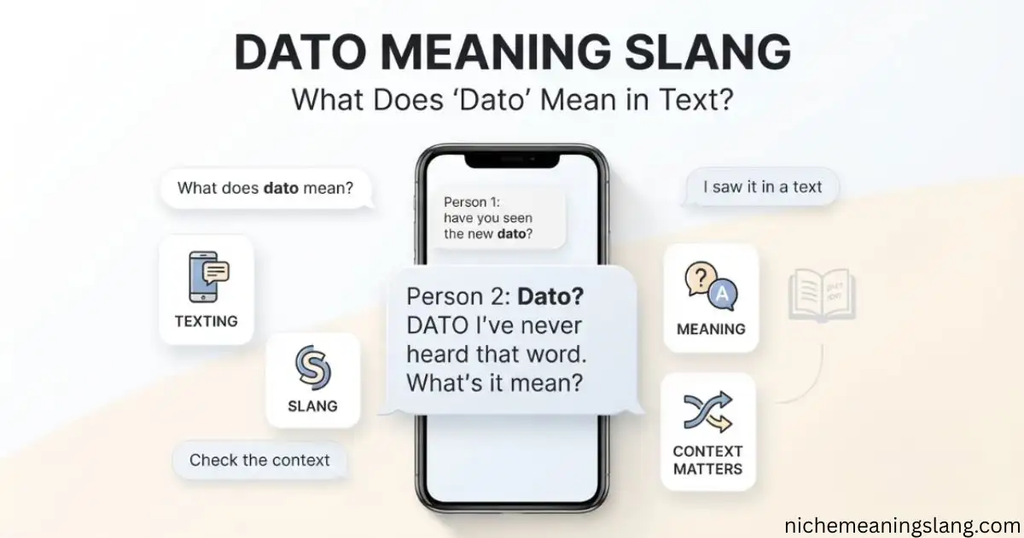
What does Dato mean?
In ordinary Spanish, dato means a piece of information, fact, or detail. The plural datos commonly means information or data. Dictionaries such as Collins and Cambridge support this core meaning, so it is important not to label the Spanish word itself as slang. It is a normal Spanish noun.
In some contemporary slang sources, however, dato is used more playfully for interesting information, gossip, a rumor, or a juicy tidbit. In that context, “I have a dato” can suggest “I have some interesting information to tell you.” The slang interpretation depends heavily on the community using it.
Other definitions of Dato:
The word can become confusing because dato has several unrelated uses. In Spanish, it can refer to information, a fact, or a detail. In internet slang, some sources associate it with gossip or a surprising piece of information. Other websites attach completely different acronym meanings to the capitalized form DATO.
You may also encounter dato in discussions involving nicknames, memes, or inside jokes. Those uses should not automatically be treated as standard slang. If the surrounding conversation gives no clue, the most reliable starting point is the ordinary Spanish meaning: a piece of information or fact.
How to use the term
If you encounter dato as slang meaning gossip or interesting information, the word generally works best in casual conversation. For example, someone might say, “I have a dato about the party,” intending to tease that they have an interesting detail or piece of gossip to share.
A natural interpretation depends on tone. If someone writes “I heard a dato,” the meaning may be closer to “I heard something interesting.” If the conversation is clearly Spanish, simply translating dato as “information” or “fact” may be more appropriate than assuming internet slang.
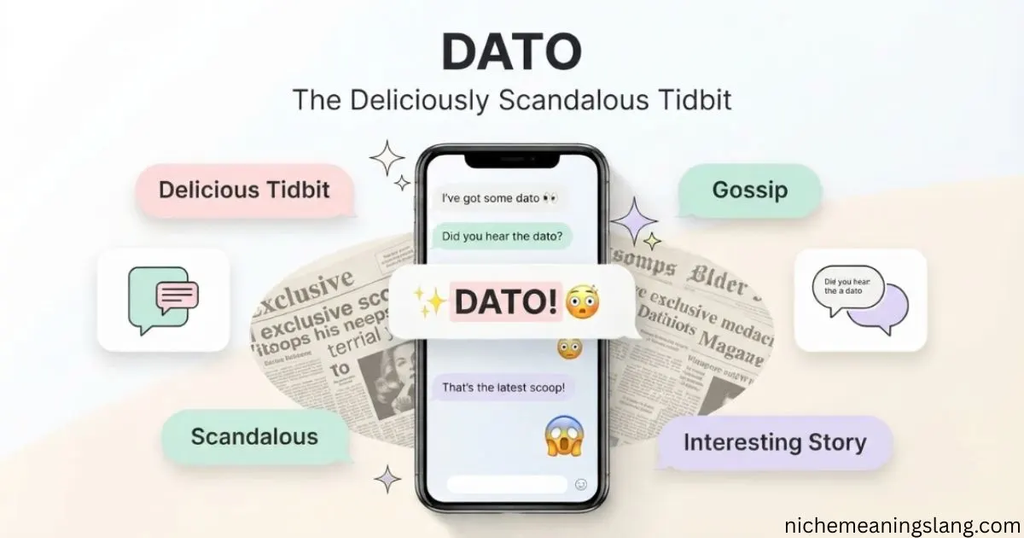
Dato: The Deliciously Scandalous Tidbit
The gossip-related interpretation of dato is the most colorful slang meaning found in current slang-focused search results. Slang.org describes it as a juicy insight, hot rumor, or intriguing piece of information. That makes it semantically close to expressions such as tea, gossip, scoop, rumor, and inside information.
However, this usage should be treated as an emerging or community-specific slang interpretation rather than a universal English definition. The established Spanish word remains much broader. In other words, every gossip-related “dato” is information, but not every Spanish dato is gossip.
The Gossip Gospel: Origins and Evolution
The most straightforward linguistic connection is Spanish dato, meaning a piece of information or fact. That ordinary meaning provides a natural bridge to the slang idea of a juicy piece of information. Moving from “information” to “interesting information” to “gossip” is a semantic shift, but the slang-specific history is not firmly documented.
That distinction matters for accurate SEO content. Slang sites sometimes describe a word’s origin with confidence even when they provide no historical evidence. For dato, established dictionaries document the Spanish noun, while the gossip interpretation appears primarily in contemporary slang sources. Treating those evidence levels differently improves trustworthiness.
Cultural Significance: Tea Time All the Time
When dato is used to mean gossip or an interesting tidbit, its closest semantic neighbors are expressions such as tea, spill the tea, juicy information, hot rumor, and inside scoop. These phrases all describe information that feels socially interesting rather than ordinary factual data.
The word can therefore work as a playful social signal. Saying “I have a dato” creates anticipation because the listener expects something worth hearing. That does not necessarily make the information scandalous; the tone can range from harmless trivia to genuine gossip.
Who Drops Datos?
A person using dato as slang is most likely doing so in a casual, informal environment where both people understand the expression. Group chats, social media conversations, memes, and friend-to-friend messages provide the kind of context where experimental vocabulary can spread naturally.
That does not mean every Gen Z speaker uses the word. One competitor presents “dato” as a younger-generation nickname, but that usage is not established by major dictionaries. Treat it as community-specific slang rather than a universal Gen Z term.
Variations and Spellings
The ordinary Spanish plural of dato is datos, meaning multiple pieces of information or data. In slang-oriented writing, you may also encounter playful combinations such as “dato energy,” “dato moment,” or similar constructions. These forms should be understood as creative extensions rather than standardized vocabulary.
Capitalization can also change the interpretation. Lowercase dato may simply be the Spanish noun or slang word, while uppercase DATO may signal an acronym. If someone writes DATO in a workplace, technical, or specialized conversation, check the surrounding context before assuming it means gossip.
Controversies and Adaptations: Keep It Cute or Else
Because slang develops inside communities, a word can spread beyond the group that originally used it and acquire new meanings. That appears to be happening with dato, where information-based interpretations coexist with playful internet uses. The safest approach is to recognize the variation instead of declaring one definition universally correct.
It is also worth avoiding unsupported claims about exactly which community “invented” the slang. Current slang pages offer different explanations, while established Spanish dictionaries confirm the older meaning. Separating documented language history from internet speculation is a stronger way to explain the term.
What Does “Dato” Mean on Urban Dictionary?
Urban Dictionary-style slang can be especially inconsistent because user-generated definitions may describe different communities, jokes, or one-off meanings. Contemporary explanations of dato associate it with information, a playful version of “date,” or an inside joke. These meanings cannot automatically be treated as standard English.
If you found “dato” through a meme, comment, or Urban Dictionary reference, read the complete sentence before translating it. A phrase such as “send me the dato” may suggest information, while “let’s get a dato” could point toward a completely different community-specific joke.
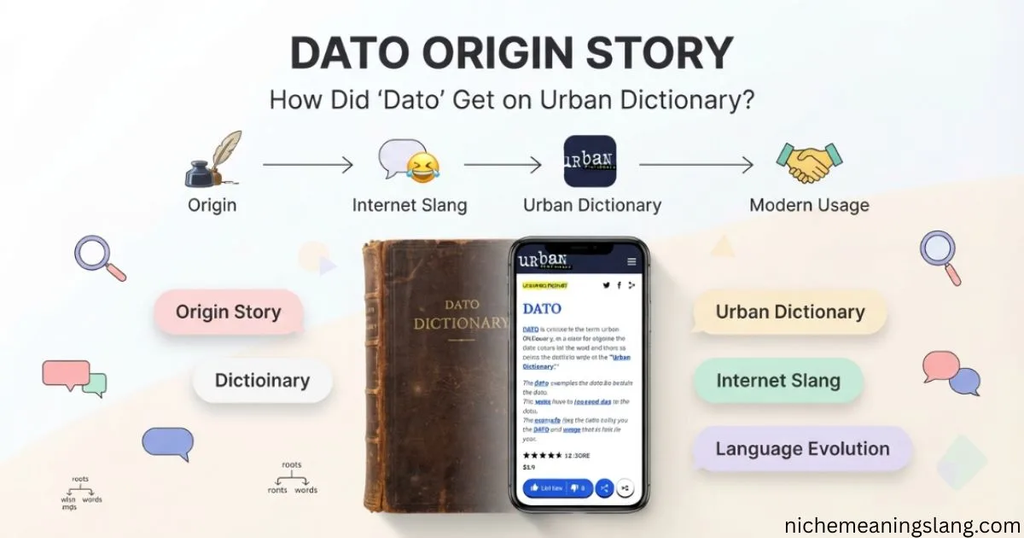
The Origin Story: How Did “Dato” Get on Urban Dictionary?
The strongest documented linguistic starting point is the Spanish noun dato, which means a piece of information, fact, or detail. Collins and Cambridge both record this meaning. That gives us a solid foundation for understanding why “dato” can naturally become associated with information-sharing in online language.
Claims that internet users specifically invented the word through a typo, meme, or chatroom trend are much harder to verify. Slang pages describe possible internet evolution, but they do not provide strong historical documentation. For an accurate explanation, it is better to say that online communities have experimented with the existing word.
How to Use “Dato” in Real Life (And Online!)
If your friends already use dato to mean interesting information or gossip, you could write, “I have a dato for you,” meaning you have something interesting to share. Another casual example might be, “What’s the dato on that story?” meaning “What’s the latest information?”
Avoid using it with people who clearly do not know the expression. In professional emails, academic writing, customer service, or formal announcements, information, fact, detail, update, or news will communicate more clearly. Slang works best when the audience already understands the social context.
Quick Do’s and Don’ts of Using “Dato” 😉
Do use dato casually when the people around you already recognize the expression. Do pay attention to whether the conversation is in English or Spanish. Do check the sentence for clues before deciding whether the word means information, gossip, or something else.
Don’t assume every “dato” means gossip. Don’t present a niche internet definition as universal Gen Z vocabulary. And don’t use it in formal communication merely because you saw it trending somewhere. Context, audience, and tone determine whether the word sounds natural.
Generational Slang Comparison
Online slang changes quickly, so the meaning of dato can vary between communities and age groups. Younger users may encounter it through memes, short-form video, group chats, or social platforms, while Spanish speakers may simply understand it as an ordinary word for information.
This is why generational labels should be used carefully. A word appearing in a Gen Z-oriented slang article does not prove that all Gen Z speakers use it. Language spreads through networks, interests, languages, and communities not simply through birth year.
Common Slang Mistakes
The biggest mistake is treating dato as if it had one fixed English slang definition. Another is confusing the Spanish noun with capitalized acronyms that happen to use the same letters. Acronym databases list multiple unrelated DATO expansions, demonstrating why context is essential.
A third mistake is assuming that a slang website’s definition represents universal usage. Slang databases can document useful examples, but user-generated or lightly sourced definitions may reflect a niche community. For dato, dictionary evidence and slang evidence should be kept separate.
Quick Meaning Table
| Context | Likely meaning | Confidence |
| Spanish conversation | Piece of information / fact | High |
| Spanish data context | Data / information | High |
| Casual slang | Interesting information / tidbit | Context-dependent |
| Gossip conversation | Juicy information / rumor | Community-dependent |
| Meme or inside joke | Playful custom meaning | Highly context-dependent |
| Capitalized DATO | Acronym | Check the context |
| “Datos” in Spanish | Information / data / facts | High |
Conclusion
The best answer to dato meaning slang is not simply “gossip.” The word dato is an established Spanish noun meaning a piece of information, fact, or detail, while contemporary slang sources use it in narrower ways for juicy information, gossip, rumors, or playful online expressions.
So if you see dato in a text, look at the sentence before deciding what it means. Spanish context usually points toward information or fact; casual English internet context may point toward gossip or an interesting tidbit; and a capitalized DATO may be an unrelated acronym. That context-first approach is more accurate than assigning the word one universal slang definition.
FAQs
These questions reflect recurring competitor/search intent rather than a claim that I verified a live Google PAA panel.
What does dato mean in slang?
In some online slang usage, dato means an interesting piece of information, juicy tidbit, gossip, or rumor. However, this is not the only meaning. In standard Spanish, dato means a piece of information or fact.
What does dato mean in Spanish?
Dato means a piece of information, fact, or detail in Spanish. The plural datos commonly means information or data.
What does “I have a dato” mean?
In a slang-heavy English conversation, “I have a dato” can mean “I have some interesting information or gossip.” The exact meaning depends on the community and context.
Is dato a Gen Z slang word?
Some contemporary slang sites associate dato with Gen Z and online communities, but there is not strong evidence that it is a universally recognized Gen Z slang term. It is safer to describe that usage as community-specific.
What does dato mean on Urban Dictionary?
Urban Dictionary-related explanations can give dato multiple meanings, including playful references to information, “date,” or inside jokes. User-generated definitions can vary substantially, so context matters.
What is the plural of dato?
The Spanish plural is datos. It can mean multiple facts, pieces of information, or data.
Is dato the same as data?
They are related but not identical in usage. Spanish dato can mean a piece of information or datum, while datos commonly means data or information collectively.
Is dato a rude word?
No. The ordinary Spanish word dato is not inherently rude. A slang interpretation involving gossip may become socially sensitive depending on what information is being shared, but the word itself is not inherently offensive.
Can I use dato in English texting?
You can if your conversation partners understand the intended slang meaning. For a general English audience, info, fact, detail, news, scoop, or gossip will usually be clearer.
Does dato mean date in slang?
Some online slang sources claim that dato can be a playful shorthand for date, but this is not a standard meaning of the Spanish noun dato. Do not assume “dato” means date without supporting context.
Related Slang Words

Ryan Mitchell is a language enthusiast and writer who explores slang, modern expressions, and everyday language. At nichemeaningslang, he helps readers understand slang meanings, usage, and context in a simple and easy-to-follow way.