40+Mississippi Slang Southern Words & Phrases Explained
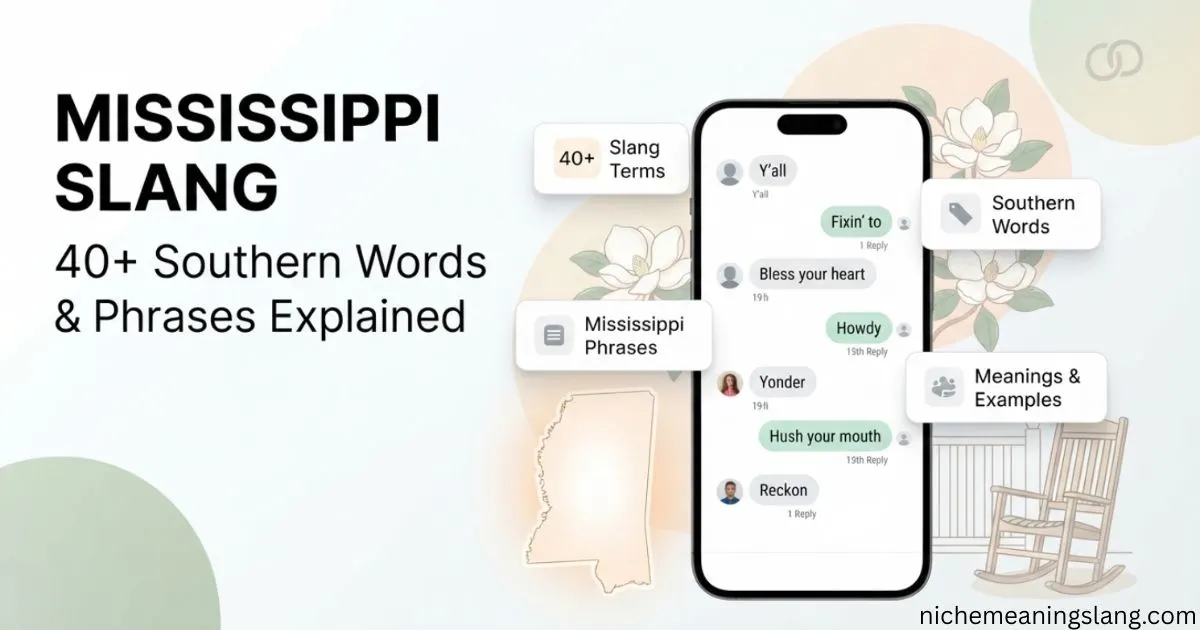
Mississippi slang is a colorful mix of Southern expressions, regional vocabulary, family language, food terms, humor, and newer internet slang. Words such as y’all, fixin’ to, holler, bless your heart, cattywampus, nabs, buggy, and sho’ nuff can instantly create a distinctly Southern conversational feel. Some are strongly associated with Mississippi, while others are shared across the American South.
Having spent time studying how regional slang works, I’ve noticed that the hardest part usually isn’t memorizing vocabulary it’s understanding tone and context. A word can sound warm, funny, sarcastic, old-fashioned, or completely ordinary depending on who says it. This guide breaks down Mississippi slang with simple meanings, natural examples, cultural context, and modern usage.
Mississippi Slang Terms You Should Know
Mississippi slang reflects everyday Southern speech, regional identity, family relationships, food culture, and community traditions. Y’all, fixin’ to, ain’t, holler, and bless your heart are familiar Southern expressions, but their tone can shift considerably depending on the speaker and situation. That flexibility is part of what makes regional language feel alive.
Some vocabulary is especially tied to Mississippi life. Nabs can mean sandwich crackers, while buggy means a shopping cart and carry can mean driving someone somewhere. These words may surprise visitors because the meaning is obvious to locals but unfamiliar outside the region.
| Mississippi slang | Meaning | Typical tone |
| Y’all | You all | Friendly |
| Fixin’ to | About to | Casual |
| Ain’t | Is not / are not / have not | Informal |
| Bless your heart | Sympathy or criticism | Contextual |
| Holler | Call or contact | Casual |
| Sho’ nuff | Definitely / truly | Playful |
| Cattywampus | Crooked or askew | Humorous |
| Nabs | Sandwich crackers | Local/regional |
| Buggy | Shopping cart | Regional |
| Carry | Drive someone somewhere | Regional |
Y’all
Y’all means “you all” and is one of the clearest markers of Southern speech. In Mississippi, it works naturally in everyday conversation: “Y’all coming to the cookout?” The expression is friendly, practical, and widely understood, making it one of the least difficult Mississippi slang terms for visitors to adopt naturally.
Fixin’ to
Fixin’ to means someone is about to do something soon. “I’m fixin’ to head to the store” suggests the action is coming up shortly. It is strongly associated with Southern English and remains common in casual speech, especially when people are describing immediate plans.
Bless Your Heart
Bless your heart is famous because the same words can communicate genuine sympathy or gentle criticism. If someone has had a rough day, it may be compassionate. In a teasing conversation, however, it can carry sarcasm. The speaker’s delivery, relationship, and situation determine the real meaning.
Holler
Holler can mean to call, contact, or let someone know something. “Holler at me when you get home” simply means “contact me when you get home.” It sounds relaxed and conversational, making it much more natural among friends or family than in formal business communication.
Sho’ Nuff
Sho’ nuff is a playful Southern expression meaning definitely, truly, or for sure. It can add emphasis to agreement: “That barbecue was good.” “Sho’ nuff it was.” The phrase has an older-school Southern flavor today, so younger speakers may use it less frequently than newer internet slang.
Cattywampus
Cattywampus describes something crooked, askew, uneven, or out of alignment. You might hear someone say a picture frame is cattywampus when it hangs crookedly. It is not exclusively a Mississippi invention, but it appears in Mississippi regional vocabulary and captures the playful creativity of Southern speech.
Nabs
Nabs is a particularly useful example of regional vocabulary. In Mississippi, asking for “nabs” can mean asking for sandwich crackers, particularly the small packaged snack crackers familiar in the South. The Sun Herald notes that the term has a complicated connection to Nabisco and the regional popularity of Lance’s Toastchee.
Buggy
In Mississippi and other parts of the South, buggy can mean a grocery shopping cart. A visitor might hear “Put the buggy back” and briefly wonder what kind of vehicle is being discussed. The meaning becomes obvious once you recognize that regional vocabulary can differ even for ordinary household objects.
13 Mississippi Slang Words And Phrases!
Mississippi slang extends beyond everyday contractions and familiar Southern words. Regional lists also include colorful expressions such as alligator bait, dagnabbit, high falutin’, jackleg, ketched up, thang, and juke joint. These terms reveal how language can connect humor, frustration, social judgment, music, and local storytelling.
At the same time, it is important not to confuse Mississippi usage with exclusive Mississippi origins. Southern speech crosses state borders, and expressions can move between Mississippi, Louisiana, Alabama, Tennessee, and other parts of the South. A strong understanding of Mississippi slang therefore requires cultural context as well as vocabulary.
1. Alligator Bait – Something That Is Very Tasty Or Desirable:
In the competitor’s Mississippi-slang list, alligator bait is presented as something especially desirable or tempting. The phrase has broader Southern associations, so it is better understood as regional Southern vocabulary rather than a term that belongs exclusively to Mississippi. Its meaning depends heavily on context and local usage.
5. Dagnabbit – An Expression Of Frustration Or Anger:
Dagnabbit is a softened expression of frustration, surprise, or annoyance. It can sound humorous because it avoids stronger profanity while still communicating emotion. You might imagine someone discovering a flat tire and muttering, “Dagnabbit!” The phrase fits the storytelling quality often associated with older Southern speech.
7. High Falutin’ – Having A Pompous Attitude:
High falutin’ describes someone or something perceived as overly fancy, pretentious, or self-important. Calling somebody high falutin’ suggests they are acting above ordinary people or trying too hard to appear sophisticated. It carries a distinctly playful criticism rather than functioning as a neutral description.
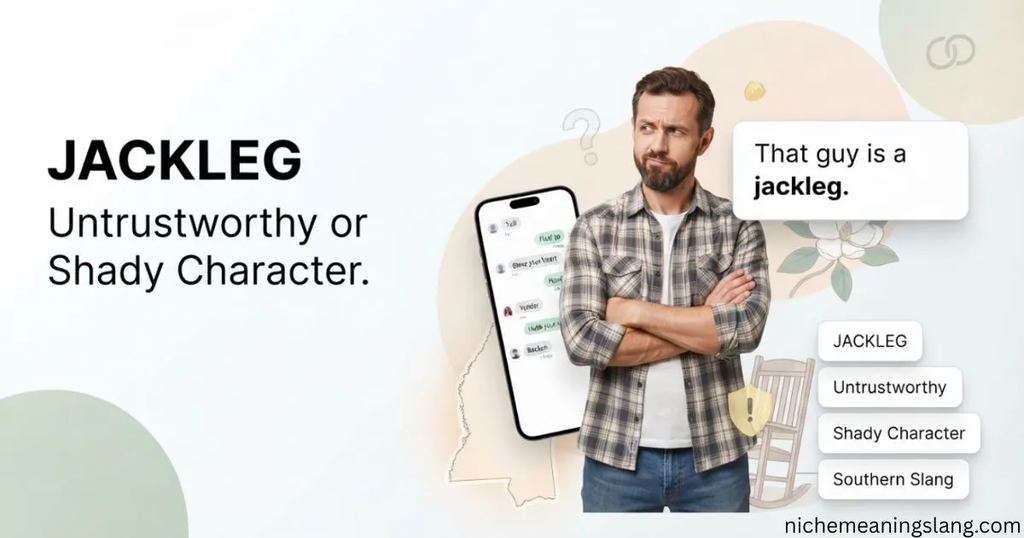
8. Jackleg – Untrustworthy Or Shady Character:
Jackleg can describe an unreliable, dishonest, or questionable person. It is useful when a speaker wants to criticize someone without using a long explanation. Because the term carries a negative judgment, it is better reserved for informal conversation where the audience understands the speaker’s tone.
9. Ketched Up – Caught Up In Something, Like Gossip:
Ketched up is presented in the competitor material as being caught up in something, particularly gossip or rumors. The spelling reflects a nonstandard pronunciation rather than formal English. This is a good example of how regional speech can preserve pronunciation in writing for humorous or conversational effect.
11. Thang – Thing, Object:
Thang is a Southern-style pronunciation and spelling of “thing.” Depending on the speaker, it can sound affectionate, humorous, emphatic, or simply conversational. You may hear it in phrases such as “That’s my thang,” where the pronunciation contributes as much personality as the underlying meaning.
13. Juke Joint – A Nightclub That Plays Music From Different Genres:
A juke joint is a small, informal venue historically associated with Black Southern communities and music such as blues. It is important cultural vocabulary, but it should not be treated as uniquely Mississippi slang. Juke joints are part of a much broader Southern African American musical and social history.
Conclusion
Mississippi slang is more than a collection of funny Southern words. It reflects regional identity, family life, food, music, humor, pronunciation, and community. Some expressions are strongly associated with Mississippi, while others belong to the larger Southern language tradition.
The easiest way to understand Mississippi slang is to listen for context. Y’all, fixin’ to, holler, bless your heart, cattywampus, nabs, buggy, and sho’ nuff can all sound different depending on the speaker and situation. Mississippi slang continues to evolve as traditional Southern speech meets modern texting, social media, and Gen Z vocabulary.
FAQs
The questions below are derived from the FAQ/search-intent patterns found in the ranking competitors. I am not labeling them as verified live Google PAA questions, because the current search evidence did not provide a direct Google PAA panel. Competitor pages repeatedly address these same informational intents.
What makes Mississippi slang unique?
Mississippi slang combines Southern vocabulary, regional pronunciation, cultural references, humor, food terms, family expressions, and newer internet language. It also overlaps considerably with speech from neighboring Southern states, so not every expression associated with Mississippi originated exclusively there.
Is Mississippi slang the same as general Southern slang?
No. There is significant overlap, but Mississippi has its own regional vocabulary and pronunciation patterns. Terms such as nabs, buggy, carry, and The Sipp can be particularly recognizable in Mississippi contexts, while expressions such as y’all and fixin’ to are widespread across the South.
Do young people still use traditional Southern slang?
Yes, although usage varies by age, community, and setting. Expressions such as y’all remain highly common, while some older phrases may sound nostalgic or playful. Modern speakers also combine traditional Southern vocabulary with internet expressions such as bet, low-key, and big mad.
Can Mississippi slang appear online?
Absolutely. Social media, texting, memes, gaming communities, and messaging apps allow regional expressions to spread beyond their original communities. Mississippi speech can therefore appear online alongside broader Southern slang and nationwide Gen Z vocabulary.
Should non-locals use Mississippi slang?
Yes, but naturally. Learning a phrase is different from forcing an accent or exaggerating regional speech. Using a word appropriately and understanding its context is much more respectful than trying to imitate a Mississippi accent you do not naturally have.
What does “The Sipp” mean?
The Sipp is a nickname for Mississippi. The expression appears in Mississippi-focused slang and travel material as an informal name for the state.
What does “carry” mean in Mississippi slang?
In the Mississippi usage documented by the Sun Herald, carry can mean drive someone somewhere. For example, “I’m going to carry Mama to the doctor” means “I’m going to drive Mama to the doctor.”
What does “nabs” mean in Mississippi?
In Mississippi, nabs can refer to packaged sandwich crackers, particularly the type associated with regional Southern snack culture. The word has a complicated commercial history involving Nabisco and Lance.
Related Slang Words

Ryan Mitchell is a language enthusiast and writer who explores slang, modern expressions, and everyday language. At nichemeaningslang, he helps readers understand slang meanings, usage, and context in a simple and easy-to-follow way.