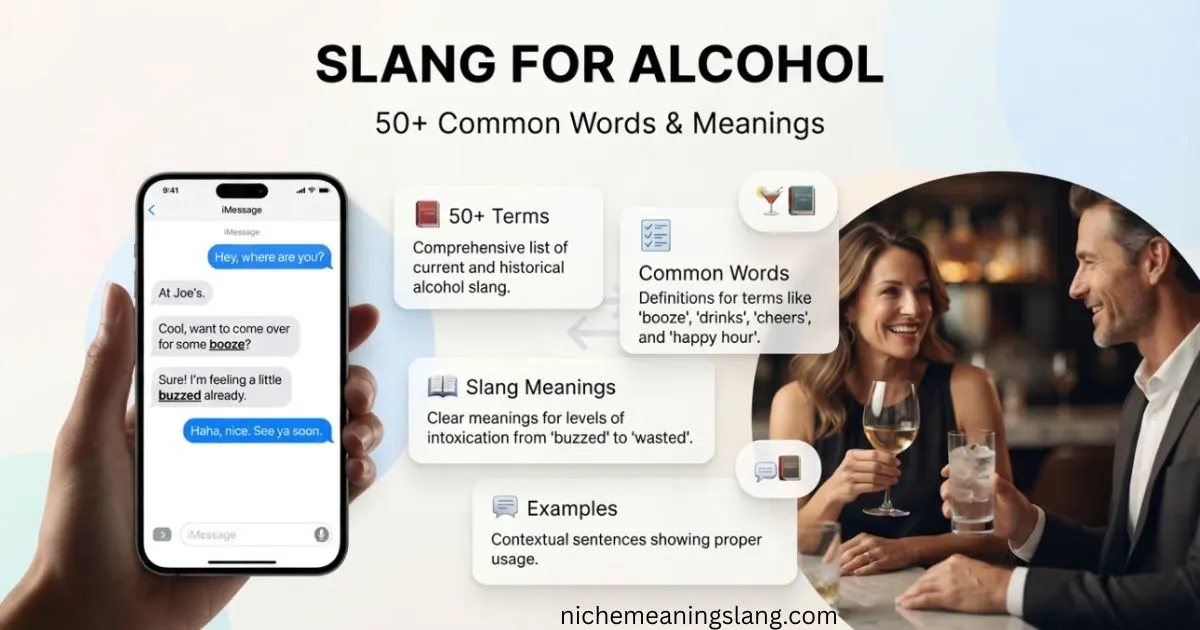
50+Slang for Alcohol Common Words & Meanings
Slang for alcohol includes familiar words such as booze, hooch, sauce, juice, brew, spirits, and firewater, but they do not all mean exactly the same thing. Some refer to alcohol generally, while others point to beer, liquor, strong drinks, drinking itself, or intoxication.
If you have ever seen a word like “sauce” in a group chat and wondered whether it meant food or alcohol, context is the answer. The same is true of juice, brew, cold one, liquid courage, and getting lit. This guide separates those meanings, explains the tone behind them, and shows how Americans actually use these expressions in casual conversation.
Quick Answer: Slang Terms for Alcohol
Common slang for alcohol includes booze, hooch, sauce, juice, brew, spirits, firewater, grog, hard stuff, and cold one. The broadest casual term is usually “booze,” while words such as “brew” and “cold one” generally point toward beer. “Hooch” often suggests strong or homemade liquor.
The important catch is that alcohol vocabulary is not one flat list. Drinking slang, beer slang, liquor slang, intoxication terms, and humorous nicknames overlap but describe different things. A person saying “bring some booze” means alcohol, while “I’m buzzed” describes their condition after drinking. Context decides which interpretation makes sense.
What Do Slang Terms for Alcohol Mean?
Slang for alcohol means informal words or expressions used instead of standard terms such as alcohol, alcoholic beverage, liquor, or spirits. Some are playful, some are old-fashioned, and others are strongly associated with particular communities, regions, generations, or social settings.
A useful distinction is between names for the drink and words about drinking. Booze, hooch, and sauce can refer to alcohol itself; brew usually means beer; liquid courage describes a perceived effect of drinking; and tipsy, hammered, or wasted describe intoxication rather than the beverage. That distinction prevents many common misunderstandings.
30+ Common Slang Terms for Alcohol
The table below separates commonly encountered expressions by their usual meaning and tone. Remember that slang is flexible: a word can shift meaning between regions, generations, friend groups, movies, social media, and ordinary conversation.
| Slang term | Usually means | Tone/context |
| Booze | Alcohol generally | Casual |
| Hooch | Strong alcohol, sometimes homemade or illicit | Informal |
| Sauce | Alcohol | Playful/casual |
| Juice | Alcohol in some contexts | Context-dependent |
| Spirits | Distilled alcoholic drinks | Neutral |
| Liquor | Distilled alcohol | Standard |
| Brew | Beer | Casual |
| Brewski | Beer | Playful |
| Cold one | Cold beer | Casual |
| Firewater | Strong alcohol | Old-fashioned |
| Grog | Alcohol, historically rum-based | Old-fashioned |
| Vino | Wine | Casual |
| Bubbly | Champagne or sparkling wine | Casual |
| Plonk | Cheap wine | Informal |
| Moonshine | Homemade/unregulated distilled alcohol | Historical/regional |
| White lightning | Moonshine | Old-fashioned |
| Hard stuff | Strong liquor | Informal |
| Liquid courage | Alcohol associated with confidence | Humorous |
| Nightcap | Late-evening drink | Classic |
| Giggle juice | Alcohol | Playful |
| Rocket fuel | Very strong alcohol | Humorous |
| Liquid gold | Valuable or premium alcohol | Figurative |
| The good stuff | Higher-quality alcohol | Casual |
| Poison | Alcohol, as in “What’s your poison?” | Joking |
| Adult beverage | Alcoholic drink | Euphemistic |
| Tipple | Alcoholic drink | Old-fashioned/British |
| Rotgut | Harsh or poor-quality liquor | Informal |
| Well liquor | House/less expensive liquor | Bar terminology |
| Top-shelf | Premium liquor | Bar terminology |
| Party fuel | Alcohol associated with partying | Playful |
| Happy juice | Humorous name for alcohol | Playful |
| Medicine | Alcohol used jokingly as a “remedy” | Humorous |
| Devil’s brew | Alcohol | Dramatic/playful |
| Boozy | Containing or involving alcohol | Informal adjective |
| Boozing | Drinking alcohol | Casual verb |
| Hit the bottle | Drinking, often heavily | Negative/serious undertone |
| Getting lit | Becoming intoxicated or having an energetic time | Modern/casual |
Not every term above is technically “slang” in the strict linguistic sense. Spirits, liquor, nightcap, and grog, for example, have established dictionary meanings beyond modern internet slang. The useful question is therefore not simply whether a word is slang, but how informal, regional, humorous, or context-specific it sounds.
For example, dictionary evidence describes hooch as informal American English for strong alcoholic drink, especially something made illegally, while grog historically referred to rum diluted with water and later broadened to alcoholic liquor.
Why People Use Slang for Alcohol Instead of Plain Words
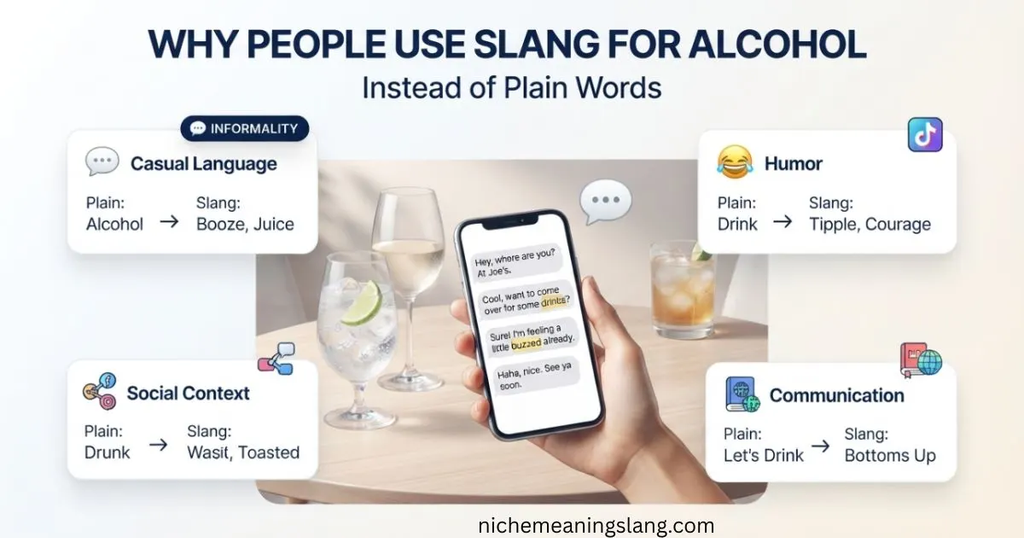
People use slang for alcohol because informal language can feel warmer, funnier, shorter, or more socially natural than saying “alcoholic beverage.” “Grab a cold one” sounds different from “obtain an alcoholic beverage,” even when the basic reference is similar. Slang also communicates personality, familiarity, age, region, and social setting.
There is another reason: alcohol vocabulary often carries emotional associations. Liquid courage makes drinking sound humorous and confidence-related, while rocket fuel exaggerates strength for comic effect. Older expressions such as firewater and grog can evoke history, movies, or nautical stories. The words tell you something about the speaker as well as the drink.
The Most Common Slang Terms for Alcohol
Among common slang for alcohol, booze is the broadest and most recognizable casual option in the competitor set. Hooch, sauce, juice, spirits, liquor, brew, grog, firewater, adult beverage, liquid courage, and nightcap also appear repeatedly, although their meanings and levels of formality differ.
“Booze” is particularly interesting because speakers do not always use it identically. Some people use it for any alcoholic drink, while others associate it more strongly with liquor or inexpensive alcohol. Community discussion shows this variation clearly, which is why a dictionary-style definition should not pretend every speaker has exactly the same mental category.
Classic and Everyday Slang Terms for Alcohol
Classic slang for alcohol includes words that have survived well beyond a single social-media trend. Booze, hooch, sauce, juice, firewater, grog, spirits, liquid courage, nightcap, and hard stuff appear across casual conversation, entertainment, bar culture, and online discussions.
Some of these expressions are much older than TikTok or Gen Z. “Hooch,” for example, has a documented American history reaching back to the late nineteenth century, while “grog” has roots in eighteenth-century naval language. Calling every popular drinking expression “new Gen Z slang” therefore misses a large part of the linguistic history behind the vocabulary.
Slang for Cheap Alcohol vs. Top-Shelf Alcohol
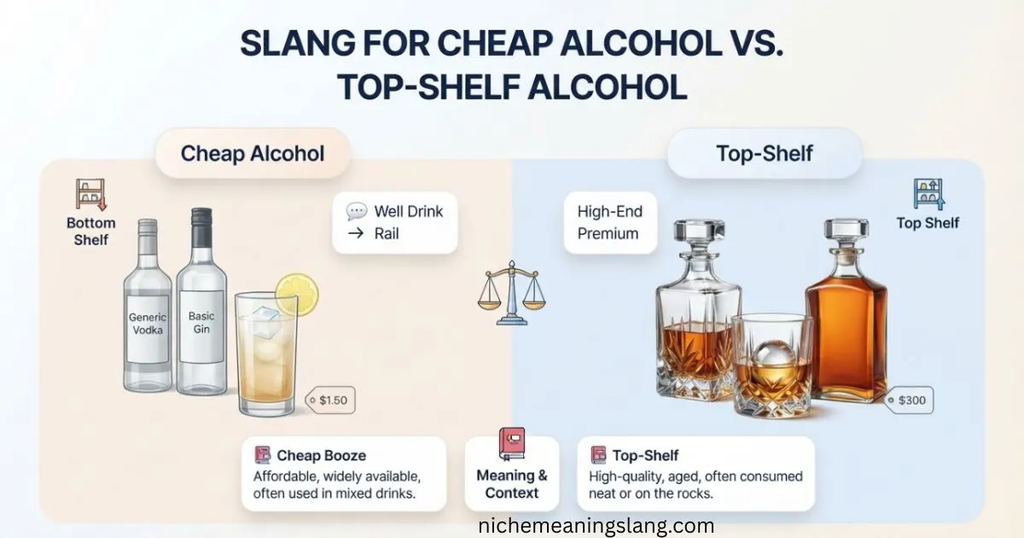
Slang for alcohol can also communicate quality, price, strength, or reputation. Expressions such as rotgut, hooch, well liquor, and swill can suggest inexpensive or harsh alcohol, while top-shelf, liquid gold, the good stuff, reserve, and call brand point toward something more premium or deliberately chosen.
The difference is often about attitude rather than an official classification. “Rotgut” is a dismissive description; “top-shelf” is a quality signal; and “liquid gold” is deliberately exaggerated. In a bar, these expressions can communicate an opinion about the drink without giving a formal description of its ingredients or price.
Slang for Cheap Alcohol
Terms such as rotgut, hooch, well liquor, swill, bum wine, paint thinner, and jet fuel can appear in informal descriptions of inexpensive, harsh, homemade, or unusually strong alcohol. They are often humorous or exaggerated rather than precise technical categories.
“Hooch” deserves particular care because its dictionary meaning can specifically suggest strong alcohol and, in some definitions, illicitly produced liquor. That makes it different from a neutral umbrella word such as “alcohol.”
Slang for Top-Shelf Alcohol
Expressions such as top-shelf, liquid gold, the good stuff, reserve, small batch, sipping liquor, and call brand are associated with quality, price, reputation, or a particular purchasing choice. They are especially natural in conversations about bars, restaurants, whiskey, spirits, and premium bottles.
“Top-shelf” is more than a nickname: it can literally refer to bottles displayed on an upper shelf, traditionally associated with premium products. “Liquid gold,” by contrast, is figurative and simply emphasizes that someone considers the drink valuable or special.
A quick context guide
| Situation | Natural examples |
| Casual conversation | booze, sauce, brew |
| Talking about beer | brew, brewski, cold one |
| Talking about liquor | spirits, hard stuff, hooch |
| Talking about wine | vino, bubbly |
| Talking about strong alcohol | firewater, rocket fuel |
| Talking about premium alcohol | top-shelf, liquid gold |
| Talking about a late drink | nightcap |
| Talking about confidence | liquid courage |
| Formal communication | alcohol, alcoholic beverage |
The safest interpretation is always contextual. Juice might mean fruit juice at breakfast and alcohol at a party. Brew might mean beer or another brewed drink. Getting lit can describe intoxication, excitement, or something unrelated to alcohol. The surrounding words usually resolve the ambiguity.
Conclusion
Slang for alcohol ranges from familiar terms such as booze, sauce, hooch, juice, brew, and spirits to humorous expressions such as liquid courage, giggle juice, rocket fuel, and liquid gold. Some words name alcohol itself, while others describe a particular drink, drinking behavior, intoxication, price, strength, or social setting.
The most useful rule is simple: context matters more than the word alone. A term that sounds perfectly natural among friends may feel strange in a workplace email, while an old expression may appear in a movie without being common in modern conversation. Understanding the meaning, tone, and setting behind each term makes alcohol slang much easier to interpret naturally.
FAQs
These questions are drawn primarily from the recurring FAQ/PAA-style queries visible across the current ranking pages.
What is the most common slang word for alcohol?
Booze is one of the most widely recognized informal words for alcohol in American English. It can function as a broad term for alcoholic drinks, although individual speakers may use it somewhat differently.
What are five slang words for alcohol?
Five common examples are booze, hooch, sauce, juice, and brew. Their meanings are not identical: brew usually points to beer, while booze can refer to alcohol generally.
What is a funny name for alcohol?
Funny or playful names include giggle juice, rocket fuel, liquid courage, liquid gold, party fuel, and devil’s brew. These are usually humorous rather than formal terms.
What is American slang for alcohol?
Common American expressions include booze, hooch, sauce, juice, brew, cold one, hard stuff, and liquid courage. Usage varies by region, age, social group, and context.
What is slang for drinking alcohol?
Expressions include boozing, hitting the bottle, having a few, throwing one back, raising a glass, getting your drink on, and pregame. Some describe drinking generally, while others imply heavier consumption.
What is slang for cheap alcohol?
Common informal expressions include rotgut, hooch, swill, bum wine, well liquor, and paint thinner. Several are humorous or disparaging rather than precise descriptions of price.
What do Gen Z call alcohol?
Some expressions associated with younger online speech include sauce, drank, party fuel, happy juice, and vibes juice, but it is inaccurate to treat every one as uniquely Gen Z. Older words such as booze and hooch continue to circulate across generations.
Related Slang Words

Ryan Mitchell is a language enthusiast and writer who explores slang, modern expressions, and everyday language. At nichemeaningslang, he helps readers understand slang meanings, usage, and context in a simple and easy-to-follow way.