50+Slang for Friends Cool Ways to Say Friend in 2026
Slang for friends usually means slang for friends: casual words like bro, bestie, homie, buddy, fam, twin, OG, and day one. The best choice depends on closeness, personality, age, region, and whether you’re texting, posting on social media, or talking face-to-face.
I’ve found that the hardest part isn’t finding a synonym for “friend” it’s choosing one that actually sounds natural. Calling your closest childhood friend “day one” feels different from calling a new buddy “bro.” This guide breaks down American friend slang by relationship, tone, generation, and setting so you can sound friendly without accidentally sounding forced.
Popular Slang Words for a Friend
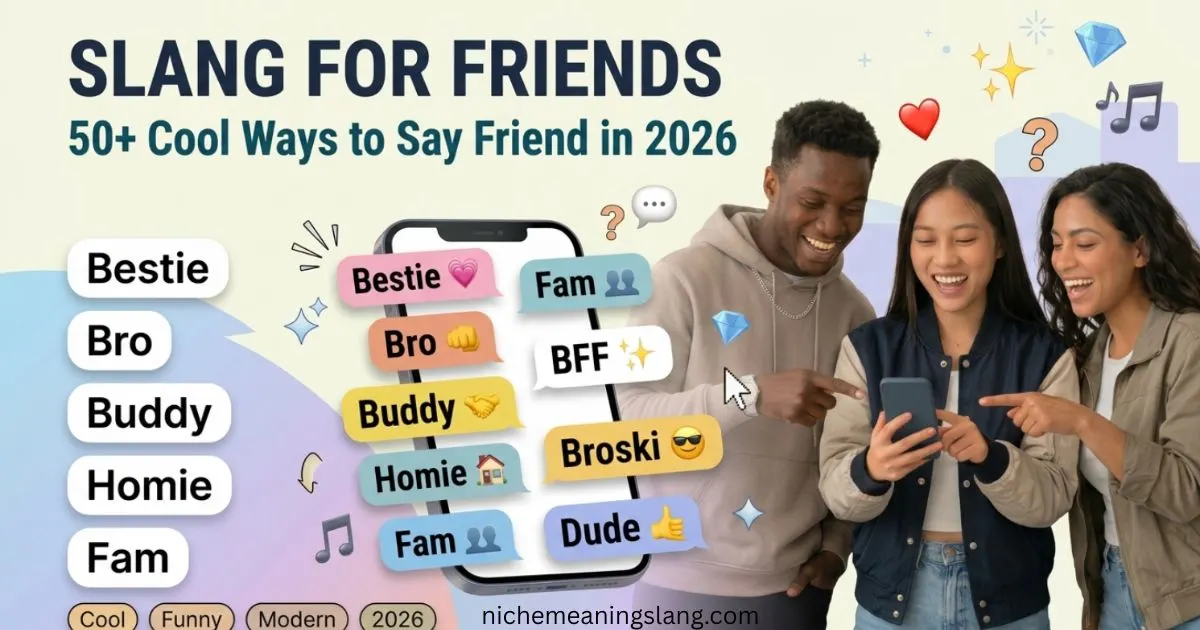
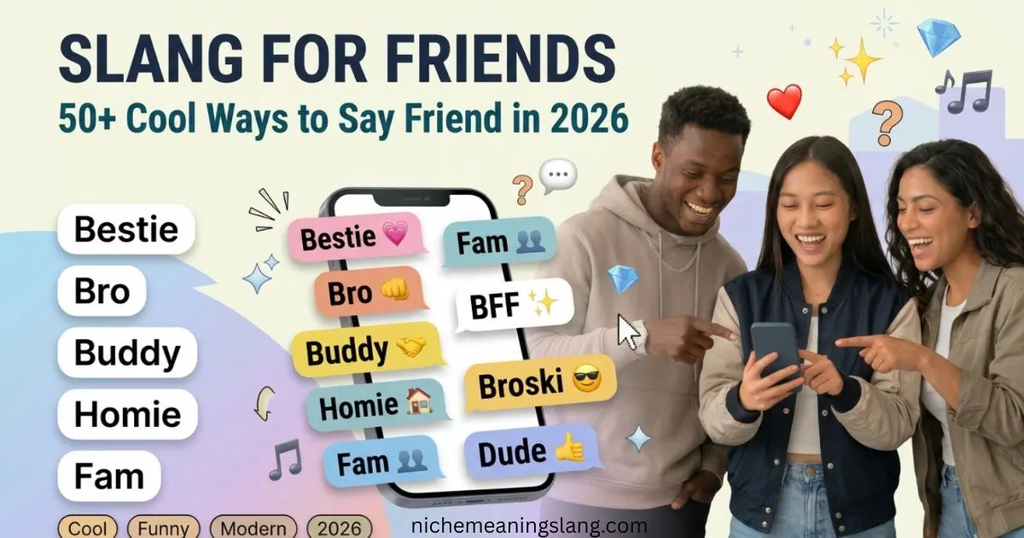
The most useful everyday choices include bro, buddy, homie, dude, pal, bestie, fam, dawg, twin, and OG. Bro feels broadly casual, buddy is friendly and familiar, homie suggests a trusted connection, while bestie signals stronger closeness. These terms can replace “friend” without sounding formal.
The key is emotional distance. Someone you casually know might be a buddy, while a longtime trusted friend could be your homie, day one, or OG. In current American texting and social-media language, words such as bestie, fam, and twin can also be used playfully with people who are not literally your closest friends.
| Slang | Meaning | Best fit |
| Bro | Close friend / familiar person | Casual |
| Bestie | Best or very close friend | Affectionate |
| Homie | Trusted close friend | Casual |
| Buddy | Friendly companion | Everyday |
| Dawg | Close friend | Playful |
| Fam | Friend treated like family | Close |
| Twin | Friend very similar to you | Gen Z / close |
| OG | Longtime, respected friend | Long friendship |
| Day one | Friend from the beginning | Loyal/long-term |
| Pal | Friendly, somewhat old-school friend term | Casual |
American Slang for Friends in Everyday Conversation
American friend slang draws from several linguistic and cultural streams, including regional speech, hip-hop culture, internet language, music, and youth culture. Terms can shift between communities, so a word that sounds natural in one social circle may feel dated, overly familiar, or unfamiliar in another.
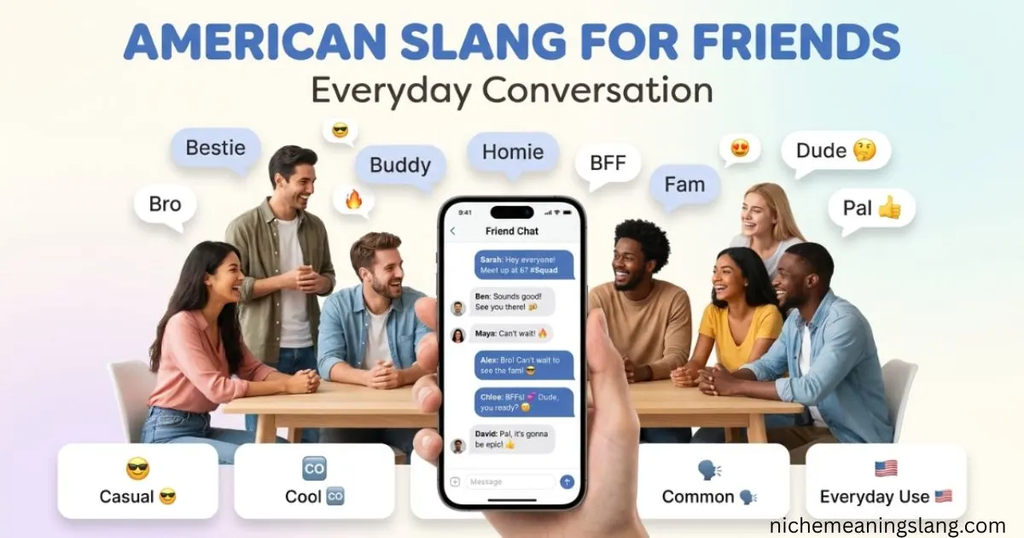
For everyday U.S. conversation, bro, buddy, dude, homie, fam, dawg, and bestie are particularly useful categories to understand. They do not all mean exactly the same thing: homie can suggest trust, bestie suggests closeness, and buddy is comparatively neutral. Tone and relationship still determine how each lands.
Slang for Your Best Friend
When the friendship is especially close, ordinary friend slang may not feel strong enough. Bestie, BFF, day one, ride or die, twin, my person, best bud, and fam all communicate some form of emotional closeness. Each emphasizes a slightly different part of the relationship.
“Bestie” is simple and affectionate, while “day one” highlights history. “Ride or die” emphasizes loyalty through difficult situations, and “twin” suggests someone who thinks or acts like you. In a heartfelt caption, these expressions can communicate years of shared memories without saying much at all.
Bestie in a Sentence
“Bestie” is a warm way to identify someone as a particularly close friend. A natural example is, “My bestie helped me move this weekend.” It works especially well in texts, captions, comments, and casual conversation where affectionate language feels normal.
Day One in a Sentence
“Day one” highlights a friendship that has lasted through different stages of life. For example: “She’s been my day one since middle school.” The phrase emphasizes loyalty, history, and shared experiences rather than simply saying that someone is a friend.
Funny Things to Call Your Friends
Funny friend names are often personal rather than standardized slang. Trouble, menace, gremlin, wild card, chaos coordinator, clown, comedian, and main character can work when the group already understands the joke. The humor comes from personality, shared experiences, or an inside reference.
That makes funny friend slang different from terms like bro or bestie. You are not necessarily describing the relationship; you are giving the friendship its own personality. Someone who is always late might become “Time Zone,” while the friend who creates every plan could jokingly become “the CEO.”
Cool and Cute Slang Names for Friends
Cool friend slang can create confidence and familiarity, while cute terms create warmth. OG, G, squad, bestie, best bud, sunshine, bug, boo thang, and twin cover different emotional registers. The right choice depends less on dictionary meaning and more on how your friend group normally talks.
For a cool, low-key tone, “G,” “OG,” or “my guy” may work. For affection, “bestie,” “sunshine,” or “best bud” feels softer. The important semantic signal is relationship: these words tell the listener whether you are emphasizing respect, humor, closeness, loyalty, or simple familiarity.
Slang for a Friend Who Feels Like Family
Some friendships become so close that fam, bro, sis, chosen family, and my people feel more accurate than “friend.” These expressions communicate belonging rather than casual acquaintance. “Fam” is especially useful when someone is trusted and emotionally important without being related by blood.
This language often appears when friends have supported each other through difficult periods, major life changes, or years of shared experiences. Saying “that’s my fam” can therefore carry more emotional weight than “that’s my friend.” It places the relationship inside a broader idea of loyalty and chosen family.
Slang for Different Types of Friends
Friend slang changes depending on the relationship being described. A ride-or-die suggests loyalty, a day one suggests history, an internet bestie signals an online friendship, and a work bestie identifies someone whose friendship developed through the workplace. The vocabulary reflects the story behind the connection.
| Friend type | Natural slang |
| Best friend | Bestie, BFF, twin |
| Longtime friend | Day one, OG |
| Loyal friend | Ride or die |
| Childhood friend | Day one, OG |
| Online friend | Internet bestie, mutual |
| Work friend | Work bestie |
| Adventure friend | Partner in crime |
| Friend like family | Fam, bro, sis |
| Close trusted friend | Homie, right hand |
| Friend group member | Squad, crew |
Slang for a Friend Group
When you mean several friends rather than one person, squad, crew, gang, circle, clique, posse, inner circle, team, and wolf pack can describe the group. The differences are mostly about tone, size, identity, and context. “Squad” feels modern and social-media friendly, while “crew” often feels established and activity-based.
“Inner circle” emphasizes trust, while “squad” often sounds casual and upbeat. “Gang” can be playful among friends but has additional serious meanings outside casual slang, so context matters. Competitor research consistently separates individual friend terms from group terminology for this reason.
Friend Slang in Texting and on Social Media
Texting encourages short, emotionally expressive terms because people want communication to feel quick and personal. Bestie, fam, twin, bro, sis, and homie commonly fit captions, comments, DMs, and group chats. Social platforms also help terms move between online communities and everyday speech.
Imagine a group chat where someone writes, “Twin, you will not believe what happened.” The word does more than identify a friend; it creates an immediate sense of closeness. Likewise, “bestie” in an Instagram caption can be affectionate even when the person is not literally someone’s best friend.
Regional Differences in Friend Slang Across the United States
Friend slang is not perfectly uniform across America. Terms can reflect regional dialect, local music scenes, neighborhood culture, generation, and community identity. Competitor research associates words such as homie with West Coast/hip-hop contexts and dawg with Southern and hip-hop-influenced usage, while broader terms such as bro and buddy travel widely.
Still, regional patterns should not be treated as rigid rules. People move, communities overlap, and social media spreads vocabulary nationally. A teenager in Texas may use twin, a New Yorker may say bro, and someone in California may use homie but none of those words belongs exclusively to one state.
Friend Slang Etiquette When Not to Use It
Friend slang works best when the relationship supports informality. Bro, homie, bestie, fam, and dude can sound warm between friends but overly familiar with a new coworker, client, teacher, manager, or older relative. The same word can also sound sarcastic when the conversation is tense.
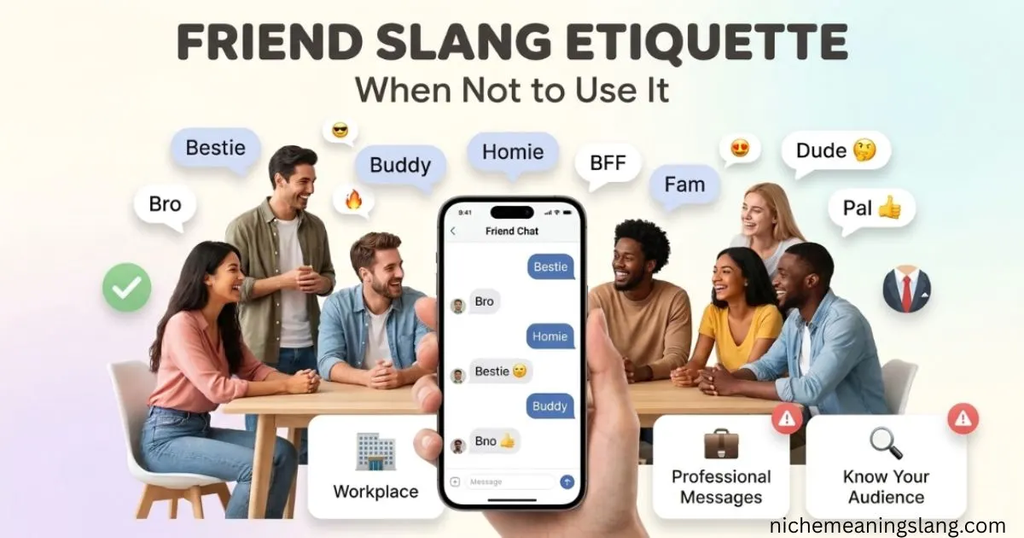
Formal emails, academic assignments, legal documents, business communication, and professional introductions generally call for standard language. You can still use friend slang when discussing slang itself, quoting someone, or writing informal creative material; the important distinction is whether the setting expects professional distance.
Frequently Asked Questions
What is the most common slang for friends?
Common American choices include bro, buddy, bestie, homie, dude, fam, and dawg. The most natural option depends on how close you are, your age, your community, and the tone of the conversation.
What is Gen Z slang for friend?
Commonly discussed Gen Z friend terms include bestie, twin, fam, and ride or die. These terms appear particularly often in texting, social media, captions, and group chats, although slang changes quickly and usage varies by community.
What do Americans call their friends in slang?
Americans commonly use bro, buddy, homie, dude, dawg, bestie, and fam. Some terms are more affectionate or culturally specific than others, so “friend” remains the safest neutral choice when the relationship or setting is uncertain.
What is slang for a best friend?
Bestie, BFF, day one, twin, ride or die, best bud, and my person can all describe a very close friend. “Bestie” is the simplest everyday choice, while “day one” emphasizes a long history.
What is slang for a group of friends?
Common group terms include squad, crew, gang, circle, clique, posse, and inner circle. Squad and crew are especially straightforward casual choices, while inner circle emphasizes a smaller group of trusted people.
What is slang for an old friend?
Day one and OG are strong choices for a longtime friend. Day one emphasizes having known someone from the beginning, while OG can add a sense of respect, history, or longstanding status.
What is a cool slang word for friend?
OG, G, bro, homie, twin, or my guy can sound cool depending on your social circle. “Cool” is subjective, though, so the most natural word is usually the one already used by people around you.
What is a funny word for friend?
Playful options include trouble, menace, gremlin, wild card, chaos coordinator, clown, or a personalized inside-joke nickname. Funny friend names work best when the person understands the affection behind the joke.
Conclusion
If you searched slang for friendst, you are almost certainly looking for slang for friends and there is no single perfect answer. Bro, bestie, homie, buddy, fam, twin, OG, day one, squad, and ride or die each communicate a slightly different relationship.
The smartest choice is to match the word to the bond. Use bestie for closeness, homie for a trusted friend, day one for history, fam for family-like loyalty, twin for similarity, and squad for a group. Slang works best when it sounds like something you would actually say not something copied from a list.
FAQs
The strongest FAQ/query-expansion opportunities observed across the current ranking pages are:
- What is a cool slang word for friend?
- What is the most common slang for friends?
- What do Americans call their friends in slang?
- What is Gen Z slang for friend?
- What is a slang word for a best friend?
- What is slang for a group of friends?
- What is slang for an old friend?
- What is a funny word for friend?
- What do you call someone instead of a friend?
These are competitor-observed FAQ queries rather than claims that they are all currently displayed in Google’s PAA box. MeaningBliss explicitly includes the first seven, while SlangWordz covers overlapping questions around Gen Z slang, cool friend terms, funny terms, alternatives to friend, and nicknames.
Related Slang Words

Ryan Mitchell is a language enthusiast and writer who explores slang, modern expressions, and everyday language. At nichemeaningslang, he helps readers understand slang meanings, usage, and context in a simple and easy-to-follow way.