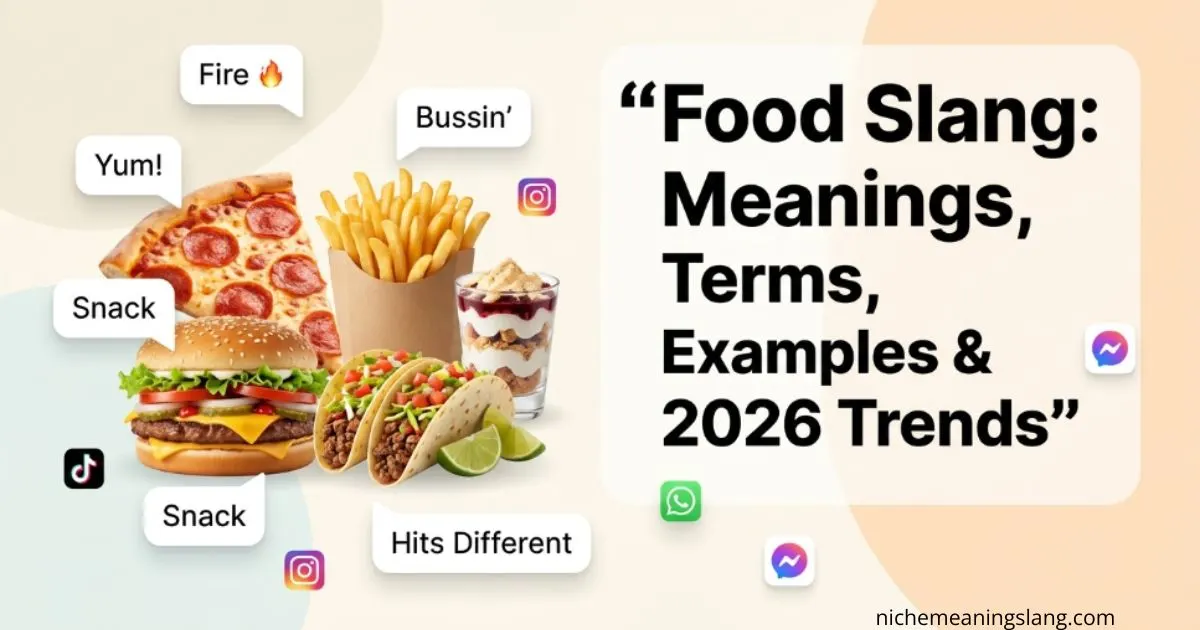
Food Slang Meanings, Terms, Examples & 2026 Trends
Food slang is informal language that uses food words to describe meals, people, feelings, money, situations, or reactions. Terms such as grub, chow, bussin, fire, slaps, snack, bread, tea, and girl dinner can carry meanings that are very different from their literal definitions.
As a language writer who follows modern American expressions, I’ve seen food vocabulary change from simple everyday words into internet shorthand almost overnight. If you’ve ever read a comment saying a meal “slaps” or someone “ate” and wondered what it meant, this guide breaks down the slang, context, tone, and cultural clues you need.
What Is Food Slang and Why Do Americans Use It?
Food slang is informal language connected with eating, meals, snacks, cooking, or food imagery. Americans use expressions such as grub, chow, eats, bussin, fire, and slaps to communicate casually, often adding humor, enthusiasm, personality, or emotional emphasis to ordinary conversations.
Food-based expressions also work because they are easy to visualize. Calling something bread can mean money, while snack can describe an attractive person. These metaphorical meanings allow speakers to communicate quickly and create shared cultural signals within friend groups, generations, and online communities.
Classic American Food Slang Words
Some American food slang is much older than TikTok. Grub means food in general, chow refers casually to food or a meal, eats means food, and nosh describes eating lightly or having a small meal. These expressions can sound natural across different age groups.
Other established expressions include munchies, bites, and feed. Their exact tone depends on the speaker and situation, but they generally sound relaxed rather than formal. “Let’s grab some grub” or “Where are the good eats?” feels conversational in a way that “Let’s consume a meal” obviously does not.
Gen Z Food Slang You Will See Online
Modern food slang has been heavily influenced by social media, especially short-form video and group-chat culture. Bussin means extremely tasty, fire means excellent, slaps describes highly satisfying food, while ate can praise someone for doing something exceptionally well.
Another useful term is mid, which signals that something is average, underwhelming, or not particularly impressive. Unlike traditional food vocabulary, these expressions can jump between food, music, fashion, performances, and everyday opinions. That flexibility is one reason internet slang spreads so quickly.
Slang for Delicious or Really Good Food
When Americans want to say food tastes amazing, bussin, fire, gas, slaps, and hits are common informal choices in current online slang. Each one carries an enthusiastic tone, although speakers may use them differently depending on age, community, and personal style.
For example, “These wings are fire” means the wings are excellent, while “This burger slaps” emphasizes how satisfying it tastes. Chef’s kiss is another expressive phrase for something that feels perfectly done. These terms are best understood through tone rather than literal translation.
Food Slang That Means More Than Food
Some of the most interesting food slang has little to do with eating. Bread can mean money, tea can mean gossip or information, beef can mean conflict, sauce can describe style or confidence, and snack can describe an attractive person.
These metaphors show how language turns familiar objects into social shortcuts. If someone says “spill the tea,” they are not asking you to pour a drink. Likewise, “earn that bread” is about making money. Context is therefore essential whenever a food word appears in casual English.
Modern TikTok and FoodTok Slang
TikTok and FoodTok have accelerated the spread of food-related vocabulary. Terms such as bussin, viral food, taste test, Food ASMR, and “TikTok made me try it” appear around cooking videos, restaurant reviews, recipes, challenges, and food discoveries.
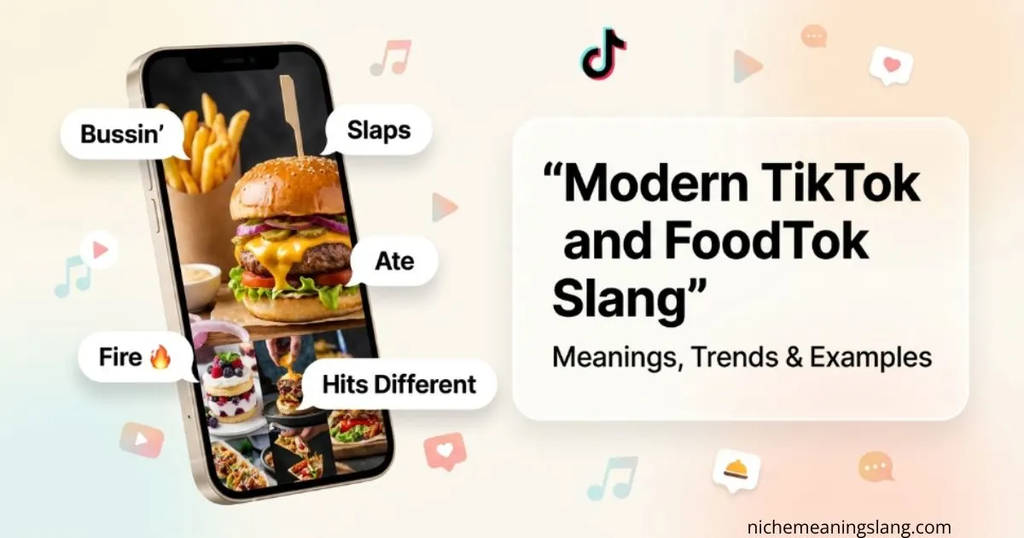
The platform also helps regional expressions travel nationally. A phrase that begins in one online community can appear in captions, comments, memes, group chats, and everyday speech. That does not mean every viral phrase becomes permanent slang; some disappear quickly while others become part of mainstream vocabulary.
Food Slang Cheat Sheet
| Food slang | Meaning | Tone |
| Bussin | Extremely tasty | Enthusiastic |
| Fire | Excellent | Positive |
| Slaps | Very satisfying or enjoyable | Casual |
| Mid | Average or disappointing | Neutral/negative |
| Grub | Food | Casual |
| Munchies | Strong snack cravings | Playful |
| Snack | Attractive person | Playful |
| Bread | Money | Casual |
| Tea | Gossip or information | Casual |
| Sauce | Style or confidence | Positive |
| Girl dinner | Small, informal meal of assorted foods | Lighthearted |
This distinction matters because some terms describe food directly while others borrow food imagery to describe people, money, emotions, or social situations.
American Food Slang by Generation
Food slang changes noticeably across generations. Current guides associate bussin, fire, mid, slaps, and girl dinner with Gen Z, while terms such as foodie, snack, basic, and extra are associated with Millennials. Older speakers may be more familiar with grub, chow, nosh, and munchies.
These categories are useful but should not be treated as strict rules. People borrow language across generations, especially online. A teenager can say “grub,” while an older adult can understand “bussin.” What matters most is whether the expression feels natural within that person’s community and setting.
How to Use Food Slang Naturally
Food slang works best in casual conversations, texting, social captions, comments, gaming chats, and conversations with friends. Before using a trending term, understand its meaning and tone. For example, “This pasta is bussin” sounds playful, while the same phrase would be unusual in a formal business report.
The easiest way to avoid sounding forced is to listen before copying. Slang changes quickly, and overusing several trendy expressions in one sentence can make your language feel unnatural. In professional writing, standard words such as delicious, flavorful, excellent, or well-prepared are usually clearer.
Is Food Slang Still Popular in 2026?
Yes, food slang remains active in 2026, but not every viral expression has equal staying power. Current sources identify bussin, fire, mid, and related expressions as continuing parts of online and casual communication, while other terms rise briefly and then fade as internet trends change.
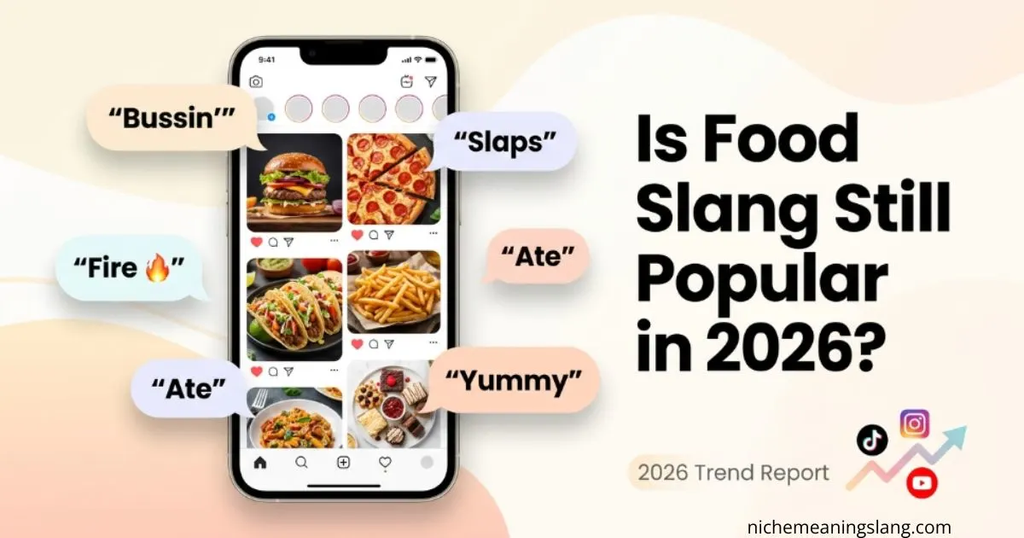
The bigger trend is the continued blending of food vocabulary with internet culture. TikTok, memes, group chats, restaurant content, and creator communities constantly reshape how people describe taste, appearance, excitement, disappointment, and social experiences. Food remains a particularly flexible source of metaphor.
Frequently Asked Questions
What is the most common slang for food?
Grub and eats are among the widely recognized casual terms for food in American English. Chow is another longstanding option. Younger speakers may also use trend-driven expressions depending on the context and online community.
What is Gen Z slang for good food?
Bussin, fire, and slaps are commonly used to describe food that tastes exceptionally good. Gas can also express strong approval. The exact popularity of each term changes as internet language evolves.
What does bussin mean?
Bussin means that something, especially food, tastes extremely good or satisfying. For example, “These tacos are bussin” is an enthusiastic way of saying the tacos taste excellent.
What does food is gas mean?
When someone says “this food is gas,” they mean the food is exceptionally good. It is informal internet slang and is most natural in casual conversations, social media, and conversations among people who understand the expression.
What does slaps mean in food slang?
When food slaps, it means the food tastes really good or delivers a particularly satisfying flavor. “This chicken slaps” is an informal compliment, not a literal reference to hitting something.
What does snack mean in slang?
Calling someone a snack can mean that the person is attractive or stylish. This is a metaphorical use of a food word and is generally playful or complimentary rather than a literal description of food.
What does bread mean in slang?
Bread commonly means money in informal English. For example, “I need to make some bread” means the speaker needs to earn money. This metaphorical use has existed beyond today’s TikTok slang and appears across casual American English.
What is girl dinner?
Girl dinner describes an informal meal made from small snacks, leftovers, or assorted foods rather than a traditional full meal. The phrase became popular online because many people recognized the casual eating pattern and found the concept relatable.
Is food slang appropriate in formal writing?
Usually, no. Food slang is most natural in casual communication, social media, texting, and conversations with friends. In professional or academic writing, clearer alternatives such as delicious, flavorful, excellent, or well-balanced are generally more appropriate.
Is food slang mostly used online?
No. Social media helps new expressions spread rapidly, but food slang also appears in ordinary conversations. Traditional words such as grub and chow have been used for generations, while newer expressions often move between online and offline communication.
Does food slang change over time?
Yes. Slang is constantly evolving. Some expressions become mainstream, others become associated with a particular generation, and some disappear when their original trend loses popularity. This is why a term that feels current today may sound dated later.
Conclusion
Food slang is much more than a collection of funny words for meals. It shows how American English turns familiar food concepts into expressions for taste, attractiveness, money, gossip, confidence, emotions, and everyday experiences. From traditional grub and chow to modern bussin, fire, slaps, and girl dinner, the vocabulary keeps evolving.
The best way to use these expressions naturally is to focus on context, audience, tone, and current usage. If you understand what a term means before repeating it, you’ll sound far more natural and you’ll also recognize when a viral phrase is genuine slang versus a short-lived internet trend.
FAQs
For FAQ/PAA targeting, prioritize these queries:
- What is food slang?
- What is the most common slang for food?
- What is Gen Z slang for good food?
- What does bussin mean?
- What does food is gas mean?
- What does slaps mean in food slang?
- What does snack mean in slang?
- What does bread mean in slang?
- What does girl dinner mean?
- Is food slang appropriate in formal writing?
- Is food slang mostly used online?
- Does food slang change over time?
These questions closely match the FAQ structures already appearing in the ranking pages.
Related Slang Words

Ryan Mitchell is a language enthusiast and writer who explores slang, modern expressions, and everyday language. At nichemeaningslang, he helps readers understand slang meanings, usage, and context in a simple and easy-to-follow way.