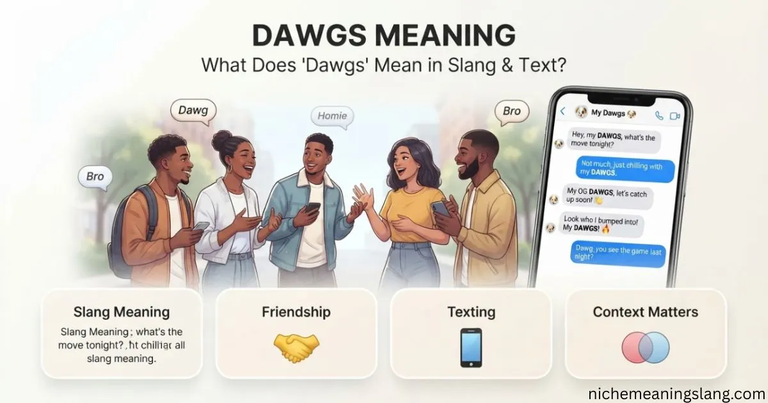
Slang for Friend 50+ Cool, Funny &Modern Friend Terms
The best slang for friend includes words like bestie, bro, homie, buddy, pal, fam, mate, dawg, and BFF. The right choice depends on closeness, tone, age, region, and context. After comparing current American usage with regional and online language, this guide makes it easier to choose a word that actually sounds natural.
If you’ve ever stared at a text saying “yo bestie,” “what’s up fam,” or “my day one” and wondered how these words became normal, you’re not alone. Friend slang carries friendship, loyalty, humor, identity, social media culture, and generational meaning often much more emotion than the plain word “friend.”

What Does Slang for Friend Mean?
Slang for friend means informal words or phrases used instead of the standard word “friend.” Common examples include bestie, homie, bro, buddy, pal, mate, fam, and BFF. Each one can communicate something slightly different, such as closeness, loyalty, familiarity, affection, humor, or regional identity.
Think about the difference between “This is my friend” and “This is my homie.” The first simply identifies a relationship; the second can suggest trust, familiarity, shared history, or community. Likewise, “bestie” signals greater closeness, while “buddy” can remain friendly without implying a deeply personal bond.
Quick Meaning Table
| Slang | Typical meaning | Tone |
| Bestie | Best or very close friend | Affectionate |
| Bro | Close friend | Casual |
| Homie | Trusted/close friend | Relaxed |
| Buddy | Friend or companion | Friendly |
| Pal | Casual friend | Light |
| Fam | Friend treated like family | Warm |
| BFF | Best Friends Forever | Playful |
| Day One | Long-time friend | Loyal |
| OG | Long-standing/respected friend | Respectful |
| Ride or Die | Extremely loyal friend | Deep/loyal |
These distinctions reflect patterns found repeatedly across the current competitor coverage.
Where Does Slang for Friend Come From?
There isn’t one origin for slang for friend because the category contains words with completely different histories. Pal, mate, buddy, bro, homie, bestie, and fam developed through different periods, communities, regions, music cultures, and communication technologies. Slang evolves socially rather than following one neat dictionary timeline.
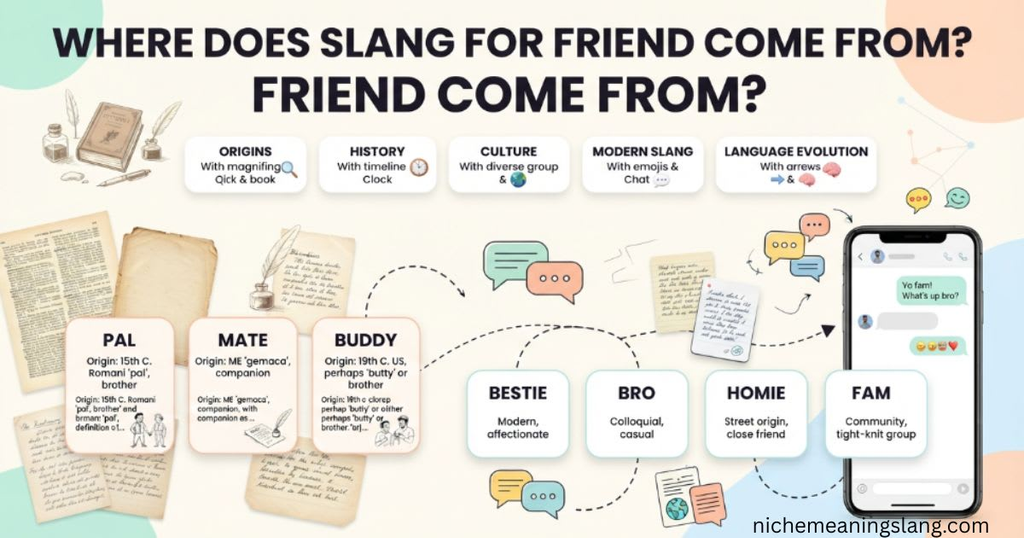
Modern American friend slang has also been influenced by hip-hop, Black American culture, AAVE, texting, gaming, memes, Instagram, and TikTok. Words can move from specific communities into mainstream speech, sometimes changing meaning along the way. That history matters because using a term naturally is different from simply copying something seen online.
Mate
Mate is strongly associated with British, Australian, and New Zealand English, where it can mean friend or serve as a casual greeting. It does not necessarily indicate a deep friendship. In American English, “mate” can sound intentionally British, regional, playful, or influenced by another English-speaking culture.
Homie
Homie generally suggests a close or trusted friend and has strong associations with neighborhood identity, hip-hop, and urban American speech. It can feel warmer and more culturally specific than simply saying “friend.” Because of that background, context and authentic usage matter when adopting the term.
How People Use Slang for Friend Today
Today, slang for friend appears in texting, group chats, Instagram captions, TikTok comments, gaming conversations, and everyday speech. A person might write “yo bro,” “hey bestie,” “you good fam?” or “my squad is here.” The same vocabulary can move effortlessly between online messages and spoken conversation.
The important part is tone. Bestie can be sincere or joking; bro can sound affectionate or annoyed; mate can feel friendly or confrontational depending on delivery. A term that feels perfect among close friends may sound strange with a stranger, coworker, teacher, or manager.
Bro
Bro comes from “brother” but is widely used for friends and acquaintances in American casual speech. It can communicate familiarity, surprise, affection, frustration, or disbelief depending on tone. “Bro, you coming?” feels friendly, while “Bro, seriously?” may express irritation rather than friendship.
Buddy
Buddy is one of the safest casual friend terms in American English. It can refer to an actual friend, companion, child, coworker, or familiar person. Its meaning is usually friendly, although a sharply delivered “buddy” can become sarcastic or confrontational. Tone determines how it lands.
Viral & Gen Z Slang for Friend
Modern slang for friend increasingly reflects Gen Z internet culture. Competitor research repeatedly highlights bestie, twin, bruh, ride or die, fam, squad, and OG as terms associated with younger online communication. Short-form video, memes, gaming, and social platforms help expressions spread quickly between communities.
One interesting change is that some terms have become less literal. Bestie, for example, can describe a genuine best friend but can also be used jokingly toward an online stranger. “Twin” can mean someone who shares your personality or taste, while “bruh” increasingly functions as a reaction rather than simply a word for friend.
Bestie
Bestie is short for best friend and usually signals closeness or affection. Online, however, it has become more flexible: people sometimes call strangers “bestie” in comments as a playful form of friendliness. That shift shows how social media can turn relationship labels into casual conversational expressions.
Twin
Twin describes a friend who seems remarkably similar to you in personality, taste, style, humor, or energy. It does not mean a biological twin. In contemporary online language, calling someone “my twin” can be an affectionate way of saying, “We think exactly alike.”
Ride or Die
Ride or die describes an exceptionally loyal friend who remains supportive through difficult situations. Unlike lightweight terms such as “pal,” it carries emotional weight. Calling someone your ride-or-die suggests trust, loyalty, shared history, resilience, and commitment, so it usually fits a genuinely close relationship.
Funny Slang for Friend
Funny slang for friend often works because friendship creates room for teasing and exaggerated nicknames. Terms such as partner in crime, bruh, menace, weirdo, doofus, homeslice, or chaos-related nicknames can become affectionate inside jokes. Their meaning depends heavily on the relationship and shared humor.
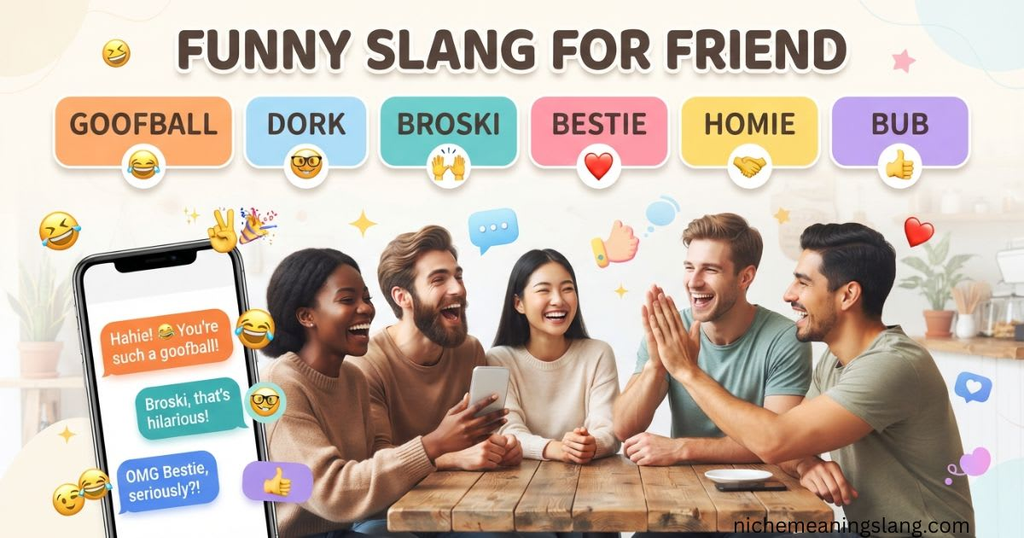
A funny friend nickname can also become more personal than ordinary slang. “Partner in crime” suggests shared adventures, while “menace” jokingly frames a friend as trouble. The emotional message is often more important than the literal meaning: I know you well enough to joke with you.
Partner in Crime
Partner in crime is a playful expression for a friend who regularly joins you in adventures, jokes, plans, or harmless mischief. It communicates companionship, shared experiences, humor, loyalty, and familiarity without necessarily claiming that the person is your closest friend.
Day One
Day One refers to a friend who has been around since the beginning. It carries stronger emotional meaning than simply saying “old friend” because it emphasizes loyalty through different stages of life. In American slang, it often suggests someone who stayed supportive before success or recognition.
Slang for Friend Girl
For a female friend, common slang for friend includes bestie, sis, girlie, best gal, BFF, soul sister, twin, and my girl. These expressions vary by personality and relationship rather than following a strict rule. “Bestie” can be affectionate, while “sis” often suggests sister-like closeness.
Gender is not always a limitation, though. Modern internet language often crosses traditional categories. Bestie, for example, is not exclusively for women, and “bro” is increasingly used broadly. The safest choice is to follow how your friend describes themselves and the language already used naturally within your relationship.
Sis
Sis is a warm, sister-like term for a close female friend. It communicates familiarity, support, and affection rather than biological family. Like “bro,” its meaning has expanded beyond literal relatives, making it common in texting, social media, friendship conversations, and supportive messages.
BFF
BFF means “Best Friends Forever” and became especially recognizable through texting and early internet culture. It refers to a very close friendship and is often used in captions, profiles, messages, and playful conversation. Compared with “buddy,” BFF makes the strength of the friendship explicit.
Choosing the Right Friend Slang
| Situation | Natural choice |
| Very close friend | Bestie |
| Close male friend | Bro |
| Trusted inner-circle friend | Homie |
| General casual friend | Buddy |
| Long-time friend | Day One |
| Extremely loyal friend | Ride or Die |
| Friend who feels like family | Fam |
| Respected longtime friend | OG |
| Similar personality/taste | Twin |
| Whole friend group | Squad / Crew |
The central rule is match the word to the relationship. A group-chat term does not automatically belong in a professional email, and a deeply loyal phrase can feel exaggerated when used for someone you barely know. Context, tone, audience, and familiarity matter more than sounding trendy.
Conclusion
Slang for friend is much more than a collection of replacement words for “friend.” Bestie, bro, homie, buddy, fam, day one, OG, twin, and ride or die each communicate a different shade of closeness, loyalty, humor, identity, or shared history.
The smartest way to choose slang for friend is to read the room. Think about your relationship, your audience, your culture, and whether the conversation is casual or formal. When the word fits naturally, friend slang makes ordinary communication feel warmer, more personal, and more human.
FAQs
What is a slang word for friend?
Common slang words for friend include bro, bestie, homie, buddy, pal, fam, mate, dawg, and BFF. The best option depends on closeness, region, generation, tone, and the setting where you are using it.
What do Americans call their friends in slang?
Americans commonly use terms such as bro, homie, buddy, dawg, bestie, fam, dude, and BFF. Different communities and generations favor different expressions, so there is no single American slang word for every friendship.
What is Gen Z slang for friend?
Common Gen Z-oriented terms include bestie, twin, bruh, ride or die, and sometimes fam. Their popularity is strongly connected with texting, memes, TikTok, gaming, and other forms of internet communication.
How do you say friend in a cool way?
You could say bestie, homie, bro, twin, OG, G, fam, or day one. The coolest choice is usually the one that fits your natural speech rather than a term you are forcing because you saw it trending online.
What is slang for a best friend?
Popular slang for a best friend includes bestie, BFF, day one, ride or die, my person, and soul friend. Each expresses a slightly different type of closeness, from affectionate familiarity to deep loyalty.
Is “bestie” only used for girls?
No. Bestie is not gender-specific. Anyone can use it for a close friend, and online it can even be used playfully toward strangers. Its meaning is mainly about friendliness or closeness rather than the gender of the speaker or listener.
What is slang for a group of friends?
Common terms include squad, crew, fam, the gang, circle, and my people. “Squad” and “crew” are especially useful when you’re referring to several friends as a group rather than one individual.
Related Slang Words

Ryan Mitchell is a language enthusiast and writer who explores slang, modern expressions, and everyday language. At nichemeaningslang, he helps readers understand slang meanings, usage, and context in a simple and easy-to-follow way.