30+Gun Slang Meanings, Terms & Contexts Explained
Gun slang means informal language used to refer to a gun or firearm, but the exact meaning depends heavily on context. If you have seen words like gat, strap, piece, heater, or roscoe in rap lyrics, movies, texts, or online conversations, you are not alone in wondering what they mean. These terms belong to American slang, street language, hip-hop culture, and popular entertainment, although some are much older than others. After researching current slang usage and dictionary references, this guide explains the language clearly so you can recognize the difference between a modern expression, an old-school term, and a word with an entirely different meaning.
Gun Slang Terms at a Glance
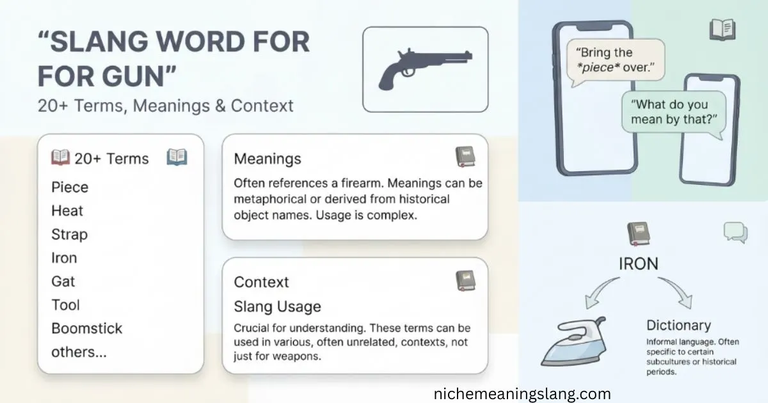
Gun slang includes many informal words for a gun, firearm, pistol, or handgun. Common examples include gat, strap, piece, heater, roscoe, iron, rod, heat, and blicky. Their popularity varies by generation, region, music scene, and platform, so a word familiar in one community may sound unusual somewhere else.
| Term | General meaning | Common association |
| Gat | Gun or handgun | American slang, music |
| Strap | Gun | Contemporary slang |
| Piece | Gun | Older and general slang |
| Heater | Gun | Older crime slang |
| Roscoe | Pistol or revolver | Vintage American slang |
| Iron | Gun | Older slang |
| Blicky | Gun or handgun | Contemporary regional slang |
| Nine | 9mm handgun | Music and slang |
| Heat | Gun in some contexts | Informal slang |
| Rod | Gun | Older slang |
The important point is that these expressions are not interchangeable in every situation. A word can carry an age, regional, cultural, or emotional tone beyond its basic dictionary meaning. Merriam-Webster, Cambridge, and Dictionary.com confirm several of these meanings independently.
What Does Gun Slang Mean?
Gun slang refers to informal words or expressions used instead of the standard words gun or firearm. The slang may appear in casual speech, music, entertainment, online discussions, or fictional dialogue. For example, gat is defined by Merriam-Webster as slang for handgun, while strap has a slang meaning of gun in Cambridge Dictionary.
The tricky part is that slang rarely works like a formal technical vocabulary. Words such as piece, iron, heat, burner, or strap can have other ordinary meanings. That means the surrounding sentence, speaker, platform, and subject matter often matter more than the word itself. A lyric, movie scene, or gaming conversation can therefore require a different interpretation.
Where Does Gun Slang Come From?
American gun slang has developed across different periods of popular culture, including early twentieth-century crime writing, detective fiction, movies, music, and later hip-hop culture. Older expressions such as roscoe are documented as American slang, with Dictionary.com dating the word to the 1910–15 period and identifying it as an older term for a revolver or pistol.
Other terms became widely recognizable through music and entertainment. The history is not always perfectly documented because slang often spreads through speech before dictionaries record it. Modern internet communities then add another layer, allowing regional expressions to travel far beyond their original communities and audiences.
Why Are There So Many Slang Words for Guns?
There is no single explanation. Slang develops through communities, music, storytelling, regional speech, and popular culture. Different groups create different labels, while movies, songs, social media, and online communities can spread those expressions to much larger audiences. That is why several words may describe essentially the same object while carrying different cultural associations.
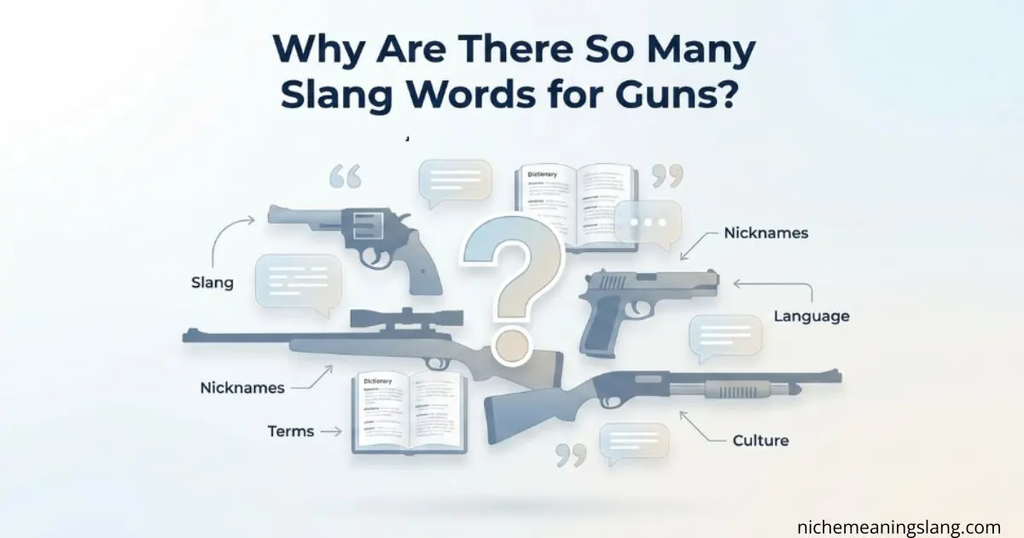
Think of the difference between roscoe, heater, strap, and blicky. They can all appear in firearm-related slang, but they do not sound identical. One may feel vintage, another cinematic, another contemporary, and another strongly tied to a particular regional or music scene. Understanding that tone is often more useful than simply memorizing definitions.
Gun Slang Terms in Music and Popular Culture
Music has been one of the major places where listeners encounter firearm-related slang. Rap lyrics, hip-hop, crime dramas, gangster films, and popular entertainment have preserved older expressions while introducing newer vocabulary to wider audiences. A listener may therefore encounter gat, strap, piece, heat, or blicky without hearing those words in ordinary conversation.
Context is especially important when reading lyrics. Artists may use slang for storytelling, characterization, cultural references, metaphor, or dramatic effect. Hearing a term in a song does not automatically mean that every speaker in the United States uses it that way. The same principle applies to movie dialogue and fictional characters.
Gun Slang Terms in Different Situations
The same slang word can feel completely different depending on where you encounter it. Music may use it artistically, a movie may use it to establish a character or period, a game may use it for a fictional object, and a text message may leave too little context to understand the speaker’s intention.
| Situation | What to look for |
| Music | Lyrics, metaphor, cultural references |
| Movies | Character and historical setting |
| Gaming | Fictional weapons and game-specific language |
| Social media | Short, rapidly changing slang |
| Texting | Surrounding messages and tone |
| School | Educational context |
| Workplace | Clear, neutral terminology |
This is why interpreting slang requires more than finding the first definition online. Look at who said it, where it appeared, what they were discussing, and what words surrounded it. That approach reduces the chance of confusing a slang meaning with an ordinary meaning.
Gun Slang in Texting and Social Media
Texting and social platforms make slang travel quickly. Words can move from rap lyrics to TikTok, Instagram, Reddit, memes, gaming communities, and group chats in a surprisingly short time. At the same time, short posts remove much of the context that normally helps readers understand what a slang term means.
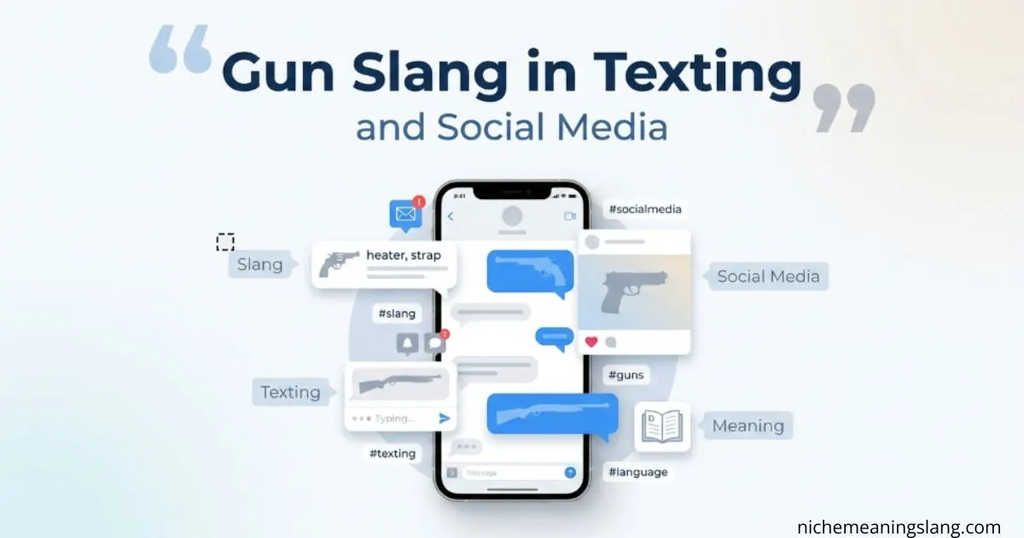
A word such as burner, heat, piece, or strap should therefore not be interpreted automatically. For example, burner can refer to a temporary phone in another context, while heat can mean temperature, pressure, attention, trouble, or something else entirely. Context is the key to accurate interpretation.
Common Questions About Gun Slang Terms
What is the most common slang word for a gun?
There is no single word that is universally the most common. Piece, gat, strap, heater, and heat are all recognizable in different American communities and cultural contexts. Their familiarity depends on age, region, music, entertainment, and the setting in which the word appears.
What does “gat” mean?
Gat is slang for a gun, particularly a handgun. Merriam-Webster defines it as slang for “handgun,” and its word history identifies the firearm sense with a shortening of “Gatling gun.” It remains recognizable in American slang and popular culture.
What does “strap” mean in slang?
In firearm-related slang, strap can mean a gun. Cambridge Dictionary specifically records this slang sense. However, strap has many ordinary meanings, so the surrounding sentence is essential before deciding that the firearm meaning is intended.
What does “piece” mean in slang?
Piece can be an informal word for a gun, particularly in American crime fiction, music, and casual dialogue. However, the ordinary word piece has many unrelated meanings, so seeing it alone is not enough to establish the firearm interpretation.
Is “Roscoe” slang for a gun?
Yes. Roscoe is an older American slang term for a revolver or pistol. Dictionary.com identifies it as older slang and dates its American usage to the early twentieth century. It is more likely to feel vintage or old-fashioned today than contemporary.
Does “burner” always mean a gun?
No. Burner has multiple meanings. In some slang contexts it can refer to a firearm, while in other everyday contexts it can mean something such as a temporary phone or a cooking appliance. Always examine the surrounding conversation before interpreting it.
Can “guns” mean something other than firearms?
Yes. In casual American English, guns can also refer to muscular arms. For example, someone might compliment another person’s “guns” after seeing their developed biceps. The fitness meaning is completely different from firearm-related slang, making context especially important.
Is gun slang appropriate in professional writing?
Usually, standard language is clearer. In workplace communication, academic writing, official documents, safety discussions, or formal reports, words such as gun or firearm generally communicate the subject more directly and avoid unnecessary ambiguity.
Conclusion
Gun slang is a broad part of informal American language rather than a single fixed vocabulary list. Words such as gat, strap, piece, heater, roscoe, and blicky can appear in music, movies, texting, gaming, and social media, but their meaning and tone depend on context, culture, region, and generation.
The easiest way to understand gun slang is to read beyond the individual word. Ask where you encountered it, who used it, what the conversation was about, and whether the setting was fictional, musical, online, or real-world. That small habit can prevent a lot of confusion. For formal communication, gun or firearm is usually the clearest choice.
FAQs
The competitor pages’ FAQ patterns strongly overlap around these questions:
- What is the most common slang word for a gun?
- What does “gat” mean?
- What does “strap” mean?
- What does “piece” mean?
- Is “heater” slang for a gun?
- What does “Roscoe” mean?
- Does “burner” always mean a gun?
- Can “guns” mean something other than firearms?
- Are gun slang terms appropriate for professional writing?
- Why are some gun slang terms difficult to understand?
These questions are explicitly represented in the current competitor FAQ structures.
Related Slang Words

Ryan Mitchell is a language enthusiast and writer who explores slang, modern expressions, and everyday language. At nichemeaningslang, he helps readers understand slang meanings, usage, and context in a simple and easy-to-follow way.
One Comment