30+Australian Slang Insults Aussie Roasts & Meanings
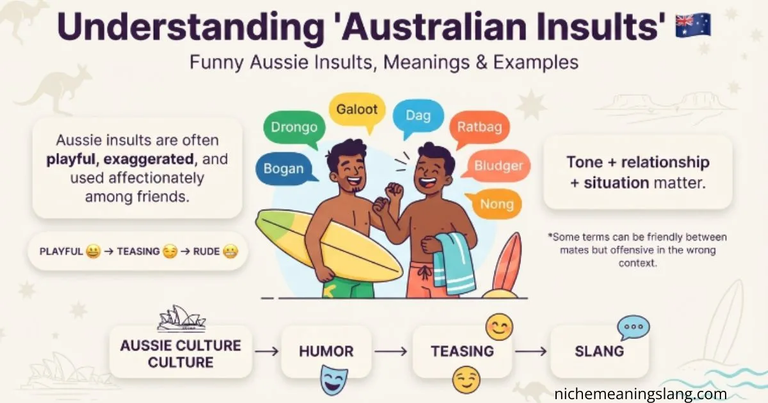
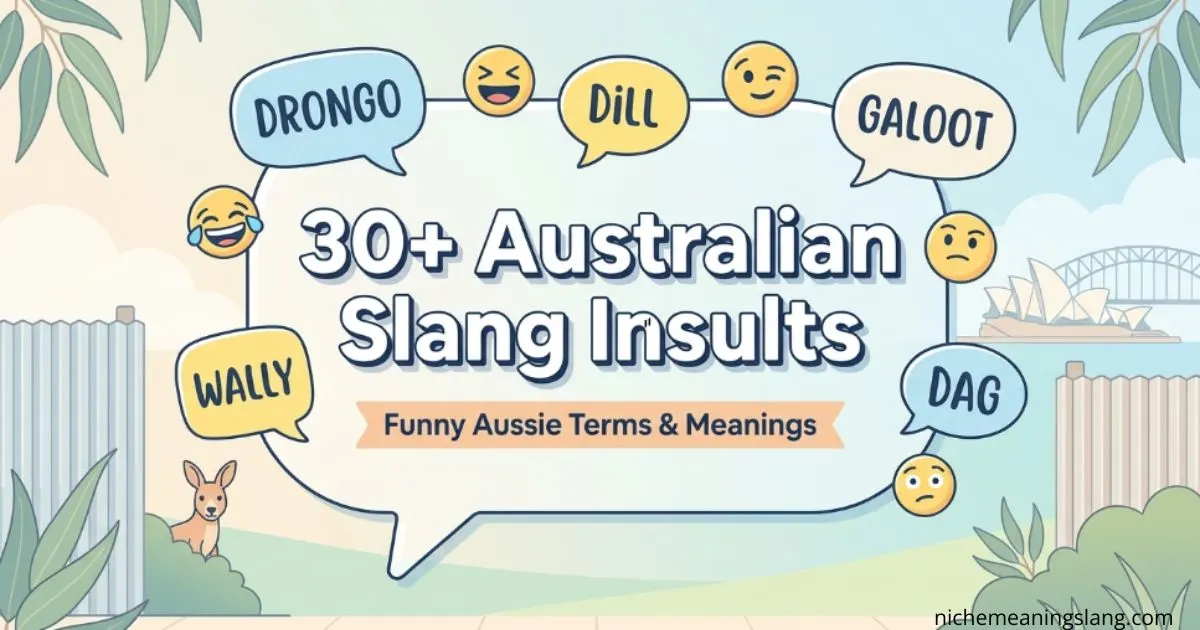
Australian slang insults are usually colorful, humorous, and heavily dependent on context. Words such as drongo, galah, dill, bogan, ratbag, and wanker can describe foolish, annoying, arrogant, or troublesome people, but their emotional force changes dramatically depending on tone and relationship.
If you have ever heard an Australian call a friend an “absolute galah” and wondered whether a fight was about to start, you are not alone. Having researched Australian English and the way regional slang works in everyday communication, I know the tricky part is not memorizing vocabulary; it is understanding the difference between friendly banter and a genuine insult.
What Are Australian Slang Insults
Australian slang insults are informal expressions used to tease, criticize, mock, or jokingly describe another person. Common examples include drongo, galah, dill, dag, ratbag, and bogan. Australian English often turns ordinary nouns, animal names, and colorful descriptions into memorable ways of talking about someone’s behavior.
The important part is social context. A drongo between close mates may sound almost affectionate, while a stronger word such as wanker can communicate genuine contempt. Australian humor is strongly associated with informality, self-deprecation, and mateship, so literal translations do not always capture what the speaker intends.
Why Context and Tone Change Everything With Australian Slang Insults
Tone can completely change an Australian slang insult. A smiling “you drongo” after a friend makes a silly mistake may be playful, while the same word delivered angrily by a stranger can feel hostile. Relationship, facial expression, setting, and whether the teasing is mutual all help reveal the intended meaning.
This is especially important for visitors from the United States. A phrase that looks harsh in a dictionary may function as friendly banter in an Australian pub or barbecue. Conversely, some terms should not automatically be treated as harmless. Wanker, tosser, and certain uses of bogan can carry real social weight.
Quick Reference Table of Common Australian Slang Insults
| Australian slang insult | Basic meaning | Typical tone |
| Drongo | Foolish person | Mild |
| Galah | Silly or loud person | Mild |
| Dill | Foolish person | Mild |
| Dag | Dorky or unfashionable person | Playful |
| Ratbag | Mischievous person | Playful |
| Bogan | Rough or unrefined person | Context-dependent |
| Bludger | Lazy person | Mild to medium |
| Sook | Someone who complains or sulks | Playful |
| Nong | Silly or clueless person | Mild |
| Wanker | Arrogant or self-important person | Rude |
| Tosser | Irritating or self-important person | Rude |
| Dropkick | Useless or pathetic person | Medium to harsh |
| Yobbo | Rowdy or uncouth person | Medium |
| Tool | Foolish or obnoxious person | Mild to medium |
| Gronk | Unintelligent or badly behaved person | Stronger |
| Boofhead | Thick-headed or silly person | Playful |
These meanings and tone distinctions reflect the classifications used by major Australian slang guides, although individual speakers can use the same expression differently.
The Most Common Australian Slang Insults Explained
Australian slang insults become much easier once you connect each word with the type of behavior it describes. Drongo and dill generally point toward foolishness, galah often suggests silly or noisy behavior, while ratbag can describe someone mischievous. Stronger words such as wanker target arrogance or self-importance.
One useful trick is to learn these expressions in real conversational situations rather than memorizing isolated definitions. Australian English relies heavily on delivery and shared cultural knowledge. A term that sounds insulting on paper may become affectionate when spoken between friends who regularly tease one another.
Drongo
Drongo means a foolish, stupid, or clumsy person. It is one of the best-known Australian insult-style words and is often relatively mild. You might hear, “You drongo,” after somebody forgets their keys or makes an obvious mistake. The word has an interesting connection to an unsuccessful racehorse and the bird after which it was named.
Galah
Galah comes from the name of Australia’s pink-and-grey galah parrot and can describe someone acting silly, foolish, or excessively loud. “You bloody galah” can sound dramatic without necessarily being seriously offensive. The surrounding tone matters, especially when the expression is used between friends.
Bogan
Bogan is more complicated than a simple synonym for “idiot.” It can describe someone perceived as rough, uncultured, or associated with particular working-class styles and behaviors. Some Australians use it humorously or even proudly about themselves, but applying it to another person can carry class-based implications.
Dill
Dill is a relatively gentle Australian way to call someone foolish or silly. Compared with stronger insults, it often feels closer to saying “goofball” or “silly person.” It works best in informal conversation, particularly when the speaker and listener already have a comfortable relationship.
Ratbag
Ratbag usually describes a mischievous, troublesome, or cheeky person. Unlike a genuinely hostile insult, it can carry affection, particularly when describing a child, sibling, or friend who is always causing harmless trouble. The word fits Australia’s broader tradition of colorful and humorous character descriptions.
Wanker
Wanker is considerably stronger than drongo, dill, or galah. It generally describes someone considered arrogant, self-important, obnoxious, or unpleasant. Although friends may sometimes use it jokingly, Americans should not assume it is harmless simply because Australians use strong language casually. Relationship and delivery are critical.
Funny Australian Slang Insults That Sound Hilarious
Australian English is famous for insults that sound almost like miniature comedy sketches. Expressions such as “you bloody galah,” “you absolute drongo,” “what a pork chop,” and “head like a dropped pie” rely on exaggerated imagery rather than clinical criticism. Their humor can make a jab feel less aggressive.
This style is part of what makes Aussie banter so distinctive to outsiders. Instead of simply saying someone is foolish, speakers may choose an unexpected animal, food, or absurd comparison. The result can sound theatrical, especially to American ears unfamiliar with Australian conversational rhythms.
Mild Australian Slang Insults You Can Use as Friendly Banter
For light teasing, drongo, dill, galah, dag, ratbag, nong, and boofhead are generally safer choices than stronger expressions. Even then, the relationship matters. Friendly banter works because both people understand that the words are playful rather than malicious.
Imagine a friend arriving late to a barbecue and saying, “Sorry, I missed the turn.” A mate might grin and answer, “You absolute drongo.” In that situation, the insult is less about attacking intelligence and more about participating in a shared joke.
Strong Australian Slang Insults and Where They Cross a Line
Stronger Australian slang insults include wanker, tosser, dropkick, and gronk, although their intensity varies by speaker and situation. These terms can express genuine irritation rather than simple teasing, especially when accompanied by an angry voice, hostile body language, or an argument.
There is also a difference between hearing a word and using it yourself. Visitors sometimes imitate slang after hearing Australians use it casually, only to discover that the relationship or context was different. If you are unsure, start with neutral vocabulary and let local speakers establish the tone.
The History Behind Australian Slang Insults
Australian insult culture is connected to a broader history of informal Australian English, British linguistic influence, working-class speech, rural vocabulary, and larrikin humor. The larrikin itself has changed meaning over time: Australian National Dictionary Centre research notes that it originally carried a much more negative meaning before developing its modern association with cheeky, irreverent behavior.
That history helps explain why Australian slang frequently mixes affection with criticism. Terms can become less severe over generations, while others disappear or develop new meanings. Contemporary research and reporting also show that younger Australians are reshaping insult and swear-word usage as language continues to evolve.
Australian Slang Insults for Someone Who Is Being Foolish
If the intended meaning is simply “you are being silly,” the softer vocabulary is usually the best place to begin. Drongo, dill, galah, nong, and boofhead all appear in Australian slang discussions as ways of describing foolish behavior. They are much closer to playful criticism than serious personal attacks.
The word galah is especially memorable because it connects the insult to an actual Australian bird. Drongo is another fascinating example because its Australian slang sense is tied to the reputation of an unsuccessful racehorse. These connections give Australian insults some of their distinctive cultural flavor.
Australian Slang Insults vs American Insults
Australian and American English share many insulting expressions, but Australian banter often places more emphasis on understatement, absurd imagery, and teasing among friends. For example, drongo is broadly comparable to “idiot,” while galah can be understood as something like “goofball” depending on context.
The comparison is never exact. Bogan, for example, is sometimes compared with American terms such as “redneck,” but the cultural meanings are not identical. Translation should therefore focus on social meaning rather than searching for a perfect one-word American equivalent.
Are Australian Slang Insults Still Used Today
Yes, many traditional Australian slang insults remain recognizable and used, but their frequency and social meaning are changing. Recent Australian reporting found that younger generations use insults and swearwords differently from older Australians, with some older terms becoming less common while new internet-driven expressions enter everyday speech.
Words such as drongo, galah, dill, and bogan continue to appear in contemporary Australian language discussions. At the same time, regional differences, age, online culture, and changing social attitudes influence which expressions sound natural today. Australian slang is not a frozen dictionary; it is a living part of Australian English.
Australian Slang Insults in Texting and Online Chats
Australian slang insults have naturally moved into texting, social media, gaming chats, and group conversations. A message such as “you drongo 😂” can communicate playful frustration, while a short “wanker” without any joking context may feel much harsher. Written communication removes facial expressions and voice tone, making context even more important.
Online Australian English also mixes traditional slang with global internet vocabulary. Younger speakers may combine old-school Aussie expressions with memes, abbreviations, emojis, and international slang. That makes modern online banter more fluid than the traditional pub-style vocabulary found in older Australian slang dictionaries.
Conclusion
The article deliberately uses context + meaning + tone + American equivalents + modern usage, rather than simply producing another list of insults. That matches the search intent visible across the leading pages and adds stronger linguistic context from ABC and the Australian National Dictionary Centre
FAQs
The FAQ content above targets recurring questions surfaced in the competitor research, including:
- What is a common Australian insult?
- What is an Australian slang word for idiot?
- What does bogan mean?
- What is a funny Australian insult?
- Are Australian insults usually serious?
- Why do Australians insult their friends?
- Which Australian slang insults are still popular?
These questions closely match the FAQ intent appearing in the strongest competing page.
Related Slang Words

Ryan Mitchell is a language enthusiast and writer who explores slang, modern expressions, and everyday language. At nichemeaningslang, he helps readers understand slang meanings, usage, and context in a simple and easy-to-follow way.