30+Slang for Awesome Cool Words to Sound Current
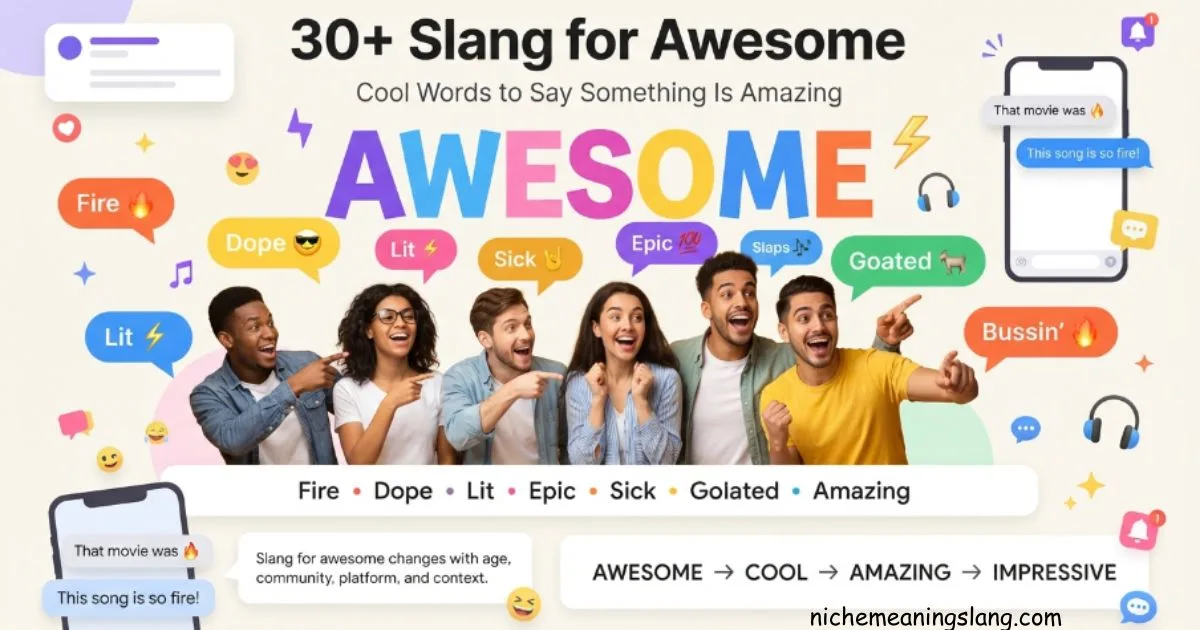
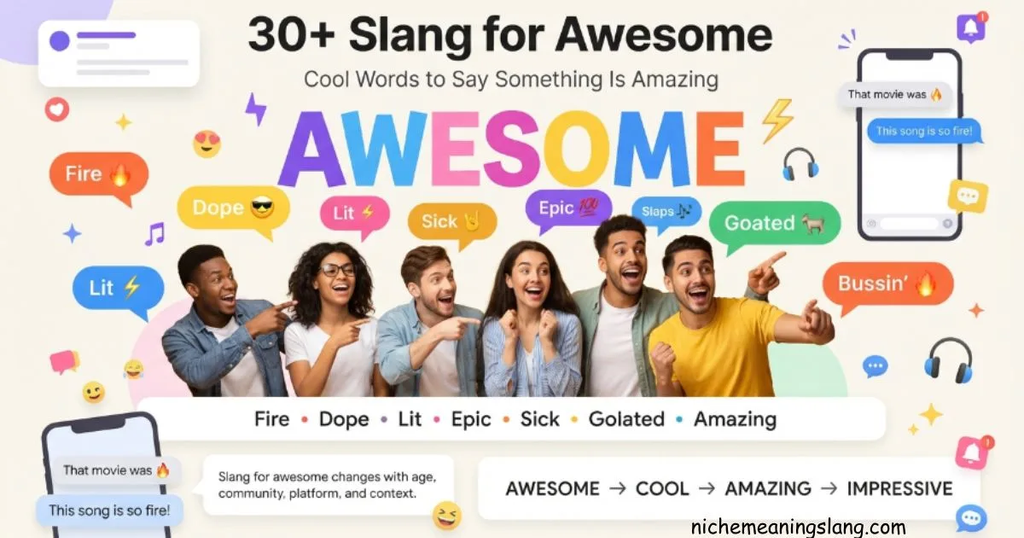
“Fire,” “goated,” “lit,” “dope,” and “slaps” are some of the most recognizable modern ways to say something is awesome. But slang for awesome isn’t one-size-fits-all: the best word depends on whether you’re praising food, music, a person, a game, an outfit, or an unforgettable moment. After researching current American slang usage, social-media language, and established dictionary definitions, one thing is clear: context matters more than simply choosing the newest word.
If you’ve ever read “that song slaps” or “this food is bussin” and wondered whether you were behind the times, you’re definitely not alone. Slang moves quickly through TikTok, gaming communities, texting, music, and everyday conversation. This guide separates the most useful terms by meaning and situation, so you can sound natural instead of forcing slang that doesn’t fit.
What Does Slang for Awesome Mean?
Slang for awesome refers to informal words or phrases used to express strong approval, excitement, admiration, or enthusiasm. Instead of saying something is “excellent,” “amazing,” or “really good,” someone might call it fire, goated, lit, dope, sick, elite, or iconic. The exact choice depends on context.
For example, a great song might “slap,” an incredible athlete can be “goated,” and an exceptionally good meal can be “bussin.” Merriam-Webster confirms that bussin’ means “extremely good” or “excellent,” while goated means considered the greatest of all time. These aren’t interchangeable in every sentence; each carries its own flavor and cultural context.
Gen Z Slang for Awesome
Gen Z slang for awesome commonly includes fire, goated, slaps, bussin, and elite, particularly across social media, texting, music, gaming, and fashion. “Fire” is broad, “goated” suggests exceptional status, “slaps” is strongly associated with music, and “bussin” is especially natural when praising food.
Current Slang for Awesome
Current slang for awesome includes words such as fire, goated, bussin, elite, slaps, cracked, iconic, and peak. There isn’t an official leaderboard for slang popularity, so “current” should mean actively recognizable and used rather than guaranteed to be the single trendiest word everywhere. Slang varies by community, age, platform, and region.
Outdated Slang for Awesome
Older expressions such as groovy, swell, far out, the cat’s pajamas, and the bomb are still understandable to many Americans, but they can sound deliberately retro today. “Rad” and “gnarly” have also survived through nostalgia and occasional revival. Using an old expression intentionally can be funny; using it seriously may make you sound dated.
Gen Alpha Slang for Awesome
Gen Alpha language overlaps heavily with gaming and short-form internet culture. Terms such as W, cracked, fire, and goated can communicate approval, winning, or exceptional skill. Because younger internet slang changes quickly, a term that feels extremely current in one online community may sound old or confusing somewhere else.
Slang for Awesome (as a Person)
When you’re describing an awesome person, the strongest choices are usually goated, GOAT, legend, icon, or cracked, depending on the situation. “Goated” suggests someone is among the very best, while “legend” is broader praise. For a highly skilled gamer, “cracked” can emphasize exceptional ability.
Where Does Slang for Awesome Come From?
Slang for awesome has never come from one single source. American informal language develops through music, youth culture, regional speech, sports, gaming, and increasingly social-media communities. Older expressions such as “cool” and “rad” have long histories, while newer terms can spread from relatively small communities into mainstream online conversation surprisingly quickly.
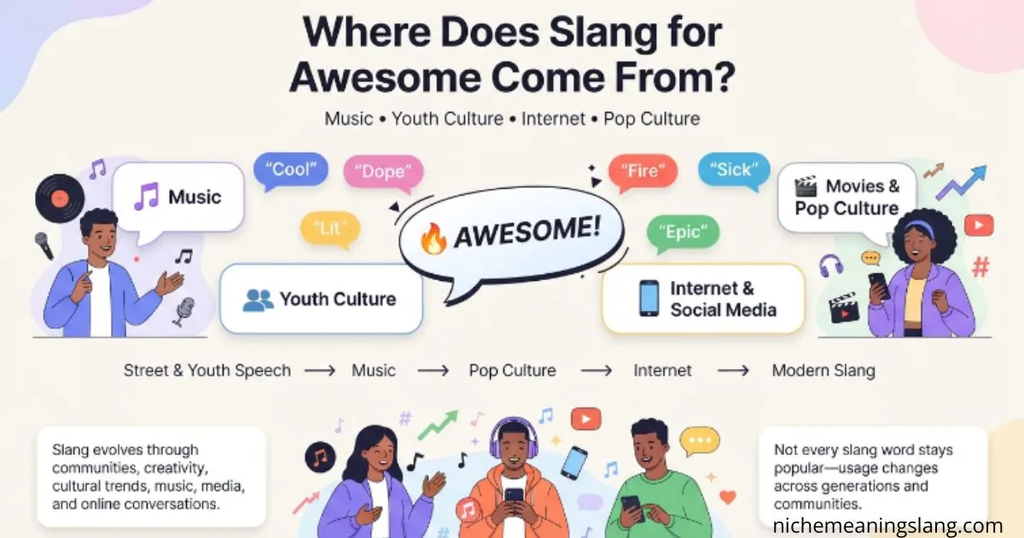
The history also explains why slang can feel generational. Hip-hop and youth culture helped popularize terms such as “dope,” while internet and gaming communities helped spread words such as “goated,” “cracked,” and “W.” TikTok and other social platforms then accelerated the process by turning short expressions into highly visible, repeatable reactions.
Fire
Fire is one of the most flexible modern slang choices for something excellent, impressive, stylish, or exciting. You can describe a song, outfit, performance, meal, video, or idea as “fire.” Its biggest advantage is versatility: unlike more specialized slang, it works across many casual situations without requiring much explanation.
Lit
Lit generally describes something exciting, energetic, or extremely fun. It fits parties, concerts, celebrations, gaming sessions, and lively events better than quiet achievements. “That party was lit” sounds natural, whereas using “lit” for every ordinary compliment can feel exaggerated. Its popularity has lasted, although its peak trendiness has faded somewhat.
Dope
Dope is a classic casual compliment meaning cool, impressive, stylish, or excellent. It works particularly well for clothing, sneakers, art, music, gadgets, and creative work. Compared with newer internet slang, it has more of an established, old-school feel, which can make it sound confident rather than trendy.
Sick
Sick can mean extremely cool or impressive in informal American English, especially when reacting to sports tricks, stunts, gaming plays, cars, or fashion. Context is essential because “sick” also literally means ill. “That skateboard trick was sick” clearly communicates admiration, while “he’s sick” could mean something entirely different.
Epic
Epic describes something unusually impressive, memorable, dramatic, or significant. It works particularly well for major achievements, adventures, performances, and moments that feel larger than ordinary. Unlike some highly online slang, “epic” is widely understood across age groups, making it one of the safer casual alternatives to “awesome.”
GOAT
GOAT stands for Greatest Of All Time and is used to praise someone or something considered exceptionally successful. It is especially common in sports, music, entertainment, and gaming. Merriam-Webster’s related form “goated” means considered the greatest of all time, with a first known use listed as 2017.
Slaps
Slaps is especially associated with music that sounds exceptionally good. “This song slaps” is a strong, enthusiastic compliment about a track or beat. Dictionary.com notes that the expression can also extend beyond music to other things considered excellent, while Merriam-Webster describes the contemporary slang sense as exhibiting excellence, especially of a song.
Bussin
Bussin’ is strongly associated with food and means extremely good, excellent, or delicious. “These wings are bussin” sounds natural in casual conversation, particularly online. Merriam-Webster classifies it as African American English slang and records its first known use as 2002. The word has since become much more visible through internet culture.
Solid
Solid is a calmer alternative to more intense praise. Calling something “solid” usually means it is reliably good, worthwhile, or well done without claiming it is the greatest thing you’ve ever experienced. It fits everyday conversation, work-related praise, performances, movies, products, and situations where you want approval without excessive hype.
Clutch
Clutch describes something that succeeds at exactly the right moment, especially under pressure. It is common in sports and gaming but can also work in everyday situations. Saying “that was clutch” praises the timing and usefulness of an action rather than simply saying that the action was awesome.
Legit
Legit can mean genuinely good, impressive, authentic, or trustworthy depending on context. It works across many casual situations because it does not belong exclusively to food, music, gaming, or fashion. “That restaurant is legit” can praise the quality, while “she’s a legit artist” emphasizes genuine ability.
Peak
Peak is internet-friendly praise for something representing an especially strong or ideal example of its category. You might hear “peak comedy,” “peak gaming,” or “this is peak internet.” It often carries a playful tone and works particularly well in memes, online commentary, fandom discussions, and social-media conversations.
Next-Level
Next-level describes something significantly better, more creative, more advanced, or more impressive than the ordinary standard. It is useful when “awesome” feels too weak but you don’t want highly specialized slang. “That design is next-level” works naturally for technology, art, cooking, fashion, business ideas, and creative projects.
How to Use Slang Naturally Without Sounding Awkward
The easiest way to use slang naturally is to match the word to the subject and the people you’re talking with. Use slaps for music, bussin primarily for food, goated for exceptional people or achievements, and fire when you want a broad compliment. A gaming chat allows more slang than a work email.
Avoid stacking several slang words together just to sound current. “Bro, this fire goated bussin elite thing is insane” sounds forced because the language is doing too much. One well-chosen expression usually feels more authentic than five trendy words packed into one sentence.
Common Slang Mistakes
One of the biggest mistakes is ignoring context. Calling every object “bussin” can sound unnatural because the term is strongly associated with food, while “slaps” has a particularly strong connection to music. Another common mistake is using outdated slang as though it were current. Good slang should fit both the situation and the audience.
Another issue is assuming every slang term has exactly the same strength. “Solid” is mild approval; “fire” is stronger enthusiasm; “goated” makes a much bigger claim. Choosing based on intensity makes your speech sound more natural and helps communicate exactly how impressed you are.
When NOT to Use It
Slang for awesome is best saved for casual conversations, texts, social media, gaming chats, and relaxed interactions with people who understand the vocabulary. Professional emails, resumes, academic papers, formal reports, and business communication generally benefit from clearer words such as excellent, impressive, outstanding, exceptional, or effective.
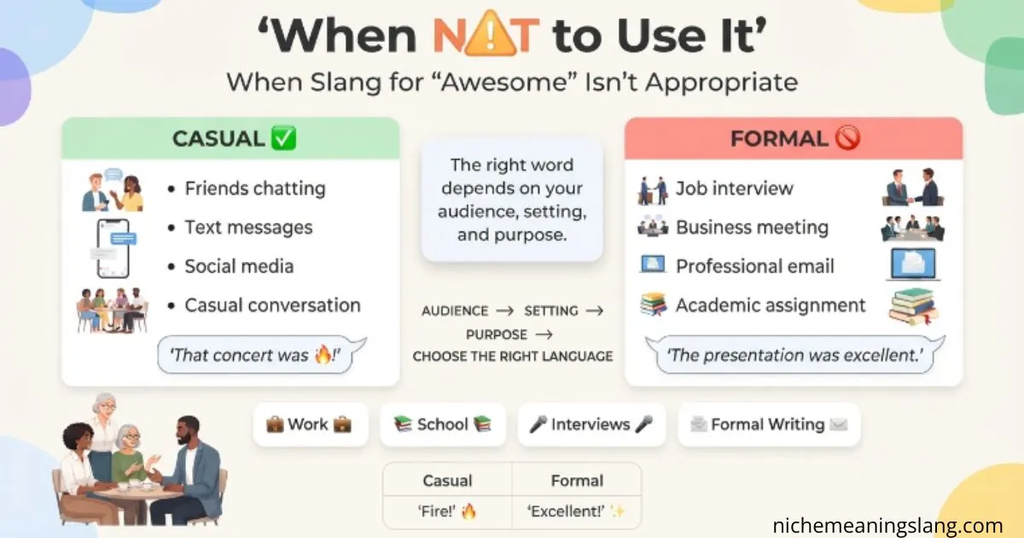
That doesn’t mean slang is “bad English.” Slang is a normal part of language and can communicate personality, humor, enthusiasm, and belonging. The real skill is knowing when to switch registers. You wouldn’t speak to your best friend exactly the same way you would write a formal job application.
Quick Slang for Awesome Cheat Sheet
| Slang | Best used for | Meaning / vibe |
| Fire | Music, fashion, food, ideas | Excellent, impressive |
| Goated | People, athletes, achievements | Among the greatest |
| Lit | Parties, events | Exciting, energetic |
| Dope | Style, art, gadgets | Cool, impressive |
| Sick | Tricks, sports, gaming | Extremely cool |
| Slaps | Music | Sounds extremely good |
| Bussin’ | Food | Extremely good/delicious |
| Elite | Skills, products, performance | Top-tier |
| Epic | Big moments | Huge, memorable |
| Solid | General praise | Reliably good |
| Clutch | Sports, gaming, timing | Perfectly timed |
| Legit | People, products, skills | Genuinely impressive |
| Peak | Memes, internet culture | The ultimate example |
| Next-level | Creativity, quality | Beyond ordinary |
Ultimately, the best slang for awesome isn’t necessarily the newest word on TikTok. It’s the word that fits the person, situation, platform, and tone. If you’re talking about a song, “slaps” is precise. If you’re praising food, “bussin’” is natural. If someone is genuinely among the best, “goated” carries much more weight than simply saying “cool.”
And if you’re unsure, fire remains one of the easiest broad compliments to understand in casual American English. The goal isn’t to sound like you’re chasing every trend; it’s to sound natural, enthusiastic, and appropriate for the conversation.
Conclusion
The best slang for awesome depends on the situation and the people you’re talking to. Words like fire, goated, lit, dope, slaps, and bussin’ can all express strong approval, but each has its own tone and context. If you want to sound natural, don’t force the latest trend—choose a word that genuinely fits what you’re describing. Whether you’re praising a song, delicious food, an amazing person, or an unforgettable experience, the right slang can make your reaction feel more fun, casual, and authentic.
FAQs
What slang word means “awesome” in 2026?
Common current choices include fire, goated, slaps, bussin, elite, epic, and peak, although the best term depends on what you’re describing. “Slaps” fits music, “bussin” is especially associated with food, and “goated” is strongest for exceptional people or achievements.
What is the most popular Gen Z slang for awesome?
Fire, goated, slaps, bussin, and elite are among the widely recognizable choices associated with current Gen Z and online slang. Usage varies by community, so no single word is universally preferred.
What is a slang word for amazing?
Good slang alternatives include fire, sick, dope, epic, goated, elite, unreal, and next-level. The best option depends on the situation: “sick” works well for an impressive trick, while “slaps” is more natural for music.
What does “fire” mean in slang?
In slang, fire means something is excellent, impressive, exciting, or highly appealing. It can describe music, food, clothing, performances, videos, ideas, and many other things.
What does “goated” mean?
Goated means considered one of the greatest of all time. It comes from GOAT, meaning “Greatest Of All Time.” Merriam-Webster lists “goated” as slang and gives its first known use as 2017.
What does “slaps” mean in slang?
“Slaps” means something is exceptionally good, especially music. “This song slaps” means the speaker thinks the song sounds excellent. The expression can also be extended to other things as enthusiastic praise.
What does “bussin” mean?
Bussin’ means extremely good or excellent and is especially common when describing delicious food. Merriam-Webster lists it as African American English slang and gives its first known use as 2002.
Is slang for awesome different online and offline?
Yes. Online communities can popularize terms much faster than ordinary conversation. Some expressions become mainstream, while others remain strongly associated with TikTok, gaming, fandoms, or specific communities.
Is slang for awesome unprofessional?
Generally, yes, in formal contexts. Words such as “fire,” “bussin,” and “goated” are better suited to casual communication. In professional writing, words such as excellent, impressive, outstanding, or exceptional are clearer and safer.
Can older slang for awesome become popular again?
Yes. Older expressions can return through nostalgia, memes, movies, music, or ironic internet usage. Words such as “rad,” “groovy,” and “the bomb” may still appear, although they often carry a deliberately retro tone.
Related Slang Words

Ryan Mitchell is a language enthusiast and writer who explores slang, modern expressions, and everyday language. At nichemeaningslang, he helps readers understand slang meanings, usage, and context in a simple and easy-to-follow way.