50+Chilean Slang Words, Meanings & Examples
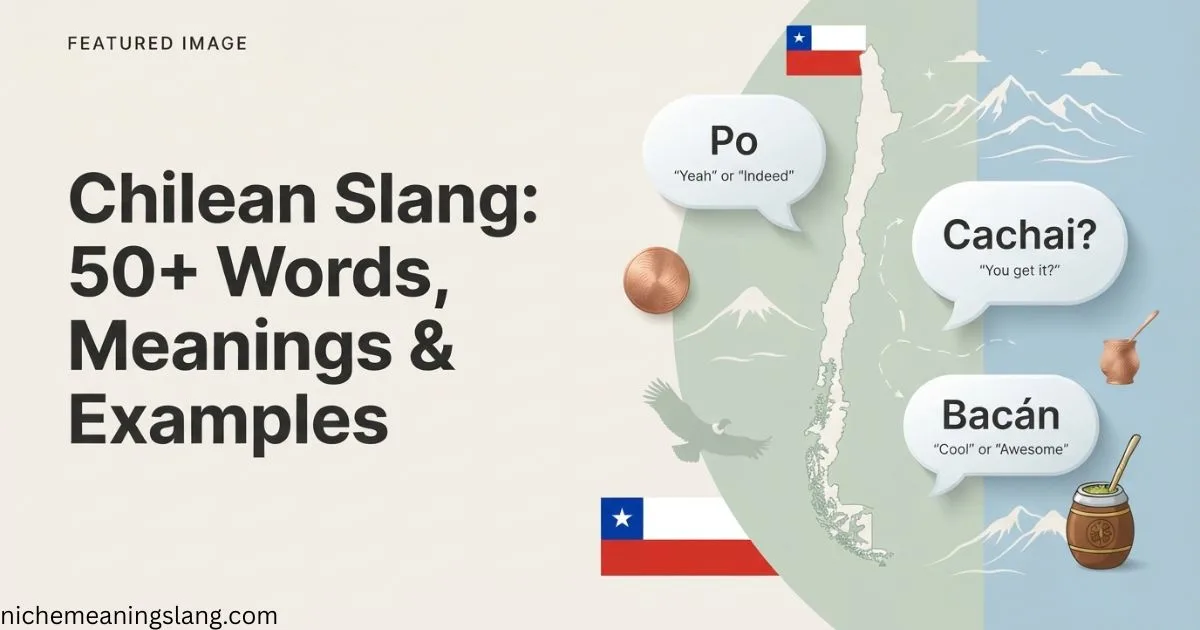
Chilean slang includes distinctive Spanish words and expressions such as cachai (you know?), po (an emphasis word), weón (dude or idiot), and bacán (awesome). These expressions, known as chilenismos, are common in everyday conversations, text messages, and social settings throughout Chile.
Learning Chilean slang helps you understand local humor, friendships, music, and everyday conversations more naturally. Chilean Spanish can sound fast to learners because speakers often shorten words, drop certain sounds, and use expressions that differ from textbook Spanish. This guide explains more than 50 Chilean slang words, their English meanings, and practical examples so you can recognize them and understand when they are appropriate.
Chilean Slang Words and Meanings
Chilean slang makes everyday Spanish expressive, informal, and strongly connected to local culture. Some words describe people or emotions, while others refer to relationships, money, parties, food, and daily routines. Their meanings can depend on context, pronunciation, and the relationship between speakers.
The following table introduces common Chilean slang terms with straightforward English meanings. Many are useful for visitors and Spanish learners, although some expressions are vulgar or best reserved for close friends.
| Chilean slang | English meaning |
| Cachai | You know? / Do you get it? |
| Po | Emphasis, similar to “of course” or “well” in some contexts |
| Weón / Hueón | Dude, friend, or idiot |
| Weá / Hueá | Thing, stuff, or situation; often vulgar |
| Bacán | Awesome, cool |
| Fome | Boring |
| Al tiro | Right away |
| Pololo | Boyfriend |
| Polola | Girlfriend |
| Pololear | To date someone |
| Carrete | Party |
| Carretear | To party |
| Pega | Work or job |
| Luca | One thousand Chilean pesos |
| Gamba | One hundred Chilean pesos in traditional slang |
| Cabro | Boy, guy, or young person |
| Cabra | Girl or young woman |
| Gallo | Guy or fellow |
| Galla | Woman or girl |
| Cuático | Intense, wild, or unbelievable |
| Qué lata | What a drag |
| Lata | Boredom or a nuisance |
| La raja | Excellent; very vulgar in origin |
| Filete | Excellent or top-quality |
| Penca | Lousy, disappointing |
| Caleta | A lot or plenty |
| Cacho | Problem or hassle |
| Atado | Problem, complication, or drama |
| Cahuín | Gossip or messy rumor |
| Copucha | Gossip or rumor |
| Copete | Alcoholic drinks |
| Chela | Beer |
| Curado | Drunk |
| Caña | Hangover |
| Mina | Woman; informal and context-dependent |
| Flaite | A socially loaded label for someone perceived as rough or streetwise |
| Cuico | Wealthy or upper-class person; can be critical |
| Choro | Tough, bold, or cool, depending on context |
| Filo | Never mind; forget it |
| Ya | Okay, enough, or now, depending on context |
| Sí po | Yes, of course |
| No po | No, of course not |
| Al lote | Carelessly, messily, or without much structure |
| Achuntar | To guess correctly or get something right |
| Cachar | To understand, notice, or get something |
| Caleta de | A lot of |
| Pasarlo chancho | To have a great time |
| Andar pato | To be broke |
| Qué bacán | How awesome |
| La micro | City bus |
| Paradero | Bus stop |
| Depa | Apartment |
| Guata | Belly or stomach |
| Cuestión | Thing, matter, or situation |
| Cachureos | Odds and ends or miscellaneous stuff |
| Arrendar | To rent |
| La once | An afternoon or early-evening tea-and-snack meal |
These meanings are based on Chilean Spanish guides and dictionaries; some terms have regional, generational, or situational variations.
1. Cachai
Cachai means “you know?”, “do you get it?”, or “understand?” It is one of the most recognizable features of informal Chilean Spanish and often appears at the end of a sentence. It comes from cachar, a verb meaning to understand or catch on to something.
Example: “Está lejos, ¿cachai?”
English: “It’s far away, you know?”
You may hear cachai repeatedly in casual conversation. It helps speakers check whether someone is following the conversation, although it can also work as a conversational filler.
2. Po
Po is a very common Chilean conversational particle derived from pues. It adds emphasis, familiarity, or insistence to a statement. Its exact English equivalent changes with the sentence, so it is often better understood through examples than translated as one fixed word.
Examples:
- “Sí po.” “Yes, of course.”
- “Ya po.” “Come on” or “all right.”
- “No po.” “No, of course not.”
Po is especially common in informal Chilean speech. You can recognize it easily, but using it naturally takes practice because its tone depends on the situation.
3. Weón and Weá
Weón, also written hueón or wn in informal messages, can mean “dude,” “friend,” or “idiot.” The related word weá can mean “thing,” “stuff,” or a vague situation. Both are highly informal, and weá can be vulgar.
Examples:
- “Hola, weón.” “Hey, dude.”
- “¿Qué es esa weá?” “What is that thing?”
- “No seai weón.” “Don’t be an idiot.”
These words are common in casual Chilean speech, but they can offend people when used with the wrong tone or in formal settings. If you are learning Spanish, it is safer to understand them before trying them yourself.
4. Bacán
Bacán means “awesome,” “cool,” or “great.” It is a useful positive expression for describing a fun experience, an impressive person, or something you really like.
Examples:
- “La película estuvo bacán.” “The movie was awesome.”
- “¡Qué bacán!” “How cool!”
- “Tu idea está bacán.” “Your idea is great.”
Unlike some Chilean slang expressions, bacán is generally friendly and easy to understand from context. It is a useful word to recognize when talking about music, food, travel, or social plans.
5. Fome
Fome means “boring,” “dull,” or “not fun.” Chileans use it to describe an event, a movie, an activity, or a situation that feels disappointing.
Examples:
- “La clase estuvo fome.” “The class was boring.”
- “Qué fome.” “How boring.”
- “La fiesta estuvo súper fome.” “The party was really boring.”
This expression is especially useful because it communicates a negative opinion without necessarily sounding as strong as an insult. Tone still matters, particularly if you use it to describe someone’s plans or work.
6. Al Tiro
Al tiro means “right away,” “immediately,” or “straightaway.” It is one of the most useful everyday Chilean expressions because it appears in conversations about meeting people, completing tasks, and making plans.
Examples:
- “Voy al tiro.” “I’ll be right there.”
- “Hazlo al tiro.” “Do it right away.”
- “Te llamo al tiro.” “I’ll call you in a moment.”
You may also see it written as altiro. Both spellings are used, and the intended meaning is usually clear from context.
7. Pololo, Polola, and Pololear
In Chile, pololo means boyfriend, polola means girlfriend, and pololear means to date someone or be in a romantic relationship. These are important relationship words because their everyday usage differs from what learners may hear in other Spanish-speaking countries.
Examples:
- “Él es mi pololo.” “He is my boyfriend.”
- “Ella es mi polola.” “She is my girlfriend.”
- “Estamos pololeando.” “We’re dating.”
If you hear Chileans discussing their partners, these words may come up naturally. Remember that novio and novia are also understood, but pololo and polola are particularly associated with Chilean Spanish.
8. Carrete and Carretear
Carrete means “party,” while carretear means “to party.” These words commonly appear when people discuss weekend plans, celebrations, birthdays, and nights out.
Examples:
- “Hay un carrete el sábado.” “There’s a party on Saturday.”
- “Vamos a carretear.” “Let’s go party.”
- “El carrete estuvo bacán.” “The party was awesome.”
Carrete is a good example of how Chilean Spanish turns everyday social activities into distinctive local vocabulary. You may also encounter related words for drinks and the morning after a night out.
9. Pega and Luca
Pega means “work” or “job,” while luca traditionally refers to one thousand Chilean pesos. These terms are helpful when following conversations about employment, salaries, shopping, or money.
Examples:
- “Tengo mucha pega.” “I have a lot of work.”
- “Estoy buscando pega.” “I’m looking for a job.”
- “Cuesta diez lucas.” “It costs ten thousand pesos.”
Because prices change, luca is a unit of informal currency slang rather than a fixed value in another currency. You will hear these words in ordinary conversations about daily life.
10. Cuático, Qué Lata, and Penca
These expressions help describe reactions and experiences. Cuático can mean intense, extreme, strange, or unbelievable. Qué lata expresses annoyance or disappointment, while penca means lousy or disappointing.
Examples:
- “Qué cuático lo que pasó.” “What happened was intense.”
- “Qué lata tener que esperar.” “What a drag having to wait.”
- “El servicio estuvo penca.” “The service was lousy.”
Their tone depends on context. Cuático may describe something impressive or unsettling, while lata and penca usually communicate dissatisfaction.
11. Cahuín, Copucha, and Cachar
Cahuín and copucha refer to gossip, rumors, or stories circulating among people. Cachar means to understand, notice, or catch on to something.
Examples:
- “Hay un cahuín en la oficina.” “There’s gossip at the office.”
- “No me contís copuchas.” “Don’t tell me gossip.”
- “Ahora caché.” “Now I get it.”
These words are particularly useful for understanding casual conversations and stories about what happened between friends or coworkers. As with many slang expressions, the exact usage can vary by speaker and setting.
12. Chilean Slang for Everyday Life
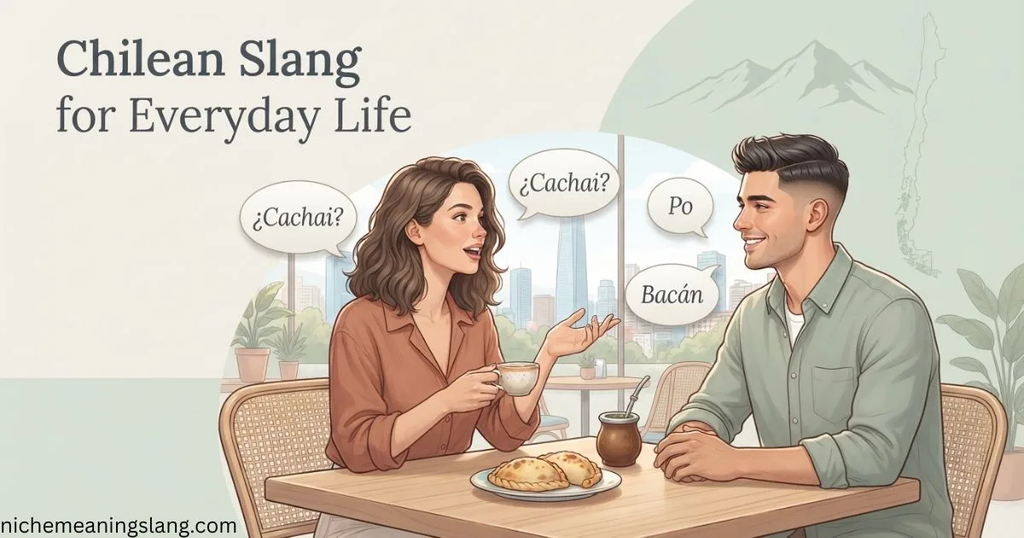
Many chilenismos are not insults or trendy expressions. They are ordinary vocabulary for transportation, food, homes, and daily routines.
- La micro: city bus.
- Paradero: bus stop.
- Depa: apartment.
- Guata: belly or stomach.
- La once: an afternoon or early-evening meal involving tea and snacks.
- Cachureos: miscellaneous objects or odds and ends.
- Arrendar: to rent.
- Cuestión: a thing, matter, or situation.
For example, “Voy a tomar once” means that someone is going to have the Chilean-style tea-and-snack meal. Learning these words can help you understand local routines as well as informal conversations.
13. How to Use Chilean Slang Naturally
The best way to learn Chilean slang is to listen to how people use it rather than memorizing translations alone. Watch Chilean interviews, listen to local podcasts, and notice how words such as po, cachai, and bacán change the tone of a sentence.
Start with friendly expressions such as bacán, al tiro, and fome. Be more careful with weón, weá, and stronger expressions because they can be vulgar or insulting. Formal conversations, job interviews, and interactions with strangers are generally not the best places to experiment with slang.
Conclusion
Chilean slang gives Spanish a distinctive local character. Expressions such as cachai, po, weón, bacán, fome, al tiro, pololo, and carrete help people communicate naturally in everyday situations, from making plans to describing emotions and relationships.
For Spanish learners, the key is understanding context, tone, and cultural differences. Start by recognizing common words, listen to how Chileans use them, and practice the friendlier expressions first. With time, these chilenismos will become easier to understand in conversations, entertainment, and social media.
FAQs
What is the most common Chilean slang word?
Cachai, po, and weón are among the most recognizable Chilean slang expressions. Their meanings depend on context: cachai asks whether someone understands, po adds emphasis, and weón can mean dude or idiot.
What does “cachai” mean in Chile?
Cachai means “you know?”, “do you get it?”, or “understand?” It often appears at the end of a sentence in informal Chilean Spanish.
What does “weón” mean?
Weón can mean “dude,” “friend,” or “idiot.” The intended meaning depends on the speaker’s tone, the relationship between speakers, and the situation. It can be vulgar or offensive.
What does “po” mean in Chilean Spanish?
Po is a conversational particle derived from pues. It adds emphasis or familiarity and appears in expressions such as sí po, no po, and ya po.
What does “bacán” mean?
Bacán means “awesome,” “cool,” or “great.” It is commonly used to praise something enjoyable, impressive, or exciting.
What does “fome” mean?
Fome means “boring,” “dull,” or “not fun.” It is used for activities, events, movies, and other disappointing experiences.
What does “al tiro” mean?
Al tiro means “right away” or “immediately.” For example, voy al tiro means “I’ll be right there.”
What does “pololo” mean in Chile?
Pololo means boyfriend, polola means girlfriend, and pololear means to date or be in a romantic relationship.
Is Chilean Spanish different from Mexican Spanish?
Yes. Both are varieties of Spanish, but they differ in pronunciation, vocabulary, local expressions, and some grammatical habits. Chilean Spanish is particularly known for expressions such as po, cachai, and weón.
Is Chilean slang appropriate in formal situations?
Some expressions are harmless in casual settings, but many slang words are too informal for professional communication. Use standard Spanish with strangers or in formal situations until you understand the local conventions.
Related Slang Words

Ryan Mitchell is a language enthusiast and writer who explores slang, modern expressions, and everyday language. At nichemeaningslang, he helps readers understand slang meanings, usage, and context in a simple and easy-to-follow way.