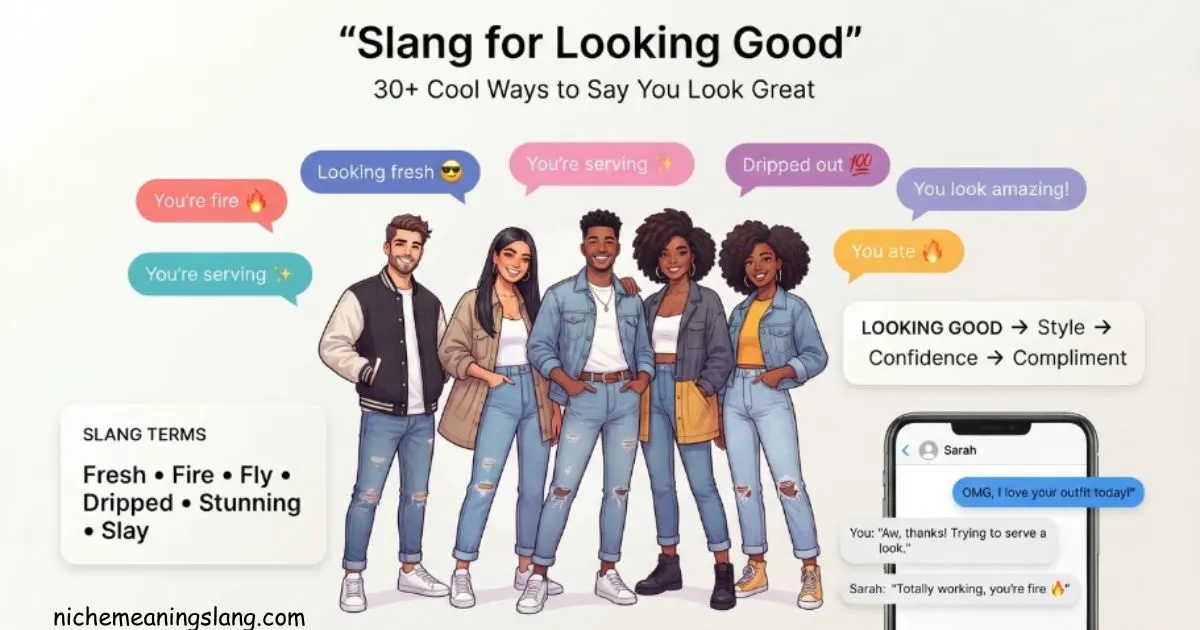
Slang for Looking Good The Complete Modern Guide to Complimenting Style and Appearance
Slang for looking good usually means a casual, expressive way to say someone looks attractive, stylish, confident, or exceptionally well put together. Words such as fire, drip, slay, snatched, clean, fresh, fine, and serving can all work, but they do not mean exactly the same thing.
After years of studying everyday language and how internet expressions change, I’ve found the hardest part isn’t learning the vocabulary it’s knowing the tone. A word that sounds natural in a TikTok comment can feel strange in a workplace conversation. This guide explains the difference between fashion slang, attractiveness slang, Gen Z expressions, flirty compliments, and older terms so you can choose naturally.
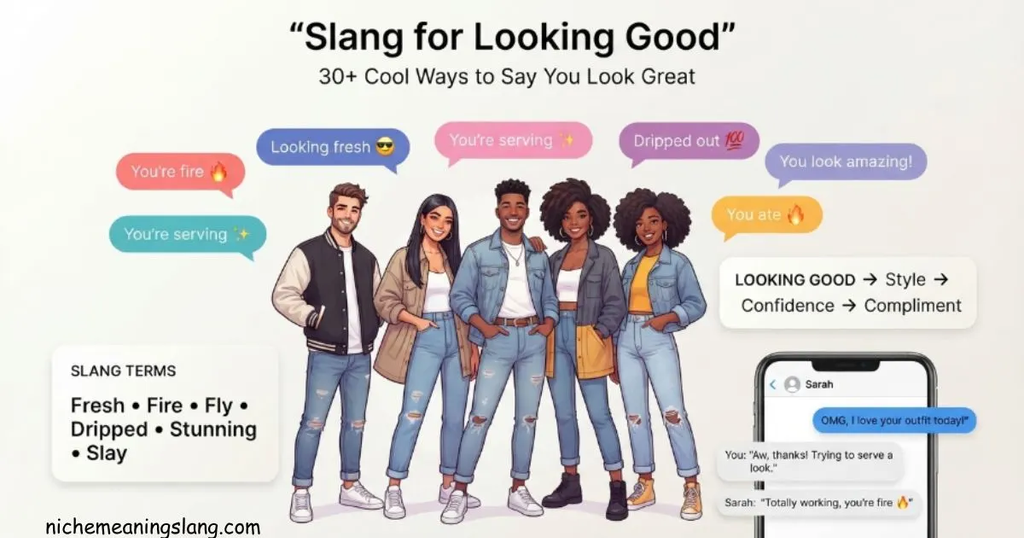
Slang for Looking Good The Complete Modern Guide to Complimenting Style and Appearance
Popular Words That Signal Someone Looks Amazing
If you want a quick compliment, fire means extremely impressive or attractive, while drip focuses more on fashion and clothing. Slay suggests someone looks amazing with confidence, and snatched usually points toward a flawless outfit, makeup, or appearance. Fine is more directly about physical attractiveness.
| Slang | What it usually means | Best use |
| Fire | Extremely impressive or attractive | Outfit, photo, overall look |
| Drip | Strong fashion sense | Clothes, shoes, accessories |
| Slay | Looking or performing exceptionally well | Overall appearance |
| Snatched | Flawless or perfectly styled | Outfit, makeup, appearance |
| Serving | Presenting a striking look confidently | Fashion, photos, events |
| Clean | Sharp, neat, polished | Outfit and grooming |
| Fresh | Crisp, stylish, newly put together | Clothes, haircut, sneakers |
| Fine | Very attractive | Person, especially as a direct compliment |
| Sharp | Smart and polished | Suits and refined clothing |
| Dapper | Elegant and stylish | Traditionally men’s fashion |
Slang Compared by Meaning and Best Use
The biggest mistake is treating every compliment as interchangeable. Drip is about someone’s fashion identity, while fit normally refers to a particular outfit. Clean suggests understated polish; fine focuses more directly on attractiveness. Slay can describe appearance, confidence, performance, or the way someone carries themselves.
For example, imagine someone arrives wearing a carefully coordinated jacket, sneakers, and accessories. Saying “That drip is crazy” praises the styling. Saying “That fit is fire” praises that particular outfit. Saying “You look fine” shifts attention toward the person rather than the clothes.
Regional and Cultural Roots of Appearance Slang
Appearance slang has deeper roots than TikTok. Drip and fire have strong connections with hip-hop and style culture, while expressions such as slay and serving have histories connected with Black American and ballroom communities. Their later popularity on social media does not erase those origins.
That history matters because slang can carry cultural meaning beyond its dictionary definition. Understanding where expressions developed helps you use them respectfully rather than treating every viral phrase as a disposable internet trend.
Fashion Focused Slang Versus Attractiveness Focused Slang
A useful shortcut is to ask yourself: Am I complimenting the clothes, or am I complimenting the person? Fashion-focused words include drip, clean, fresh, fit, and dripped out. Attractiveness-focused expressions include fine, snack, gorgeous, stunning, and head turner.
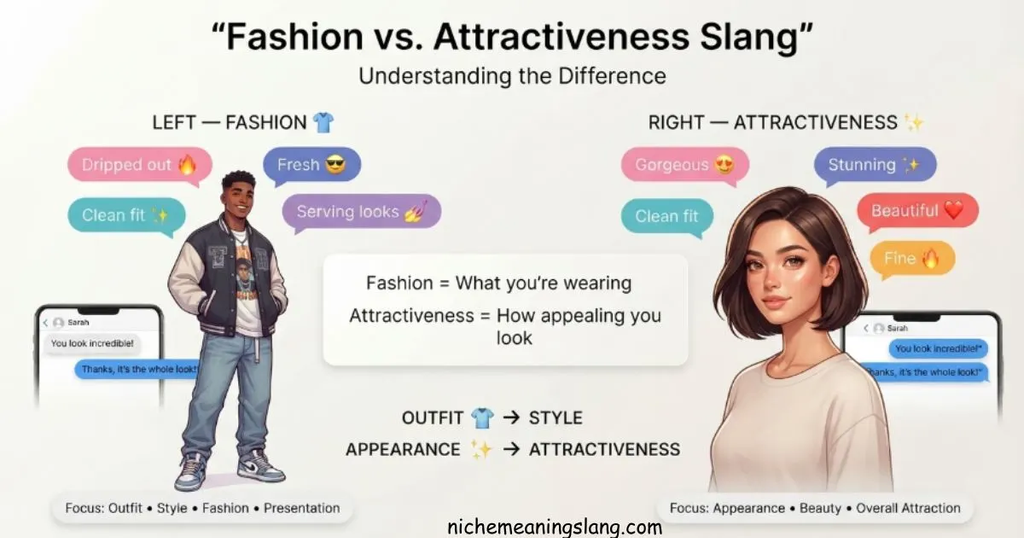
This distinction prevents awkward compliments. If your friend’s sneakers and jacket are the standout feature, “the fit is fire” makes sense. If you’re directly expressing attraction, “you look fine” carries a much more personal meaning.
Texting and Social Media Ways to Say Someone Looks Good
Short-form communication is where appearance slang really shines. A comment such as “That fit is fire”, “You’re serving”, “Drip check passed,” or “Your aura is unreal” communicates excitement without sounding like a formal compliment. These expressions are particularly natural in comments, captions, DMs, and group chats.
For a friend, try “You’re looking fresh.” For a fashion-focused post, “The drip is immaculate” works better. For a playful compliment, “You ate that look” is stronger. The best choice depends less on memorizing slang and more on matching the language already being used around you.
Compliments for Different Audiences and Occasions
Context changes everything. With close friends, expressions such as “you ate,” “that fit is fire,” “you’re serving,” or “you’ve got drip” can feel completely natural. With a crush, “you look fine” or “absolute head turner” sounds more direct and potentially flirtatious.
The safest rule is simple: match the relationship. A phrase that makes your best friend laugh may feel too personal coming from a coworker. Modern appearance slang is flexible, but the social relationship determines whether the compliment feels funny, friendly, flattering, or uncomfortable.
How Slang Changes Across Generations
Slang changes because language follows culture. Expressions such as fly, fresh, and on point remain recognizable, while newer audiences often use drip, snatched, serving, aura, and ate. Older expressions do not necessarily disappear; they can become nostalgic, regional, ironic, or associated with a particular generation.
This explains why someone can understand a slang word perfectly while rarely using it. “On fleek,” for example, became strongly associated with the mid-2010s and is now often used humorously or nostalgically. Meanwhile, newer terms can rise rapidly through TikTok and other online communities.
The Psychology Behind a Good Compliment
A good compliment feels specific. “You look nice” is positive but broad; “That jacket is fire” tells someone exactly what caught your attention. Slang can make compliments feel more energetic because it communicates not only approval but also enthusiasm, familiarity, and social tone.
That’s why the strongest compliment isn’t necessarily the trendiest word. It is the one that accurately captures what you noticed. Calling a minimalist outfit “clean” may feel more genuine than forcing “drip” into the conversation simply because it is currently popular.
When Not to Use Slang
Slang works best when the setting is informal. Text messages, friendships, social media, casual parties, and online communities are natural environments. Professional emails, interviews, client meetings, academic writing, and formal introductions generally call for clearer standard language instead.
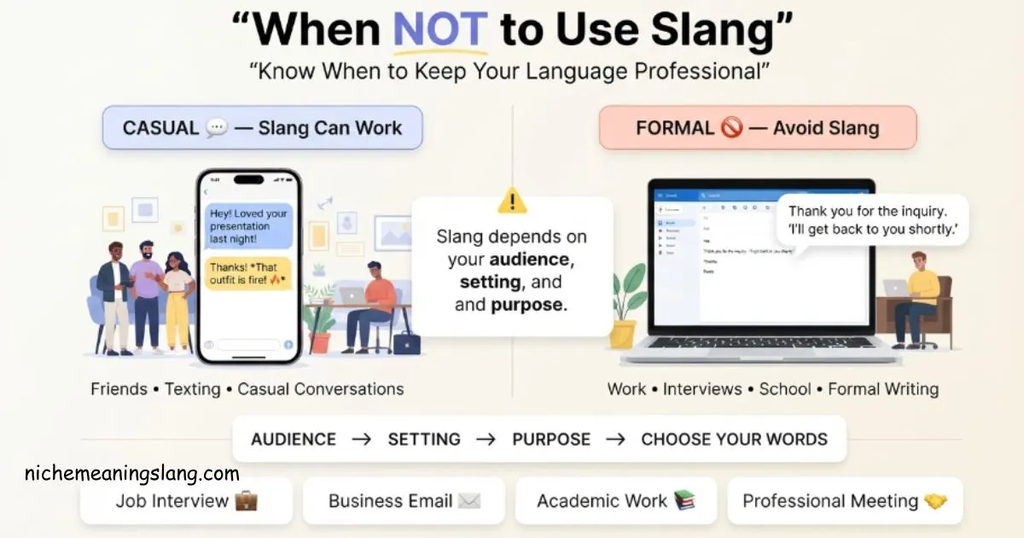
There is also a difference between understanding slang and performing it. If a phrase feels unnatural in your normal vocabulary, you don’t need to force it. A sincere “You look really sharp today” can land much better than stacking five trending expressions into one sentence.
What is the most popular slang for looking good?
Common current expressions include fire, drip, slay, snatched, serving, and fine. The best choice depends on what you’re complimenting. Drip emphasizes fashion, fire emphasizes impressive style or appearance, while fine is more directly about attractiveness.
What is Gen Z slang for looking amazing?
Common Gen Z-associated expressions include slay, ate, serving, snatched, aura, and drip. These words are especially visible across TikTok, Instagram, memes, and group chats, although their popularity can shift quickly as online language evolves.
What is a good text to say someone looks good?
For a casual friend, try “That fit is fire,” “You’re looking fresh,” or “You ate that look.” For a more direct or flirty message, “You look fine” is clearer. Choose one expression that matches your relationship instead of combining several slang terms.
A simple rule for choosing the right compliment
Think about three things: what looks good, who you’re talking to, and how direct you want to be. Clothes suggest drip, clean, fresh, or fire. A flawless overall look can invite slay, serving, or snatched. Direct attraction leans toward fine or head turner.
The goal isn’t to sound like you memorized an internet slang dictionary. The goal is to make the compliment feel like something you would actually say. One well-chosen expression usually sounds more natural than a sentence packed with trendy vocabulary.
Conclusion
The strongest approach to slang for looking good is not memorizing the biggest possible list. It is understanding the difference between fashion, attractiveness, confidence, and overall presentation. Drip praises style, fire signals something impressive, slay celebrates an exceptional look, clean suggests polished simplicity, and fine is a more direct statement of attraction.
Slang will continue changing as TikTok, Instagram, music, memes, and younger communities introduce new expressions. The most natural compliment is therefore the one that fits the person, relationship, setting, and moment. Use slang as a way to add personality not as a substitute for genuine observation.
FAQs
What slang means someone looks very attractive?
Fire, fine, snatched, and slay can all communicate that someone looks exceptionally good, although fine is the most direct expression of physical attractiveness. Fire can describe an outfit, photo, or overall appearance.
Is “drip” still popular in 2026?
Yes. Current search results continue to treat drip as an active appearance and fashion slang term, particularly for standout clothing, sneakers, accessories, and personal style.
Can slang be used in professional writing?
Generally, slang is better avoided in professional writing. Standard expressions such as “you look sharp,” “you look polished,” or “that outfit looks great” are safer for workplaces and formal situations.
Why does appearance slang change so quickly?
Social media accelerates language change. TikTok, Instagram, memes, music communities, and online conversations can move a phrase from a niche community into mainstream usage extremely quickly.
Are older slang terms still used?
Yes, although their tone can change. Words such as fly, fresh, and on point remain recognizable, while expressions such as on fleek are more likely to sound nostalgic or ironic to many modern speakers
Related Slang Words

Ryan Mitchell is a language enthusiast and writer who explores slang, modern expressions, and everyday language. At nichemeaningslang, he helps readers understand slang meanings, usage, and context in a simple and easy-to-follow way.