2021 Slang Meanings, Examples & Gen Z Internet Language
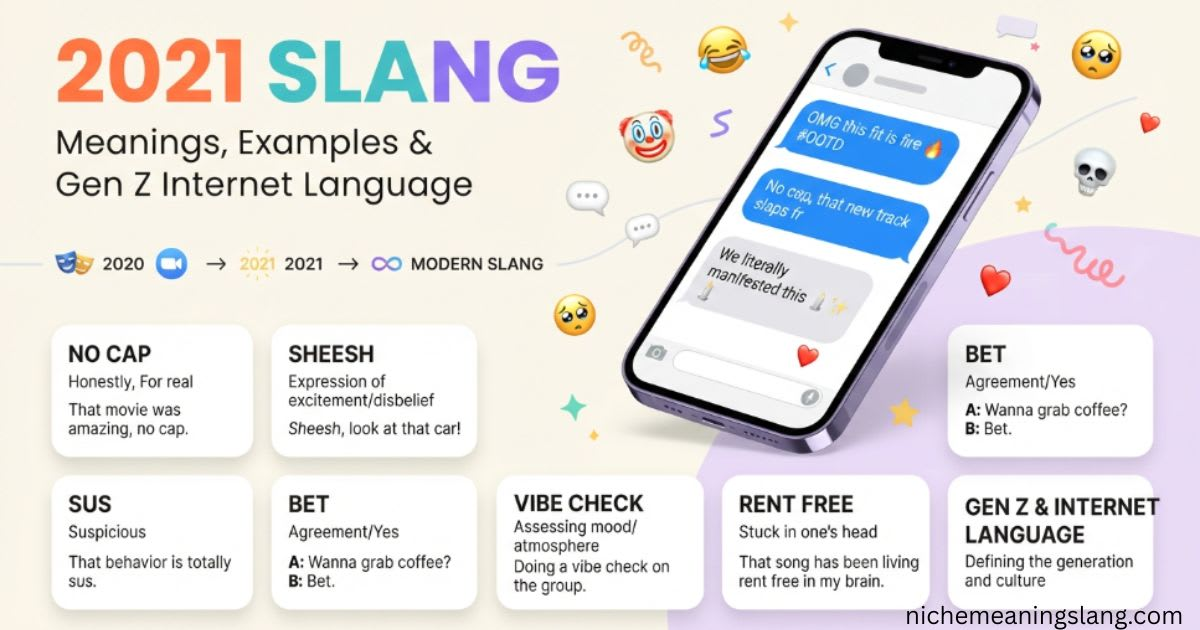
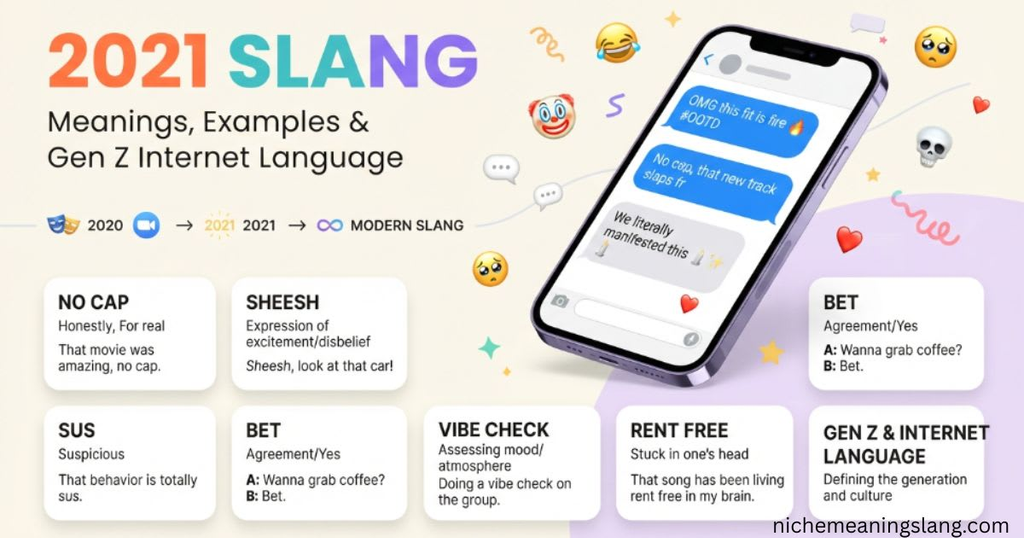
2021 slang was a fast-moving mix of Gen Z vocabulary, TikTok trends, gaming language, memes, and older expressions suddenly going mainstream. If you remember seeing “no cap,” “bussin,” “sus,” or “sheesh” everywhere, you were watching internet language change in real time.
After years of writing about online language, one pattern is especially clear: people rarely search slang because they simply want a dictionary definition. They want the context, tone, origin, example, and social meaning. This guide connects those pieces so parents, creators, marketers, and curious readers can understand 2021 slang without sounding forced.
The First Time I Revisited My 2021 Slang
Looking back at 2021 slang feels like opening an old group chat: familiar, slightly embarrassing, and surprisingly nostalgic. Words like no cap, bussin, sus, bet, and drip moved between TikTok, gaming chats, Instagram captions, and everyday conversations. Reddit discussions from the period show how strongly these expressions had entered real online conversation.
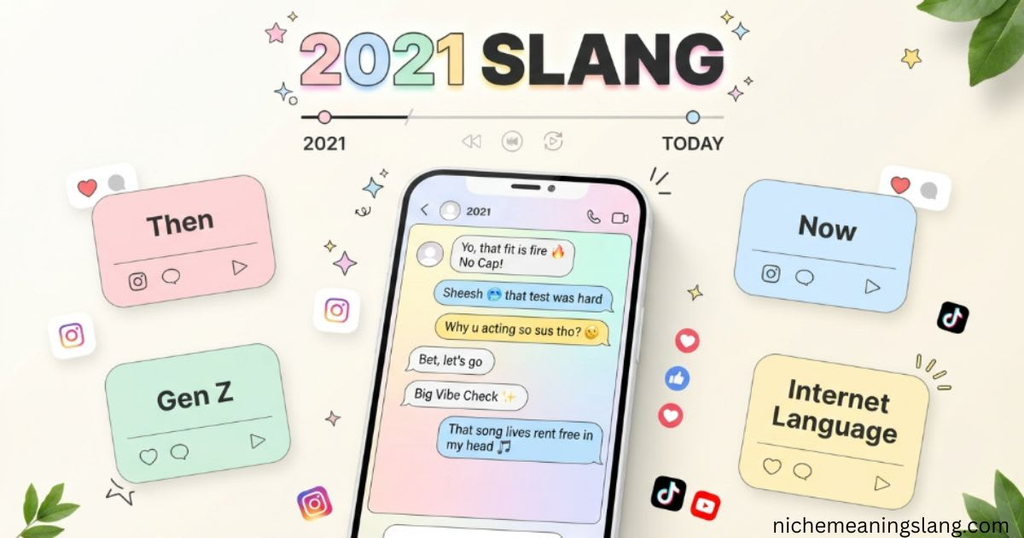
The interesting part is that not every popular 2021 expression was actually invented in 2021. Some had older histories in Black American English, LGBTQ+ communities, drag culture, hip-hop, gaming, or earlier internet communities. That distinction matters because 2021 slang was often the year a term became highly visible, not necessarily the year it was born.
Bussin
Bussin means extremely good, especially when talking about food. A natural example is, “These wings are bussin.” The term became strongly associated with TikTok food content in 2021, but its linguistic roots predate that viral moment. Its semantic neighborhood includes food, delicious, amazing, TikTok, AAVE, and internet slang.
Cap
Cap means a lie, exaggeration, or dishonest claim. Saying “That’s cap” is basically calling someone out, while “You’re capping” means they are not telling the truth. The expression became highly recognizable through Gen Z slang, texting, social media, honesty, exaggeration, and online arguments.
No Cap
No cap means “no lie,” “seriously,” or “I’m telling the truth.” Someone might say, “That restaurant is amazing, no cap.” The phrase became strongly associated with Gen Z communication, hip-hop influence, social media, honesty, and casual conversation, although Dictionary.com notes that its roots are considerably older than Gen Z.
Bet
Bet is a compact way to express agreement, approval, or willingness: “Meet me at eight?” “Bet.” Depending on context, it can also communicate confidence or challenge. In the 2021 slang ecosystem, it sat alongside no cap, facts, texting, agreement, approval, and Black American slang.
Sus
Sus is short for suspicious or suspect. It became especially visible through Among Us, where players used the word to describe someone behaving suspiciously. By 2021, the gaming expression had escaped the game and entered everyday texting, memes, TikTok comments, Discord conversations, and casual speech.
Drip
Drip describes impressive, fashionable style, especially clothing, accessories, or an overall look. Someone might say, “Your drip is crazy,” as a compliment. Its semantic neighborhood includes fashion, outfit, jewelry, style, streetwear, confidence, and Gen Z vocabulary, making it one of the more visually driven expressions in 2021 slang.
Slaps
Slaps means something is excellent or extremely enjoyable, particularly music and sometimes food. “This song slaps” became a familiar compliment. The term has a much longer history than its 2021 popularity, showing an important feature of internet slang: older expressions can be revived, repackaged, and amplified by younger communities.
Hits Different
Hits different describes something that feels unusually powerful, emotional, satisfying, or meaningful. “That song hits different at midnight” suggests an emotional experience rather than simple quality. Its semantic field includes feelings, music, nostalgia, TikTok, Twitter, emotional reactions, and Gen Z expression.
Mid
Mid means average, unimpressive, or disappointing. Calling a movie “mid” is a casual way of saying it failed to impress you. Unlike some extremely short-lived viral expressions, mid has demonstrated staying power because it provides a convenient evaluation word for movies, food, music, games, products, and everyday opinions.
Sheesh
Sheesh is an expressive reaction showing amazement, admiration, surprise, or disbelief. It could appear under a dramatic outfit, an impressive car, a huge accomplishment, or an unexpected moment. Reddit discussions from 2021 show how exaggerated spellings such as “sheeeeeesh” became part of the playful online style.
Why 2021 Slang Even Matters Now
The value of 2021 slang is bigger than nostalgia. That year shows how TikTok, Twitter, Instagram, gaming communities, memes, and creators could accelerate language at remarkable speed. TikTok itself described its community as being at the forefront of developing new terminology, idioms, and slang.
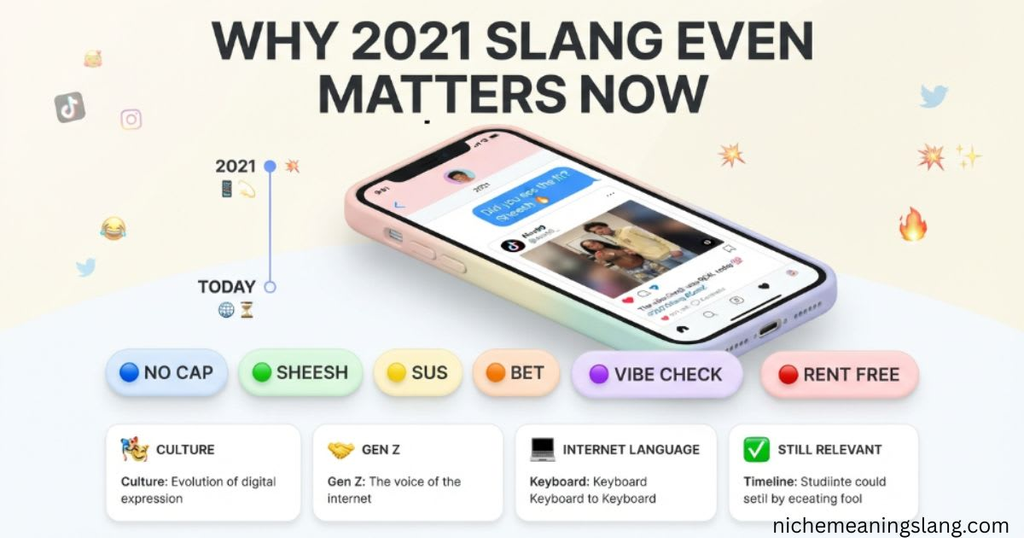
It also teaches an important lesson about language: popularity is not the same as origin. A phrase may become mainstream on TikTok while having much older roots in another community. Understanding that distinction makes your use of Gen Z slang, internet vocabulary, AAVE-influenced expressions, memes, and social media language more accurate and respectful.
Rent Free
Rent free means something stays in your mind even when you wish it would leave. “That scene has been living rent free in my head” is a playful way to describe persistent thoughts. The expression fits naturally with memes, nostalgia, annoying moments, celebrity moments, jokes, and online conversations.
Ghosting
Ghosting means suddenly stopping communication without explanation, especially in texting or dating. Someone might say, “We were talking every day, then they ghosted me.” It belongs to the broader semantic field of relationships, messaging, social media, communication, dating, rejection, and online behavior, and it remained recognizable beyond 2021.
Main Character
Main character describes someone acting as though they are the central figure in their own story, often confidently or dramatically. TikTok helped popularize the related idea of main character energy, connecting the phrase with self-expression, confidence, lifestyle videos, personal identity, and social-media storytelling.
Glow Up
Glow up means a noticeable positive transformation, often involving appearance, confidence, lifestyle, or personal development. “She had a serious glow up” can describe much more than physical beauty. In 2021 slang, it connected naturally with fashion, beauty, confidence, transformation videos, social media, and personal growth.
Lowkey
Lowkey signals something subtle, private, restrained, or not openly admitted. “I lowkey love that song” means the speaker likes it but presents the feeling casually. The expression commonly works with feelings, opinions, crushes, preferences, texting, understatement, and casual conversation. Dictionary.com distinguishes low-key from high-key as contrasting degrees of openness.
Highkey
Highkey is essentially the more openly expressed counterpart to lowkey. “I highkey want pizza tonight” communicates a strong or obvious desire. The term belongs to the semantic network of emphasis, feelings, opinions, Gen Z communication, texting, social media, lowkey, and highkey, where context determines how strongly the speaker intends the statement.
Flex
Flex means showing off an achievement, possession, appearance, money, skill, or status. “Posting that new car is a flex” describes the display rather than merely owning the car. In 2021 slang, flex, drip, style, status, social media, confidence, and showing off frequently appeared in overlapping conversations.
Big Mood
Big mood expresses strong identification with something relatable. If someone posts a picture of sleeping all weekend and you reply “big mood,” you mean you completely understand or share that feeling. Its semantic cluster includes relatable, emotions, memes, reactions, agreement, social media, and online humor.
Conclusion
2021 slang remains useful because it captures a specific moment when TikTok, memes, gaming, Gen Z culture, and social media dramatically accelerated everyday language. The words may change, but the pattern remains: communities create expressions, platforms amplify them, and mainstream culture adopts some while leaving others behind. Understanding that lifecycle helps you recognize not just what a slang word means, but where it came from, how it feels, and when it actually belongs in conversation.
FAQs
What does 2021 slang refer to?
2021 slang refers to informal words and phrases that became especially popular or visible during 2021, particularly through TikTok, social media, gaming, memes, and Gen Z internet culture.
What are some common 2021 slang words?
Common examples include no cap, cap, bussin, sus, sheesh, bet, drip, mid, rent free, lowkey, highkey, slaps, and hits different. Not all were created in 2021; many became especially prominent during that period.
Where did 2021 slang come from?
It came from multiple sources rather than one community. TikTok and other social platforms accelerated its spread, while individual expressions had roots in gaming, Black American English, LGBTQ+ and drag communities, hip-hop, older internet culture, and everyday speech.
Is 2021 slang still used today?
Some expressions remain common, including no cap, sus, mid, lowkey, highkey, ghosting, flex, and glow up. Others feel more dated because internet slang has a short cultural shelf life. Current usage depends heavily on age, community, platform, and context.
Why does slang change so quickly?
Social platforms dramatically reduce the time between invention, exposure, imitation, and mainstream adoption. TikTok, in particular, can turn a phrase, sound, joke, or expression into a widely recognized cultural reference extremely quickly.
Can I use 2021 slang in professional writing?
Usually, no. Slang is highly dependent on audience and context. A phrase such as “no cap” may sound natural in a text to a friend but inappropriate in a business email, academic assignment, legal document, or formal workplace communication.
Related Slang Words

Ryan Mitchell is a language enthusiast and writer who explores slang, modern expressions, and everyday language. At nichemeaningslang, he helps readers understand slang meanings, usage, and context in a simple and easy-to-follow way.