What Does Dig Mean in the 1960s?
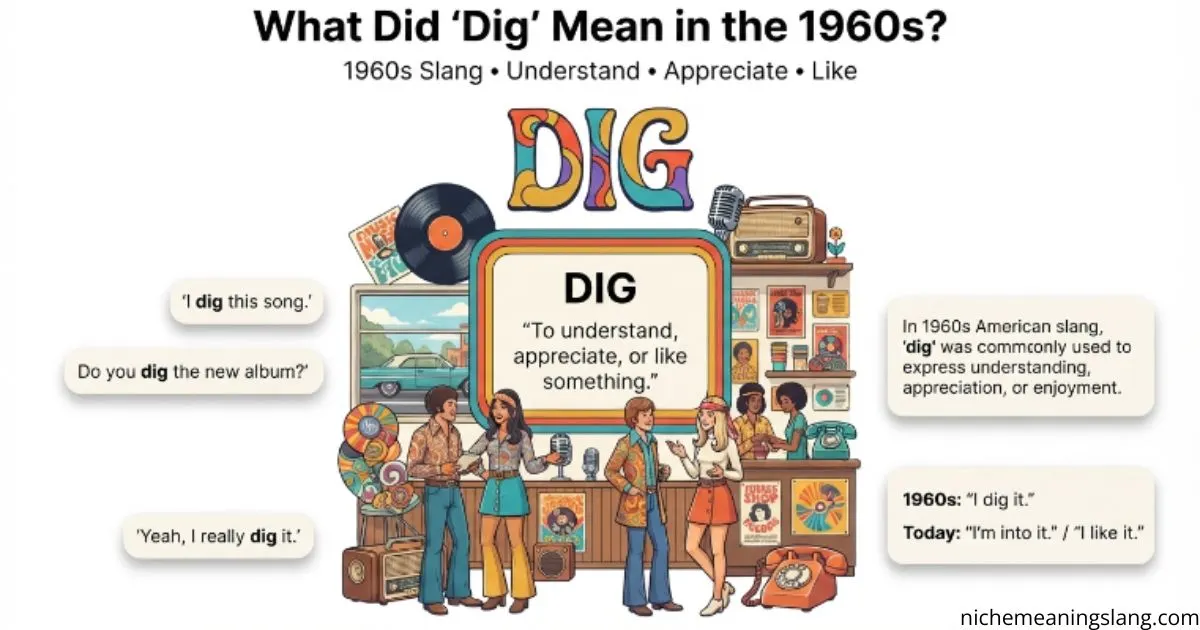
“Dig” in the 1960s generally meant to understand, like, appreciate, or really connect with something. If someone asked, “You dig?” they could be asking whether you understood their point. If they said, “I dig this song,” they meant they genuinely liked it. The expression belonged to the era’s jazz slang, youth culture, counterculture, music, and casual speech.
One detail often gets lost in modern explanations: “dig” did not originate in the 1960s. Historical evidence places its slang use earlier, particularly in African American English and jazz circles. By the 1960s, however, the expression had become widely recognizable through popular culture, music, movies, and youth speech.
What Does “Dig” Mean in the 1960s?
In 1960s slang, dig could mean understand, like, appreciate, or grasp the significance of something. “I dig your idea” could therefore communicate more than simple approval. Depending on context, it suggested that you understood the idea and genuinely appreciated it.
That is why phrases such as “I dig it,” “I dig that,” and “Can you dig it?” feel slightly different from simply saying “I like it.” The expression could signal understanding, interest, approval, or cultural awareness. Historical slang sources document “dig” with several overlapping meanings rather than one rigid definition.
Where Is “Dig” Used in the 1960s?
The expression appeared in conversations about music, ideas, people, style, and experiences. Jazz culture was especially important to its history, and the word later circulated through Beat Generation and broader youth culture. By the 1960s, “dig” could sound natural in informal conversations among people discussing records, performances, fashion, or new ideas.
Imagine someone playing a new jazz record for a friend and asking, “You dig this?” The question does not literally involve excavation. It means something closer to “Do you understand what this is doing?” or “Do you appreciate this?” That mixture of understanding and appreciation is central to the slang sense.
Examples of “Dig” in 1960s Conversation
“I dig this song.” means “I really like or appreciate this song.” “You dig?” can mean “Do you understand?” while “Can you dig it?” can ask whether someone understands, accepts, or appreciates what is being discussed. Context determines the precise shade of meaning.
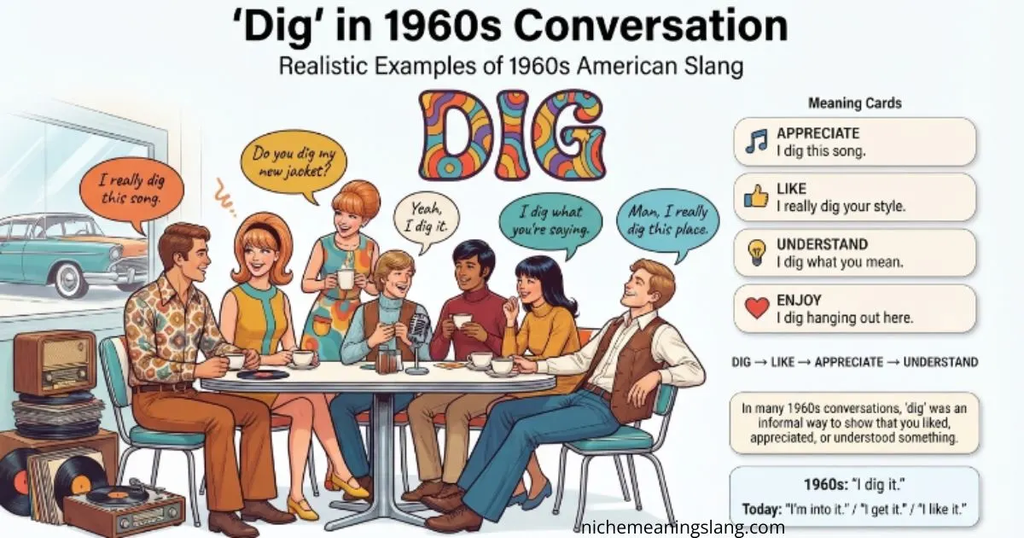
Here are natural examples: “I dig your new jacket” means “I really like your jacket.” “You dig what I’m saying?” means “Do you understand me?” And “I can dig that” can express acceptance or agreement. These weren’t necessarily separate dictionary definitions in everyday speech; their meanings could overlap.
When to Use and When Not to Use “Dig” in the 1960s
Historically, dig was informal slang, so it belonged mainly in casual conversation rather than formal writing. It worked naturally around friends, musicians, artists, and people discussing popular culture. The phrase could communicate warmth or approval without sounding as formal as “I appreciate your perspective.”
Today, using “dig” deliberately can create a retro, playful, musical, or nostalgic tone. It may fit a conversation about vintage records or a 1960s-themed story, but it can sound theatrical if forced into every sentence. Modern speakers are much more likely to say “I like it,” “I’m into it,” or “I get it.”
Similar 1960s Slang Words or Alternatives to “Dig”
Words frequently associated with the era include groovy, far out, cat, hip, square, pad, threads, and right on. They did not all mean the same thing, but together they help reconstruct the vocabulary surrounding 1960s youth and popular culture. Competitor research repeatedly connects these expressions with dig.
For modern English, alternatives depend on the meaning intended. If dig means “like,” you might say “I’m into it” or “I really like it.” If it means “understand,” “I get you” or “I understand” works better. If it means approval, “I can get behind that” may be closer.
The Psychology & Culture Behind “Dig” in the 1960s
The appeal of dig was partly its ability to compress several ideas into one relaxed expression: understanding, appreciation, attention, and shared taste. Saying “I dig it” could imply that something had clicked with you rather than merely meeting a basic standard of approval.
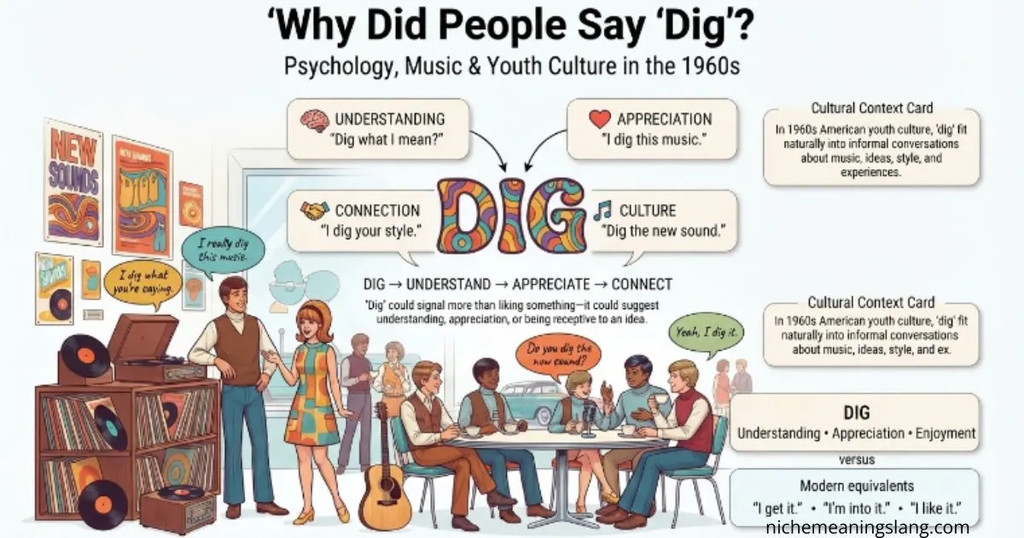
Its cultural history is equally important. The slang sense is associated with African American English and jazz culture, and dictionaries identify its emergence in American slang before the 1960s. The 1960s did not invent the word’s slang meaning; the decade helped make it especially recognizable within mainstream American popular culture.
Common Slang Mistakes With “Dig” in the 1960s
The first mistake is assuming that dig always means “like.” Historical sources show that understanding was an important sense, too. A 1936 example recorded “You dig?” as a shortened way of asking whether someone understood. Later uses could emphasize appreciation or enjoyment.
Another mistake is claiming that hippies invented the expression. They helped popularize and associate it with 1960s counterculture, but the slang is older. It was documented in African American and jazz-related usage decades earlier. The exact etymology remains debated, so claims of one certain linguistic origin should be treated cautiously.
Conclusion
So, what does dig mean in the 1960s? The simplest answer is “to understand, like, appreciate, or connect with something.” The phrase could be as simple as “I dig this song” or as conversational as “You dig?” asking whether someone understood.
The more interesting story is that 1960s slang did not create dig from scratch. Its slang history reaches back into earlier American usage, particularly African American English and jazz culture, before the expression became widely associated with 1960s youth and counterculture.
That history explains why dig feels so perfectly “1960s” today even though its roots are older. It carries the sound of a generation discovering new music, challenging conventions, and looking for language that expressed not merely understanding, but genuine appreciation.
FAQs
What did “dig” mean in the 1960s?
It commonly meant to understand, like, appreciate, or take notice of something. The intended meaning depended on context. “You dig?” generally asked whether someone understood, while “I dig this music” expressed appreciation or enjoyment.
Where did the slang word “dig” originate?
The slang sense was documented in American usage before the 1960s and is strongly associated with African American English and jazz culture. The precise etymology is uncertain; proposed explanations include semantic development from English dig and possible influence from other languages.
Is “dig” still used today?
Yes, but it is generally less common in ordinary American conversation than it was during its peak cultural visibility. Today, it often sounds old-fashioned, playful, musical, or deliberately retro. It can still be understood from context, particularly in phrases such as “I dig it.”
Was “dig” formal or informal?
It was informal slang. Saying “I dig your idea” would have been conversational rather than formal. In contemporary professional writing, clearer expressions such as “I appreciate your idea” or “I understand your point” are usually more appropriate.
Does “Can you dig it?” mean “Do you understand?”
Often, yes. “Can you dig it?” could ask whether someone understood or appreciated something. Depending on the situation, it could carry both meanings at once: “Do you understand what I’m saying, and are you with me on it?” Historical jazz slang sources document dig with the sense of comprehend or understand.
Is “dig” a hippie word?
It became strongly associated with 1960s counterculture and hippie-era language, but it was not originally a hippie invention. The slang meaning predates the 1960s and was documented in African American English and jazz-related contexts earlier in the twentieth century.
What is the difference between “I dig it” and “I dig you”?
“I dig it” normally means I like, appreciate, or understand that thing. “I dig you” can mean I like or understand you, and in some contexts it may carry personal or romantic interest. Context and tone determine the intended meaning.
Is “dig” still popular in 2026?
It is recognizable but not among the dominant everyday slang expressions used by most Americans. Its strongest modern associations are usually retro culture, music, vintage media, humor, and deliberate throwback language rather than ordinary texting.
Related Slang Words

Ryan Mitchell is a language enthusiast and writer who explores slang, modern expressions, and everyday language. At nichemeaningslang, he helps readers understand slang meanings, usage, and context in a simple and easy-to-follow way.