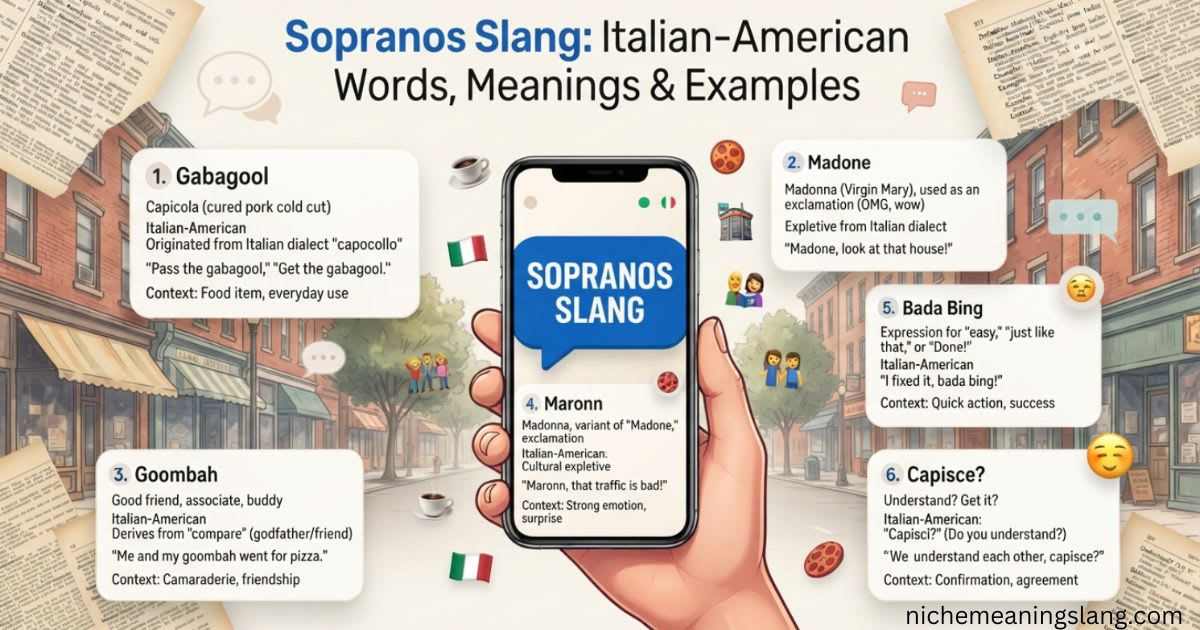
Sopranos Slang Italian-American Words, Meanings & Examples
Sopranos slang is the distinctive mix of Italian-American dialect, New Jersey street talk, mob terminology, and expressions that made The Sopranos sound unmistakably like itself. If “gabagool,” “goombah,” “capisce,” or “fuggedaboutit” ever made you stop mid-scene, you’re not alone. The vocabulary combines Italian-American culture, New Jersey slang, mafia terminology, Italian dialect, and pop-culture language. HBO itself has highlighted several of these expressions in its Sopranos visual dictionary.
After studying slang and dialect patterns, the biggest mistake is treating these words as ordinary Italian. Many reflect Neapolitan or Southern Italian influence, American pronunciation, regional speech, organized-crime terminology, and television shorthand. This guide separates those layers so you can understand not only what a word means, but its tone, cultural setting, and why Tony Soprano’s dialogue still feels so recognizable decades after the series ended.
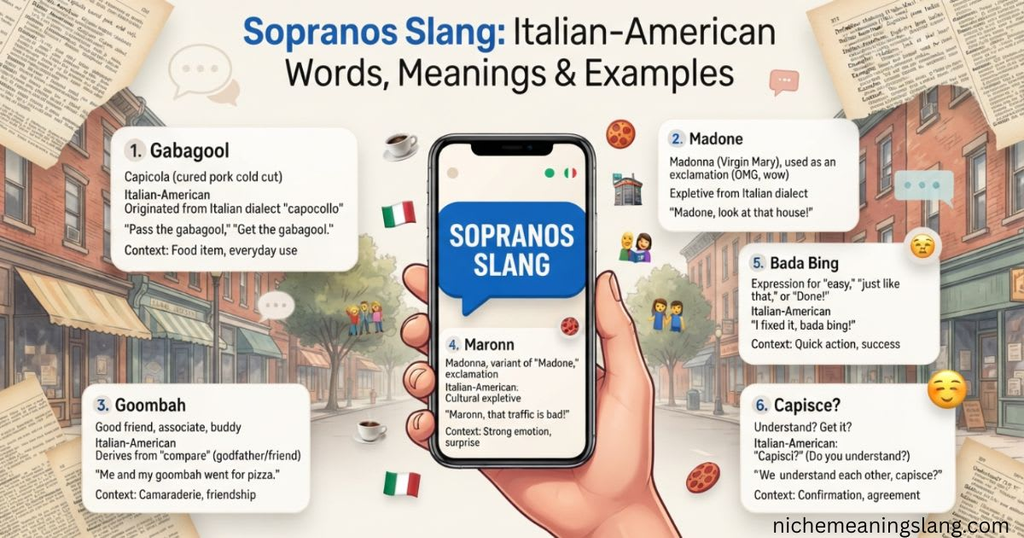
11 Sopranos Slang Terms (Grouped by Tone)
The most useful way to understand Sopranos slang is by tone rather than alphabetically. Some expressions signal respect, loyalty, friendship, or competence; others communicate teasing, sarcasm, suspicion, or hostility. That distinction matters because the same phrase can sound affectionate among friends and threatening in a different setting.
The vocabulary also comes from different linguistic layers. Italian-American dialect, mob language, New Jersey speech, Southern Italian influence, and American pop culture overlap throughout the show. Some expressions were already established before The Sopranos; the series helped make them globally recognizable rather than inventing every term from scratch.
A. Positive / Praise Slang
The positive side of Sopranos slang includes expressions associated with respect, loyalty, influence, trust, money-making ability, and status. These terms are especially revealing because mob hierarchy is communicated through ordinary-sounding compliments. Calling someone a “stand-up guy” or “good earner” says something about character and usefulness, not merely personality.
Stand-up guy
A stand-up guy is someone dependable, honorable, and willing to do the right thing within the social code being portrayed. The phrase belongs to a semantic cluster involving respect, loyalty, reliability, honor, reputation, and character. Outside mob fiction, Americans can still use it positively for someone considered genuinely trustworthy.
Good earner
A good earner is someone who generates substantial money for the organization or group. In the world of The Sopranos, earning power is closely connected to respect, business, money, loyalty, hierarchy, and status. It is therefore more specific than simply calling someone successful; it evaluates their financial value to the group.
Connected
If someone is connected, they have useful relationships, influence, or ties to powerful people. In The Sopranos, the expression can carry a much heavier meaning than ordinary networking. Its semantic field includes influence, relationships, power, reputation, access, hierarchy, and organized crime, so context determines whether it sounds impressive, threatening, or merely descriptive.
Made Guy
A made guy is a formally initiated member of the Mafia in the criminal-world terminology portrayed by the show. The phrase signals membership, hierarchy, loyalty, status, initiation, and protection. It is not simply another word for “mobster”; the distinction between an associate and a formally inducted member is important within the fictional hierarchy.
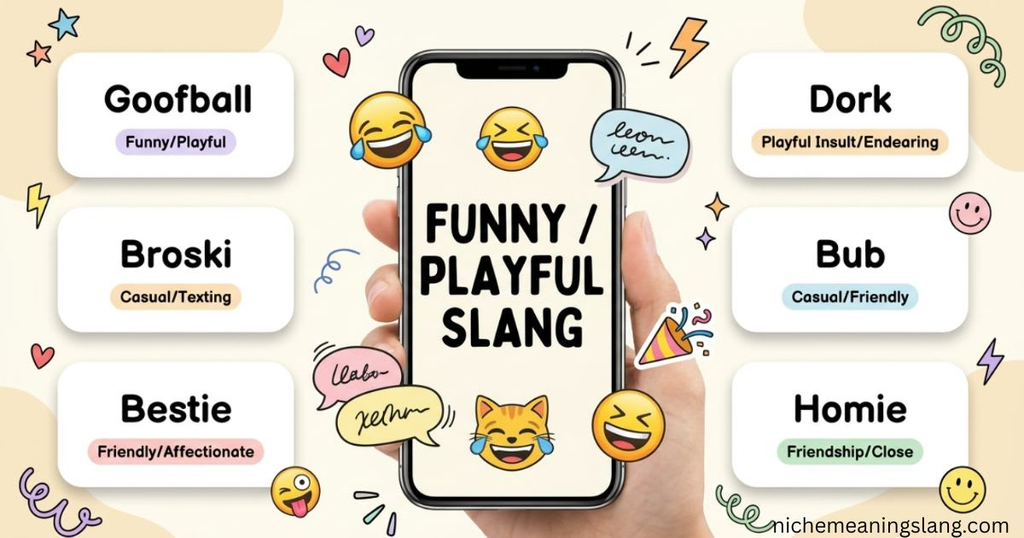
B. Funny / Playful Slang
The playful side of Sopranos slang is what many Americans remember most easily: fuggedaboutit, wise guy, goombah, breaking balls, bada bing, madone, and exaggerated Italian-American pronunciations. These expressions can create warmth or comedy, but their meanings still depend heavily on relationship, delivery, cultural context, and whether the speaker is making a pop-culture reference.
Fuggedaboutit
Fuggedaboutit is a stylized pronunciation of “forget about it.” Depending on context, it can mean drop the subject, don’t worry about it, that’s impossible, or absolutely not. Its semantic range includes dismissal, emphasis, confidence, humor, New York/New Jersey speech, and Italian-American pop culture, which explains why the phrase became recognizable far beyond The Sopranos.
Wise guy
A wise guy can mean a sarcastic, cheeky, or smart-mouthed person in ordinary American speech, while mob contexts give it a more specific criminal-world meaning. The expression therefore connects sarcasm, attitude, organized crime, disrespect, humor, and authority. Calling someone a wise guy can be playful or a warning to stop pushing your luck.
Goombah
Goombah generally refers to a close friend, companion, or associate, particularly in Italian-American usage. In the show’s mob context, it can suggest friendship, loyalty, camaraderie, neighborhood identity, family-like relationships, and association. It is important not to confuse it with goomah, which has a very different meaning.
Breaking balls
Breaking balls means teasing, joking with, or giving someone a hard time. The phrase fits the show’s conversational rhythm because insults can function as humor, friendship, masculinity, camaraderie, provocation, and social testing. “I’m just breaking your balls” essentially tells someone that the apparent hostility is intended as teasing rather than a serious attack.
C. Negative / Insult Slang
The darker side of Sopranos slang involves betrayal, foolishness, threats, violence, and social exclusion. Words such as rat, stunad, and whacked aren’t interchangeable insults: each points to a different idea. Understanding that semantic distinction makes the dialogue much easier to follow, especially when characters speak indirectly about danger or betrayal.
Rat
A rat is an informant or betrayer, particularly someone who provides information to law enforcement. In mob vocabulary, it carries a serious accusation involving betrayal, secrecy, loyalty, police cooperation, distrust, and punishment. The word exists broadly in American English, but The Sopranos gives it heightened significance because loyalty and silence are central to the show’s criminal hierarchy.
Stunad
Stunad or stunod describes a foolish, incompetent, or clueless person. It belongs to the expressive side of Italian-American slang, insults, stupidity, frustration, humor, and family banter. Unlike a serious accusation such as “rat,” it can sometimes sound almost affectionate when used between people who know each other well, depending entirely on tone and situation.
Whacked
Whacked is mob slang for being killed or violently eliminated. Because the term is tied directly to organized crime, violence, threats, murder, criminal hierarchy, and mob storytelling, it should not be treated as a harmless synonym for “fired” or “removed” without context. In The Sopranos, the word carries obvious menace even when delivered casually.
What is Sopranos slang?
Sopranos slang is the informal vocabulary associated with The Sopranos, combining Italian-American expressions, New Jersey speech, street language, mob terminology, and Southern Italian dialect influences. The show also popularized expressions that existed before it, turning regional vocabulary into widely recognizable American pop-culture language.
Is Sopranos slang real?
Yes, much of it has real linguistic or cultural roots, but it is not accurate to call all of it standard Italian. Italian-American dialect, Neapolitan influence, Sicilian influence, American pronunciation, mafia terminology, and television dramatization all contribute to the show’s distinctive vocabulary. Some expressions are authentic regional speech; others were exaggerated or popularized for entertainment.
Why did The Sopranos use so much slang?
The slang helped establish character identity, regional authenticity, social hierarchy, loyalty, humor, intimidation, and cultural setting. A character’s word choice could reveal whether he was an insider, an associate, a family member, or an outsider. That linguistic texture helped make North Jersey’s fictional mob world feel socially complete rather than merely scripted.
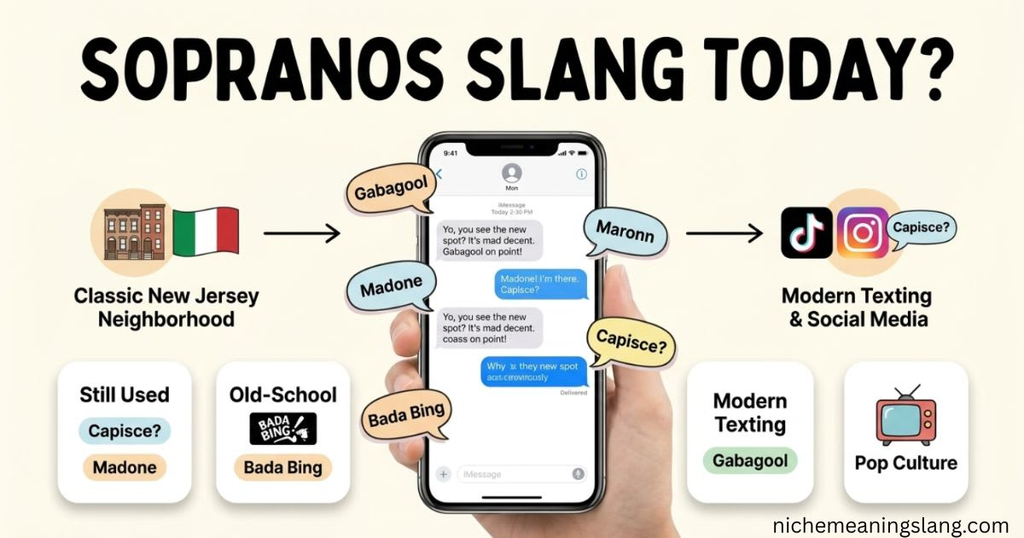
Do people still use Sopranos slang today?
Yes, although usage varies dramatically. Some expressions remain recognizable in American pop culture, memes, streaming discussions, Italian-American communities, comedy, and everyday speech. Younger audiences may encounter terms through clips and social media rather than watching the original HBO broadcast, while older fans may associate them directly with the series and its characters.
Is Sopranos slang offensive?
Some expressions can be offensive, vulgar, culturally loaded, or threatening depending on the term and context. The safest approach is to understand meaning, origin, audience, tone, and cultural history before using an expression. A harmless Sopranos joke among fans is different from using a slur or presenting fictional mob speech as authentic Italian language.
A final distinction worth remembering: “Italian slang,” “Italian-American slang,” and “Sopranos slang” are not synonyms. The show draws heavily on Italian-American speech and Southern Italian linguistic influences, but its vocabulary is filtered through American regional history and fictional organized-crime storytelling. That is why gabagool can be instantly recognizable to an American Sopranos fan without being the normal word you would expect to hear in contemporary Italy. HBO’s own glossary similarly treats terms such as gabagool and goomah as part of the show’s distinctive vocabulary.
Conclusion
The strongest semantic takeaway is that Sopranos slang is not simply “Italian words used by mobsters.” It is an intersection of Italian-American dialect, New Jersey identity, Southern Italian linguistic influence, Mafia terminology, character hierarchy, humor, intimidation and American pop culture. That distinction is exactly what separates a useful glossary from a shallow word list.
The expressions that survived gabagool, goombah, goomah, made guy, wiseguy, fuggedaboutit, capisce, madone and bada bing remain recognizable because The Sopranos embedded them in memorable characters and situations. The show ended in 2007, but its vocabulary continues to circulate through streaming, memes, clips and American pop culture.
FAQs
The competitor-derived FAQ questions above already cover the primary current SERP intent. The most valuable additional PAA-style queries to target in supporting content are:
- What does gabagool mean in The Sopranos?
- What does goombah mean?
- What is a goomah?
- What does capisce mean?
- What does madone mean?
- What does stunad mean?
- What does bada bing mean?
- Is Sopranos Italian real Italian?
- What is the difference between goombah and goomah?
- Why do they pronounce Italian words differently in The Sopranos?
These questions align closely with the vocabulary and semantic relationships repeatedly surfaced across the researched pages. HBO’s own glossary particularly validates gabagool, Madone, stugots and goomah as high-interest terms
Related Slang Words

Ryan Mitchell is a language enthusiast and writer who explores slang, modern expressions, and everyday language. At nichemeaningslang, he helps readers understand slang meanings, usage, and context in a simple and easy-to-follow way.