40+Slang for Mustache Funny Names & Terms for 2026
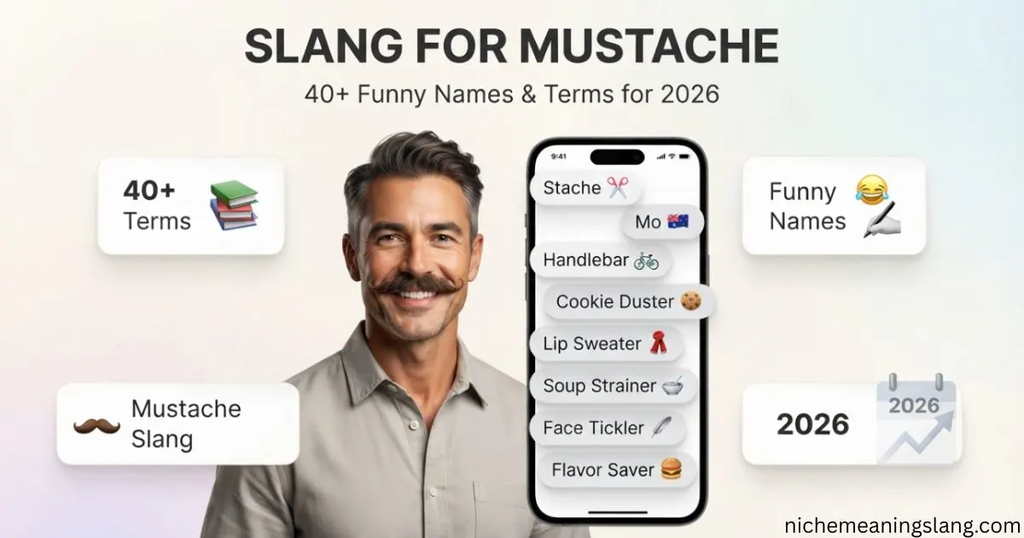
If you want the most common slang for mustache, start with stache or ’stache. Other terms include mo, tash, cookie duster, soup strainer, lip sweater, crumb catcher, flavor saver, lip rug, and mouth brow. Some are established informal words, while others are humorous nicknames.
I’ve found that mustache vocabulary gets surprisingly personal: one person hears “stache” and thinks classic American casual speech, while another hears “cookie duster” and immediately pictures an old-school dad or cowboy. That difference matters. In this guide, we’ll separate common terms from playful inventions, explain tone, and show which slang for mustache actually sounds natural in American English.
Slang Words for Mustache
The easiest slang for mustache in American English is stache, a clipped form of “mustache.” You’ll also see ’stache, which visually signals that the beginning of the original word has been removed. Mo is another casual shortening, while tash/tache is more associated with British usage. These terms are informal, so they fit casual conversation, captions, barbershop talk, and jokes better than formal writing.
Funny mustache nicknames work differently. Cookie duster, soup strainer, lip sweater, crumb catcher, flavor saver, lip rug, and mouth brow are descriptive jokes rather than precise dictionary synonyms. Their meaning comes from imagery: food, clothing, eyebrows, or household objects. That makes them expressive, but also more dependent on humor, familiarity, and tone than simple words such as stache.
Stache
Stache is the most useful everyday slang for mustache in American English. It is short, recognizable, and natural in phrases such as “Nice stache” or “That stache looks sharp.” Unlike many joke nicknames, it does not automatically sound teasing. It works especially well in casual conversation, grooming discussions, captions, and friendly compliments.
’Stache
’Stache means the same thing as stache, with the apostrophe showing that part of “mustache” has been dropped. You might see “fresh ’stache,” “new ’stache,” or “growing my ’stache.” The spelling feels particularly natural in captions and informal writing, although “stache” without the apostrophe is also common.
Mo
Mo is a clipped form of moustache and is especially associated with Australian and British English. In the United States, Americans may recognize it through Movember, the annual mustache-growing campaign. “Growing a mo” therefore has a slightly international or Movember-related flavor rather than being the default American replacement for “mustache.”
Cookie Duster
Cookie duster is a humorous nickname for a full or noticeable mustache. The joke imagines the upper-lip hair as a little brush capable of sweeping cookie crumbs away. It has an old-school, playful feeling and works best when everyone understands the comment as humor rather than a serious description.
Lip Sweater
Lip sweater is a playful metaphor for facial hair covering the upper lip. The image is simple: the mustache looks like a tiny sweater keeping the mouth warm. It is much more humorous than neutral, so it fits memes, friendly teasing, captions, and casual conversations rather than professional or formal situations.
Crumb Catcher
Crumb catcher turns a mustache into a miniature food trap. It is easy to understand because the joke connects upper-lip hair with crumbs left behind after eating. The phrase works best between friends who already joke about appearance. With a stranger, the same comment can feel more like criticism than playful banter.
Flavor Saver
Flavor saver is another food-based nickname for a mustache. The humor suggests that facial hair somehow holds onto the flavor of whatever someone has eaten or drunk. It is deliberately silly, which makes it useful for jokes and social captions. It should not be confused with a standard dictionary synonym for mustache.
Mouth Brow
Mouth brow compares a mustache with an eyebrow positioned above the mouth. It has a meme-like quality because the phrase creates an immediate visual comparison. You might use it jokingly when someone has prominent upper-lip hair, but it is less established than “stache” and may not be understood outside internet-humor contexts.
Soup Strainer
Soup strainer is a classic humorous nickname for a thick mustache. The joke imagines the facial hair filtering soup or other food before it reaches the mouth. It has an old-school comedy feel and can sound affectionate when used among friends, although describing a stranger’s appearance this way can easily become teasing.
Face Caterpillar
Face caterpillar is an exaggerated nickname for a thick or prominent mustache. The visual comparison is the entire joke: the hair resembles a small caterpillar sitting across the upper lip. It fits meme culture and playful conversation, but it is not a standard replacement for mustache in everyday American speech.
Lip Rug
Lip rug describes a thick mustache as though it were a miniature rug covering the upper lip. It is deliberately visual and humorous, making it useful for teasing or casual jokes. Because it focuses on the size and coverage of facial hair, it can sound complimentary, silly, or insulting depending on delivery.
Nose Neighbor
Nose neighbor is a playful expression for the mustache living directly underneath the nose. It personifies the facial hair as the nose’s next-door neighbor. The phrase is much more creative than established slang, so it works best in online jokes, captions, memes, and conversations where unusual humor is already welcome.
Fuzz Bar
Fuzz bar describes a small strip of fuzzy facial hair above the lip. It is particularly useful for talking about early mustache growth when the hair is visible but not yet dense. Unlike stache, it feels more descriptive and playful, so it belongs comfortably in casual grooming conversations rather than formal language.
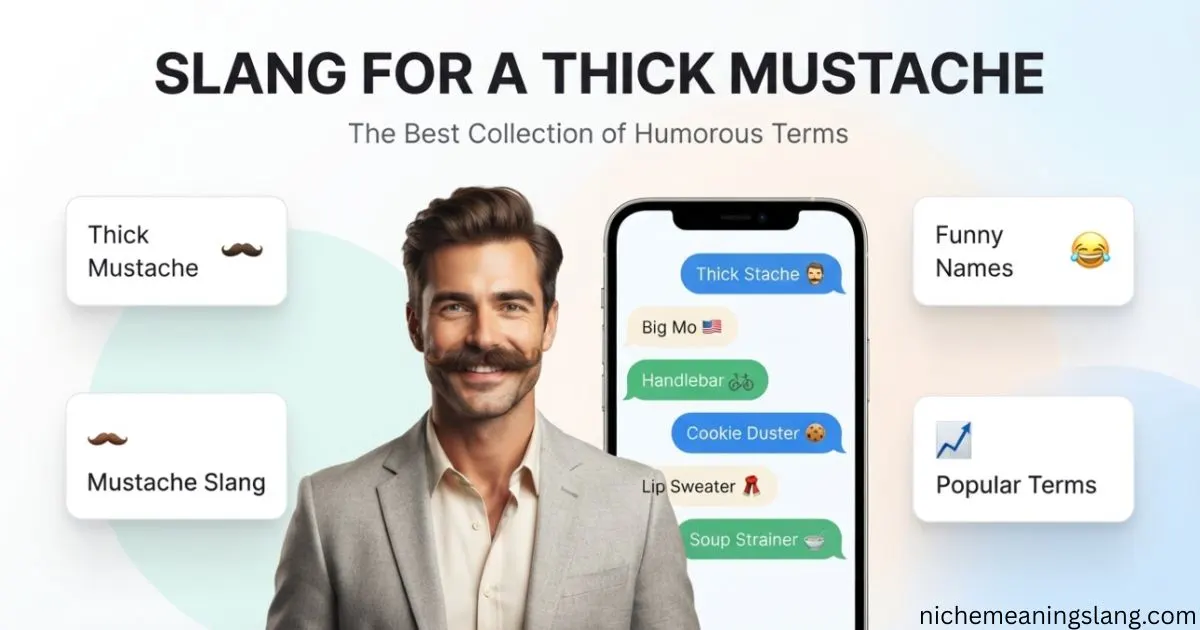
Slang for a Thick Mustache
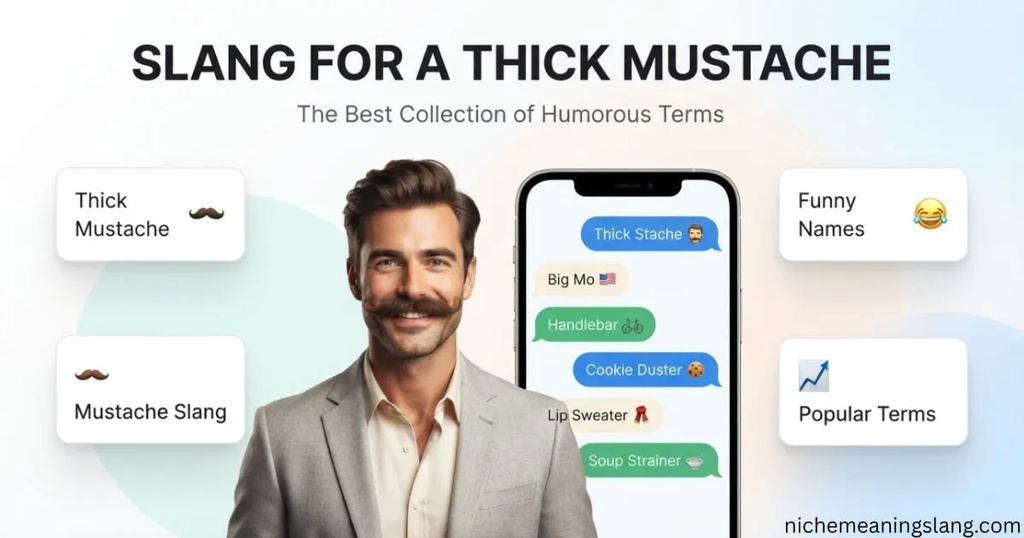
When the mustache is especially thick, slang for mustache becomes more exaggerated. Cookie duster, soup strainer, lip sweater, lip rug, lip hedge, mouth mop, whisker wall, stache beast, and mustache mane all create an oversized visual image. These terms are less about precise classification and more about communicating that the facial hair is large, noticeable, or unusually full.
A thick mustache can also have a recognizable style name rather than a slang nickname. Walrus, Chevron, handlebar, and similar labels describe visual characteristics more specifically. That distinction is worth remembering: not every colorful mustache term is technically slang. Some are established style names, while others are humorous descriptions invented for the moment.
Example
A natural joke might be: “That’s not a mustache anymore that’s a whole lip forest.” The point is exaggeration, not literal classification. Similar phrases such as mustache monster, stache beast, lip beast, and whisker wall work because they make ordinary facial hair sound dramatically larger than it really is.
Lip Hedge
Lip hedge suggests a dense, bushy patch of facial hair growing across the upper lip. Like “lip rug,” it uses an everyday object as a visual metaphor. It is best treated as humorous slang rather than an established technical term, and it works most naturally among friends who are comfortable joking about grooming.
Mustache Mane
Mustache mane makes a mustache sound grand, dramatic, and unusually substantial. “Mane” normally describes the hair around an animal’s head, so applying it to the upper lip creates playful exaggeration. It is useful when celebrating an impressive mustache rather than simply describing ordinary facial hair.
Stache Beast
Stache beast is an intentionally exaggerated compliment for a particularly impressive mustache. Calling someone’s facial hair a “beast” can suggest size, strength, or personality. The expression fits casual conversation and social media captions, especially when the speaker wants humor rather than a straightforward compliment.
Whisker Wall
Whisker wall imagines a dense mustache as a barrier of hair across the mouth. It is visual, funny, and intentionally dramatic. “Whiskers” can refer to facial hair more broadly, so this expression is better understood as playful imagery than as a standardized American term for a particular mustache style.
Slang for a Thin Mustache
Thin facial hair tends to inspire different descriptions. Pencil mustache, fuzz strip, fuzz bar, lip line, whisker line, tiny stache, mini stache, and face fringe can describe narrow or developing upper-lip hair. Some are casual descriptions rather than fixed slang, so context is important when deciding whether a term sounds natural.
A pencil mustache is different from a random nickname because it refers to a recognizable style: a narrow, carefully shaped line above the upper lip. Meanwhile, terms such as fuzz bar or tiny stache are more informal descriptions of growth. That distinction prevents a slang list from treating every creative phrase as an established term.
Pencil
A pencil or pencil mustache describes a narrow, neatly defined line of hair above the upper lip. The name comes from its thin appearance, which resembles a line drawn with a pencil. It is better understood as a mustache style than pure slang, and it has a strong vintage association.
Fuzz Bar
A fuzz bar can describe a small, developing strip of upper-lip hair. The word “fuzz” makes the term sound softer and less formal than “mustache,” while “bar” emphasizes the horizontal shape. It works naturally in joking grooming conversations, particularly when someone is still waiting for fuller facial-hair growth.
Mini Beard
Mini beard is an informal comparison that treats a small mustache as though it were a tiny beard. It is playful rather than technically accurate because a mustache and beard are distinct areas of facial hair. The phrase works best when someone is joking about early growth or a very small upper-lip patch.
Face Fringe
Face fringe describes hair along the upper lip as a kind of fringe around the face. It has a creative, fashion-oriented sound and is less established than stache or tash. Because it is descriptive rather than standardized, it is safest in casual writing where the playful meaning is obvious.
Mustache Slang: Choosing the Right Tone
The most important thing about slang for mustache is not memorizing every funny nickname. It is knowing which terms are actually established and which ones are playful inventions. “Stache” is a safe casual choice in American English. “Tash” is recognizable but strongly associated with British English, while “cookie duster” and “soup strainer” are humorous rather than neutral.
| Term | Meaning | Tone | Best context |
| Stache | Short form of mustache | Casual | Everyday U.S. conversation |
| ’Stache | Short form of mustache | Casual | Texts, captions |
| Tash | Short form of moustache | British/Informal | UK-oriented context |
| Mo | Short form of moustache | Casual | Australia/UK, Movember |
| Cookie duster | Full mustache | Funny | Friendly jokes |
| Soup strainer | Thick mustache | Humorous | Casual/old-school humor |
| Lip sweater | Hair over upper lip | Playful | Friends, memes |
| Crumb catcher | Mustache | Joking | Friendly teasing |
| Flavor saver | Mustache | Funny | Casual humor |
| Lip rug | Thick mustache | Playful | Casual conversation |
| Mouth brow | Mustache | Meme-style | Online humor |
| Pencil mustache | Thin style | Descriptive | Grooming/style discussions |
| Handlebar | Curled mustache style | Style term | Grooming/fashion |
| Chevron | Broad mustache style | Style term | Grooming/fashion |
| Horseshoe | Downward mustache style | Style term | Grooming/fashion |
| Fu Manchu | Long downward style | Style term | Style/cultural discussion |
The safest rule is simple: use stache when you want to sound natural, and use the funny nicknames when the conversation is already playful. A phrase like “Nice stache” sounds like a compliment. “That cookie duster is huge” sounds like a joke. “That pornstache is wild” carries a different, potentially sexualized tone and deserves more caution.
Modern Usage and Social Media
Mustache slang fits naturally into TikTok, Instagram, Reddit, captions, grooming posts, and meme culture because short expressions are easy to recognize. “New stache unlocked,” “Rate the stache,” and “The ’stache is back” are immediately understandable. More creative expressions such as “lip sweater” or “face caterpillar” add humor because they create a visual punchline.
Modern internet slang also changes quickly. A phrase can appear in a handful of memes without becoming widely established vocabulary. That is why a strong slang guide should distinguish dictionary-supported informal terms from creative community nicknames. The distinction helps readers avoid repeating an obscure phrase and assuming everyone will recognize it.
Regional Differences: Stache, Tash, and Mo
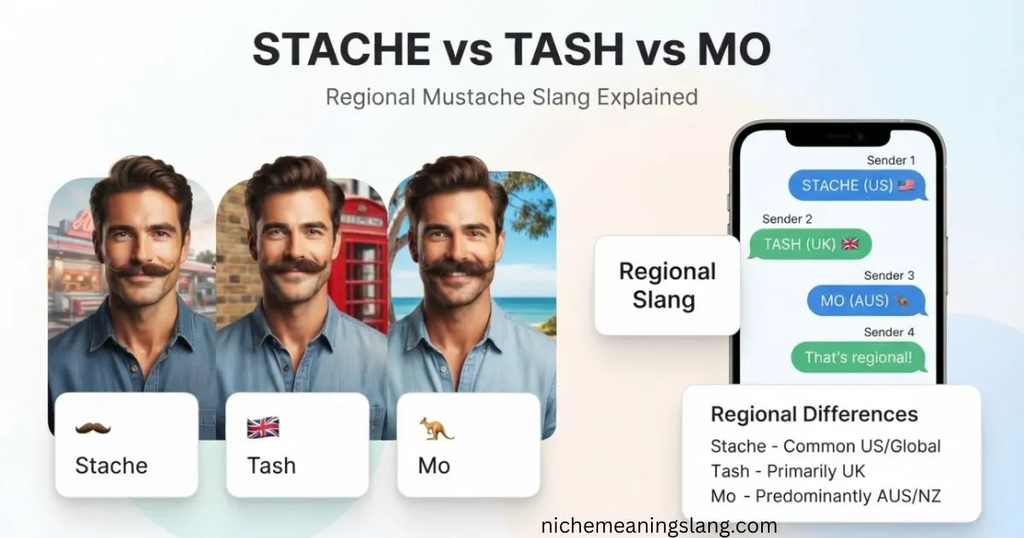
For a U.S. audience, stache is the most useful short form. Cambridge labels it U.S. informal and defines it as short for mustache. Tash, by contrast, is labeled UK informal for moustache, while Collins likewise describes it as an informal short form.
Mo has a stronger Australian/New Zealand association and is also familiar through Movember. Wiktionary identifies mo as a clipping of moustache in Australian and New Zealand colloquial use.
That makes the regional picture easy:
- U.S.: stache / ’stache
- U.K.: tash / tache
- Australia/New Zealand: mo
- International online: stache, ’stache, mo, plus humorous nicknames
What Counts as Real Slang?
Not every funny phrase on the internet has equal linguistic status. Stache and tash are dictionary-recognized informal forms. Cookie duster is also attested as a humorous term for a mustache, including in historical American slang references.
Terms such as lip sweater, mouth brow, nose neighbor, lip forest, and mustache monster are better described as playful expressions or internet-style nicknames. They may be perfectly understandable without being standardized vocabulary. That difference is important for anyone trying to use slang naturally instead of simply copying a list.
Using Mustache Slang Without Sounding Awkward
The easiest way to sound natural is to match the expression to the relationship. With a friend, “That stache is looking sharp” sounds relaxed and complimentary. “That cookie duster is getting serious” clearly signals humor. In a professional conversation, however, simply saying “mustache” is cleaner and less likely to distract from the subject.
Appearance-based humor also requires a little awareness. A person may love joking about their facial hair or they may dislike comments about it. Even harmless terms can sound insulting if the speaker is mocking someone rather than celebrating their style. Context, tone, and familiarity matter more than the dictionary definition.
Conclusion
The best slang for mustache depends on what you are trying to say. In American English, stache and ’stache are the easiest casual choices, while tash has a stronger British connection and mo is especially associated with Australian and Movember usage. Funny terms such as cookie duster, soup strainer, lip sweater, crumb catcher, flavor saver, and lip rug add personality but work best in relaxed settings.
The bigger lesson is that not every creative nickname is established slang. Some terms are dictionary-recognized informal forms, while others are playful internet expressions that depend heavily on humor and context. If you want natural slang for mustache, start with stache, then choose a funnier nickname only when the tone and audience make it appropriate.
FAQs
What is the most common slang for mustache?
Stache is the most useful common American slang term for mustache. Cambridge Dictionary specifically labels stache as U.S. informal and defines it as a shortened form of mustache.
What is a funny name for a mustache?
Popular humorous names include cookie duster, soup strainer, lip sweater, crumb catcher, flavor saver, lip rug, and mouth brow. These are playful expressions rather than equally established synonyms.
Is “stache” slang for mustache?
Yes. Stache is an informal shortened form of mustache and is especially associated with American English.
What does “tash” mean?
Tash is an informal short form of moustache, especially in British English. Cambridge and Collins both recognize it with that meaning.
What does “mo” mean for a mustache?
Mo can be a shortened form of moustache, particularly in Australian and New Zealand colloquial English. It is also strongly associated with Movember.
Why is a mustache called a “cookie duster”?
“Cookie duster” is a humorous expression that compares a prominent mustache to a brush that could dust crumbs from cookies. Historical slang references document the expression as a U.S. term for a mustache.
What slang is used for a thick mustache?
Common playful expressions include cookie duster, soup strainer, lip sweater, lip rug, lip hedge, whisker wall, stache beast, and mustache mane.
What do you call a thin mustache?
A thin mustache may be called a pencil mustache, pencil stache, fuzz bar, fuzz strip, lip line, or tiny stache. Some are established style descriptions, while others are casual nicknames.
Are mustache nicknames offensive?
Not automatically. Most are humorous, but terms can become insulting when they mock someone’s appearance. Context and relationship matter, especially with teasing expressions.
Is “tash” used in America?
Americans may recognize tash, but it is more strongly associated with British English. In the U.S., stache is the more natural casual short form.
Is a handlebar a slang word for mustache?
Not exactly. Handlebar is primarily the name of a recognizable mustache style with ends that curl upward or outward. It may appear in slang lists, but it is more accurately classified as a style term.
Is “mustache” spelled differently in British English?
Yes. British English commonly uses moustache, while American English generally uses mustache. The informal forms tash and tache are associated with the British spelling.
Related Slang Words

Ryan Mitchell is a language enthusiast and writer who explores slang, modern expressions, and everyday language. At nichemeaningslang, he helps readers understand slang meanings, usage, and context in a simple and easy-to-follow way.