40+Pot Slang Weed Terms, Meanings & Modern Usage Guide
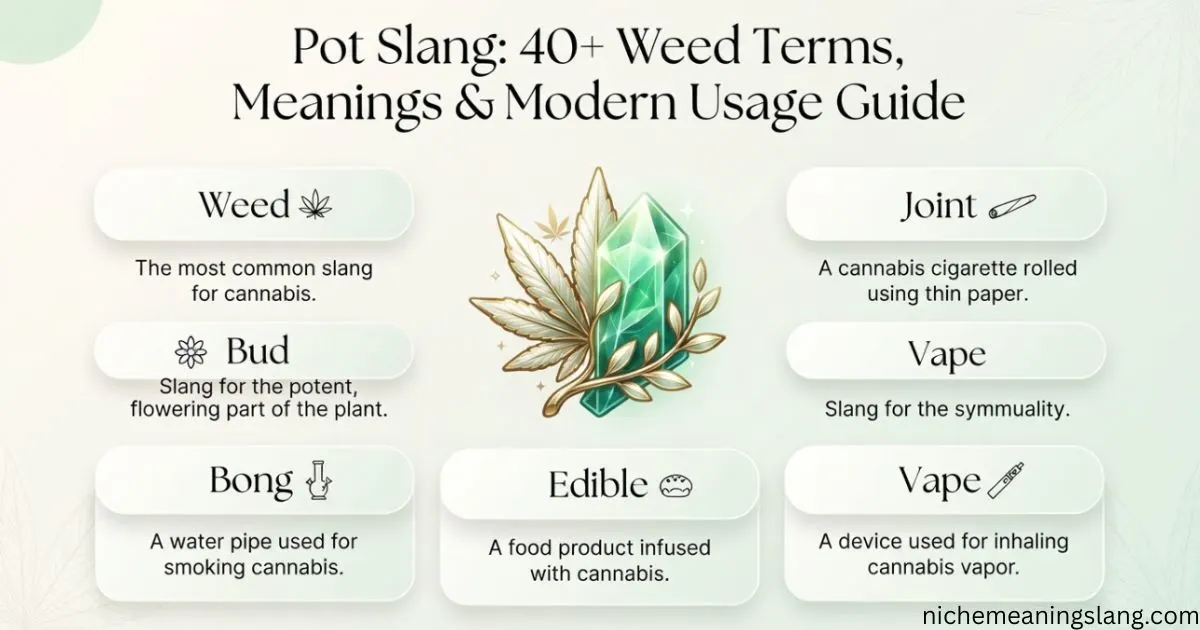
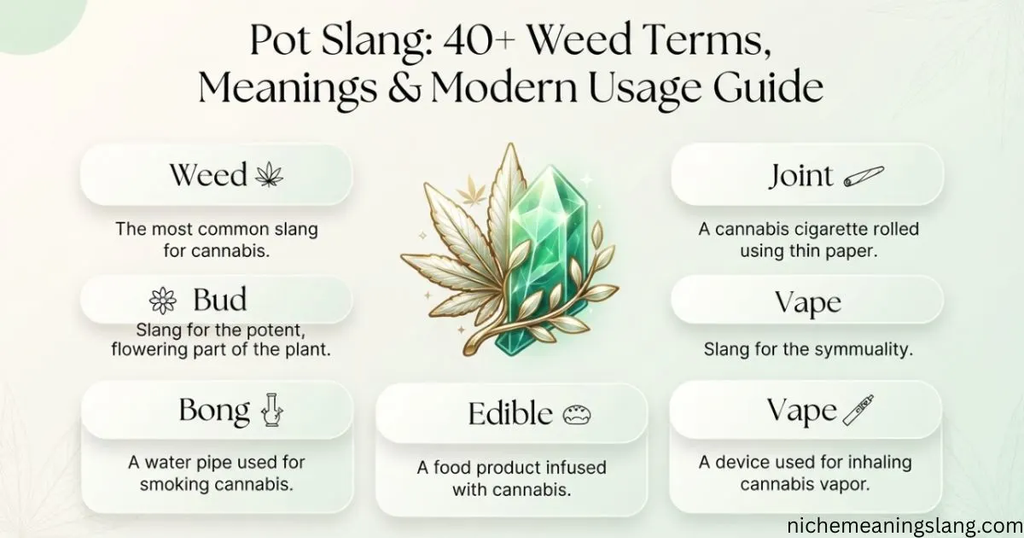
Pot slang refers to the informal vocabulary people use for cannabis, marijuana, weed, cannabis flower, effects, and related culture. Common examples include bud, gas, loud, dank, stash, zooted, Mary Jane, ganja, grass, reefer, and 420. The exact meaning can shift by generation, region, platform, and context.
If you have ever seen a cannabis term in a song, meme, group chat, or social-media caption and wondered what it actually meant, the confusion is understandable. Some expressions are decades old, while others spread quickly through online culture. This guide separates recognizable cannabis nicknames from newer slang and explains how each term functions in everyday American English.
Bud
“Bud” commonly refers to cannabis flower, especially the dried flowering part of the plant. In casual conversation, it is one of the clearest and most widely recognizable cannabis terms. You may also see related expressions such as flower, nug, cannabis, and herb in discussions about the plant.
Unlike some highly stylized slang, “bud” is relatively straightforward. A person saying “bud” generally means cannabis flower rather than cannabis in every possible form. That makes the term useful for understanding informal conversations without assuming a hidden or complicated meaning.
Blaze
“Blaze” is informal slang for smoking cannabis. It is casual, conversational language and is more likely to appear among friends, in music, memes, or online communities than in professional writing.
The word is interesting because its meaning can be broader than cannabis depending on context. “Blaze” can also mean burn intensely or move quickly. When it appears alongside words such as weed, joint, high, smoke, or cannabis, the intended meaning is usually clear from the surrounding language.
Zooted
“Zooted” is modern slang describing someone who is extremely intoxicated or high. It is particularly recognizable in internet culture, memes, social media, and younger informal speech, although slang usage changes quickly.
Because “zooted” is expressive rather than technical, it often communicates a humorous or exaggerated tone. Someone might say they are “zooted” as a playful description of being very high, but the word itself does not provide a reliable measure of impairment or intoxication.
Gas
“Gas” can refer to cannabis considered especially strong, high-quality, or desirable. The term is strongly associated with contemporary cannabis slang and appears frequently in music, social media, and informal conversation.
Context is essential because “gas” has many unrelated meanings in American English. It can mean gasoline, fuel, flatulence, or literal gas. In a phrase such as “that weed is gas,” however, the cannabis meaning becomes clear.
Loud
“Loud” is an older cannabis slang term generally associated with flower that has a strong smell and is often described as potent or high quality. The expression draws attention to the noticeable aroma of cannabis.
The word is less self-explanatory than “weed” or “bud,” which is why context matters. “That is loud” could refer to music, clothing, or someone speaking loudly. Cannabis-related conversation provides the semantic clues that make the intended meaning recognizable.
Stash
“Stash” means a private supply or stored amount of something. In cannabis slang, it can refer to someone’s personal supply of weed.
Unlike highly specialized cannabis vocabulary, “stash” is used for many other things. People can have a snack stash, cash stash, or emergency stash. When combined with words such as weed, cannabis, bud, or smoke, the cannabis interpretation becomes much more likely.
Wake & Bake
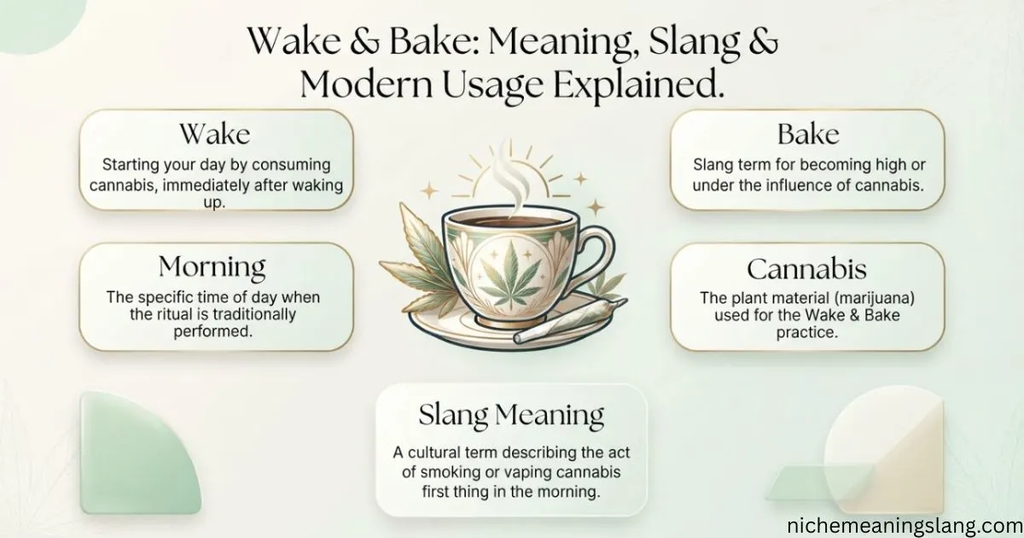
“Wake & Bake” is an informal phrase referring to consuming cannabis soon after waking up. It has an established place in cannabis culture and older slang, while still appearing in memes and casual online conversation.
The expression is cultural rather than technical. It describes a routine or lifestyle reference, not a specific product. Because the phrase is strongly associated with cannabis, readers usually understand its meaning when it appears in social posts or casual dialogue.
Green Out
“Green out” describes feeling sick, overwhelmed, anxious, dizzy, or otherwise unwell after consuming too much cannabis. The phrase is often used in personal stories, harm-awareness conversations, and casual descriptions of an unpleasant experience.
Unlike terms that praise cannabis quality, “green out” has a cautionary meaning. It is useful vocabulary for understanding someone’s description of an adverse experience, but slang should not substitute for medical advice when someone is seriously unwell.
Munchies
“The munchies” refers to increased hunger or strong cravings for food associated with cannabis use. The phrase has become one of the most recognizable expressions connected with cannabis culture.
You will often see it in jokes, memes, television, movies, and casual conversation. “The munchies hit” is essentially a humorous way of saying that someone suddenly wants food. Unlike many newer terms, this expression has remained recognizable across multiple generations.
Dank
“Dank” can describe cannabis considered very good, strong, or desirable. The term also has older English meanings related to dampness or mustiness, which is why its cannabis meaning depends strongly on context.
In contemporary internet culture, “dank” can also describe memes, humor, or content. A phrase such as “dank meme” has nothing to do with cannabis. When the surrounding vocabulary includes weed, bud, flower, smoke, or strain, the cannabis interpretation becomes much more likely.
Joint
A “joint” is a cannabis cigarette rolled in paper. The word is widely understood in American English and has been part of cannabis vocabulary for decades.
The important semantic point is that “joint” is not exclusively cannabis slang. In ordinary English, it can mean a place, connection, body articulation, or establishment. Cannabis context narrows the meaning. This makes “joint” a classic example of a slang term whose interpretation depends on surrounding words.
Blunt
“Blunt” is a common cannabis term for cannabis rolled in a cigar-style wrapper or tobacco-leaf-based wrap. The term has deep connections with American cannabis culture and hip-hop language.
The word itself has unrelated meanings, including describing something direct or not sharp. In cannabis conversation, however, “blunt” generally refers to a particular smoking format. Modern usage is especially common in music, entertainment, memes, and casual conversation.
Mary Jane
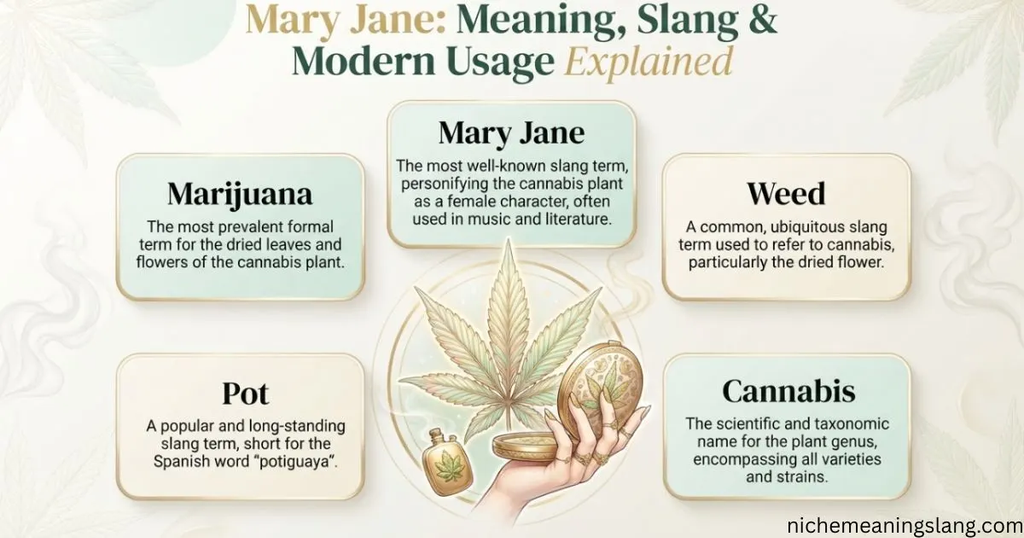
“Mary Jane” is a playful nickname for marijuana. It is built as a wordplay-based expression and became deeply embedded in American popular culture, music, and cannabis vocabulary.
The term can sound intentionally old-fashioned or humorous today. It is often used in songs, jokes, movies, and nostalgic references rather than as the preferred technical term. The meaning is usually obvious when the surrounding conversation involves cannabis.
Ganja
“Ganja” is a long-established term for cannabis with roots in South Asian languages, particularly Hindi and related usage. It became strongly associated with Rastafari culture and reggae music before becoming more widely recognized in American popular culture.
That cultural history makes “ganja” different from newly invented internet slang. The word carries associations with reggae, Jamaica, Rastafari, music, and global cannabis culture. Treating it as simply another Gen Z internet term loses important historical context.
Grass
“Grass” is an older American slang term for marijuana. It became particularly recognizable during the counterculture era of the 1960s and remains understandable today, although it can sound more old-school than contemporary terms.
The word illustrates how cannabis vocabulary changes across generations. Someone encountering “grass” in an older song, film, or article may understand it differently from a younger speaker accustomed to words such as weed, bud, gas, or zaza.
Reefer
“Reefer” is an older slang term for marijuana with strong historical associations in American culture. The word became especially prominent during the early and mid-20th century, including through the notorious anti-cannabis film Reefer Madness.
Today, “reefer” often sounds dated or deliberately old-fashioned. It may appear in historical writing, comedy, movies, music, or discussions of cannabis history. Unlike modern internet slang, its cultural meaning is tied strongly to an earlier period of American language.
420
“420” is a cultural code associated with cannabis and cannabis culture. April 20, written as 4/20 in U.S. date format, became widely recognized as a cannabis-related cultural date.
The number also appears in memes, music, social media, merchandise, and casual references. Because it has become a broader cultural symbol, seeing “420” does not automatically prove that a particular message is discussing cannabis; surrounding context still matters.
Nuggets
“Nuggets” or “nugs” can refer informally to individual pieces of cannabis flower. The term is especially associated with the appearance of compact flower buds.
Because “nugget” is also an ordinary English word for a small piece of something, context is essential. In a cannabis discussion, nug, bud, flower, and nugget can form a clear semantic cluster. Outside that context, the word could refer to food, information, or something else entirely.
Conclusion
Pot slang is a broad and constantly changing part of American cannabis vocabulary. Classic terms such as pot, weed, grass, reefer, and Mary Jane sit alongside newer expressions such as gas, zooted, loud, zaza, and dank.
The best way to understand pot slang is to look beyond the individual word. Generation, platform, music, regional culture, and conversational context all influence meaning. A term that sounds current on TikTok may already feel dated elsewhere, while older expressions can survive through movies, music, and pop culture.
FAQ Section
What does pot slang mean?
Pot slang refers to informal vocabulary associated with cannabis, marijuana, weed, cannabis flower, effects, and cannabis culture.
What does “pot” mean in slang?
In American English, “pot” is a long-established slang term for cannabis or marijuana.
What are common pot slang words?
Common examples include weed, bud, grass, ganja, Mary Jane, reefer, gas, loud, dank, zaza, and pot.
Is “pot” the same as “weed”?
Both can refer to cannabis generally, although individual speakers may prefer one term based on generation, region, or context.
What does “gas” mean in weed slang?
“Gas” commonly describes cannabis that the speaker considers strong, high-quality, or desirable.
What does “zooted” mean?
“Zooted” is informal slang for being extremely high or intoxicated, often used humorously online.
What does “420” mean in slang?
420 is a widely recognized cultural reference associated with cannabis. It can refer to the cannabis community, April 20, or cannabis-related content.
Can pot slang be used in professional writing?
Usually, formal writing is clearer when it uses precise terms such as cannabis or marijuana instead of informal slang.
Related Slang Words

Ryan Mitchell is a language enthusiast and writer who explores slang, modern expressions, and everyday language. At nichemeaningslang, he helps readers understand slang meanings, usage, and context in a simple and easy-to-follow way.