Palomo Dominican Slang Meaning, Uses & Examples Explained
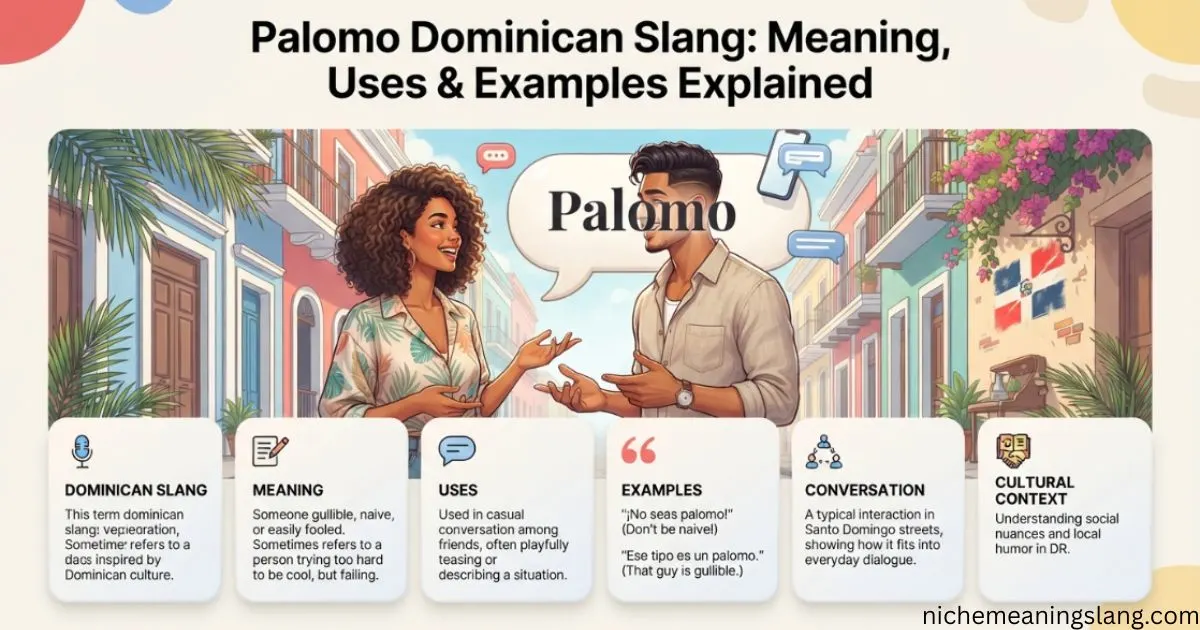
Palomo Dominican slang usually describes a man who is naive, gullible, shy, soft, or lacking confidence, especially in social or romantic situations. In Dominican Spanish, the word can carry shades of weakness, innocence, or being easily fooled. ASALE also records it as a Dominican term for a good-natured man with a weak character.
The tricky part is that palomo does not have one perfect English equivalent. Depending on context, it can suggest “naive,” “pushover,” “fool,” or a guy who is too shy to make a move. Dominican-language sources also connect it with street smarts and flirting, so this guide separates the literal meaning from the slang meaning.
What Does “Palomo” Literally Mean in Dominican Spanish? Palomo Dominican Slang
Literally, palomo refers to a male pigeon or dove, but Dominican slang gives the word a very different social meaning. In Dominican Spanish, it can describe someone who is naive, innocent, gullible, weak, or easily taken advantage of. The exact shade depends heavily on the conversation.
For an English speaker, “palomo” might therefore translate as fool, sucker, pushover, soft guy, or naive person rather than one fixed English word. ASALE’s Dominican definition emphasizes a good man with a weak character, while other Dominican resources emphasize innocence and being easily fooled.
How Is “Palomo” Used in Everyday Dominican Conversation? Palomo Dominican Slang
In everyday Dominican conversation, palomo is generally directed at a person rather than an object. Expressions such as “Ese tipo es un palomo” can suggest that the guy is foolish or too easy to fool, while “No seas palomo” tells someone not to act naive, timid, or overly passive.
Romantic situations can make the meaning more specific. Lingoda gives palomo as a man who is shy when flirting, while other Dominican sources describe someone who lacks street smarts or confidence. So the word can move from “naive” to “shy” or “soft” depending on what the speaker is criticizing.
18. Palomo
Lingopie lists Palomo as its 18th Dominican slang term and explains it as someone who is too naive or innocent, easily fooled, or too nice for their own good. Its example, “Ese es un palomo,” illustrates the word as a casual judgment about someone’s gullibility.
What Is the Difference Between “Palomo” and Other Dominican Slang Terms? Palomo Dominican Slang
The closest comparison depends on what behavior the speaker means. Bobo can suggest a fool or simpleton, while pariguayo is commonly associated with someone clueless, timid, or socially out of the loop. Tíguere, by contrast, describes someone street-smart and socially sharp the opposite direction from palomo.
| Term | General sense | Main distinction |
| Palomo | Naive, weak, gullible, shy | Often emphasizes softness or lack of confidence |
| Bobo | Fool, simpleton | More general foolishness |
| Pariguayo | Clueless or timid person | Often social awkwardness or being out of the know |
| Tíguere | Street-smart person | Contrasts with a naive or inexperienced person |
| Pendejo | Fool, idiot, coward | Broader Spanish slang with regional variation |
These distinctions are contextual rather than absolute. Dominican slang is flexible, and speakers can use overlapping words differently by neighborhood, generation, relationship, and situation. The important semantic contrast is that palomo repeatedly connects with naivety, weakness, timidity, or being easily taken advantage of.
Is “Palomo” Always Negative or Can It Be Playful? Palomo Dominican Slang
Usually, calling someone palomo is not a compliment. It can criticize a person for being gullible, too soft, timid, or lacking social confidence. However, friends may use the word jokingly, especially when teasing someone about a romantic situation or an overly generous gesture.
That difference between insult and teasing matters. A close friend saying “No seas palomo” may simply be joking, while the same phrase from a stranger could sound disrespectful. Because tone carries so much meaning in Dominican Spanish, learners should understand the word before attempting to use it casually.
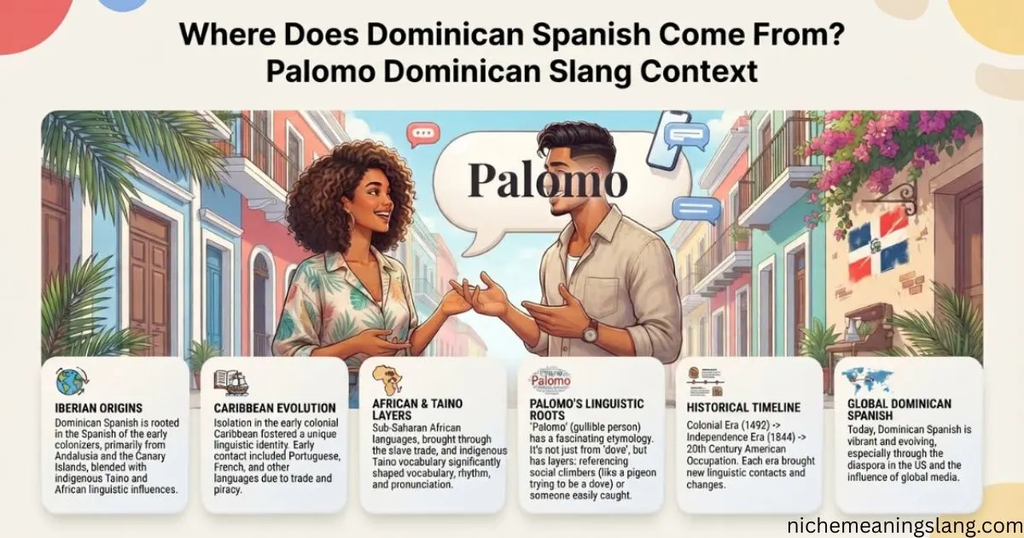
Where Does Dominican Spanish Come From? Palomo Dominican Slang Context
Understanding Dominican slang becomes easier when you understand Dominican Spanish itself. Lingopie describes it as a language variety shaped by Spanish, Taíno, African, Caribbean, and U.S. influences. Lingoda likewise notes historical influences from Spanish colonial dialects, Indigenous languages, Africa, and later U.S. contact.
That history helps explain why a familiar Spanish word can develop a distinctly Dominican social meaning. Palomo is a good example: its ordinary bird-related meaning exists alongside a Dominican slang sense connected with weakness, naivety, shyness, and social behavior. Meaning therefore comes from both vocabulary and cultural context.
25 Dominican Slang Terms You Gotta Know Palomo Dominican Slang Context
Palomo sits inside a much larger Dominican slang system. Lingopie’s Dominican vocabulary guide includes terms such as qué lo que, vaina, jevi, dique, pariguayo, tiguere, bobo, bacano, tato, and muela. Learning these neighboring expressions makes palomo easier to understand because slang meanings often become clearer through contrast.
For example, tíguere is associated with being street-smart, while palomo can suggest the opposite: someone who is too trusting or inexperienced. Pariguayo can point toward timidity or being out of the loop. These relationships create a useful semantic map for understanding Dominican street language rather than memorizing isolated translations.
Common Dominican Spanish Slang and Phrases Palomo Dominican Slang Context
Dominican Spanish slang is often heard in music, social media, informal conversations, and diaspora communities. Lingoda notes that Dominican Spanish is widely heard in the United States, particularly in the Northeast, while Dominican-language resources show how local expressions travel through music and online culture.
That means an American listener may encounter palomo without being in the Dominican Republic. A song, TikTok, conversation, or Dominican-American social group can carry the expression into a different setting. Even then, the safest interpretation depends on the surrounding words: is the speaker talking about foolishness, flirting, weakness, or simply teasing a friend?
Conclusion:
The most useful way to understand palomo Dominican slang is as a context-dependent label for someone perceived as naive, gullible, soft, shy, or lacking confidence. In romantic situations, it can point particularly toward a man who is timid or easily controlled; in broader conversation, it can simply mean a fool or pushover.
FAQs
The main questions surrounding palomo concern its translation, tone, and relationship context. Because the word does not map neatly onto one English equivalent, understanding the speaker’s intent is more useful than relying on a single dictionary translation.
For American readers encountering the expression online, the practical takeaway is straightforward: palomo is usually a negative or teasing description of someone who is naive, soft, gullible, shy, or lacking confidence. It is informal and should not be treated as a neutral everyday synonym for “man.”
What does palomo mean in Dominican slang?
It generally describes a man who is naive, gullible, weak, shy, or easily taken advantage of. Depending on context, it can suggest a pushover or someone who lacks confidence, especially around flirting or relationships.
Is palomo an insult?
Usually, yes. It commonly carries a negative or mocking sense, although close friends can use it playfully. Because tone matters, calling a stranger palomo can sound disrespectful.
What does “no seas palomo” mean?
A natural English rendering is “don’t be a fool,” “don’t be so naive,” or “don’t be a pushover.” The best translation changes according to what the person is doing in the conversation.
Does palomo mean shy in Dominican Spanish?
It can. Lingoda specifically lists the Dominican slang meaning as a man who is shy when flirting. Other sources use the word more broadly for someone naive or weak, so romantic context can narrow the meaning.
What is the literal meaning of palomo?
Outside the Dominican slang sense, palomo refers to a male pigeon/dove. The slang meaning developed separately from that literal animal meaning and should be interpreted from context.
Is palomo used outside the Dominican Republic?
The word itself exists throughout Spanish, but its slang meanings vary by country. ASALE specifically records the weak-character/young-man senses for the Dominican Republic, so you should not automatically assume the Dominican meaning applies elsewhere.
Related Slang Words

Ryan Mitchell is a language enthusiast and writer who explores slang, modern expressions, and everyday language. At nichemeaningslang, he helps readers understand slang meanings, usage, and context in a simple and easy-to-follow way.