Way in Spanish Slang: Meaning, Uses & Examples
Have you heard someone say “way” in a Spanish conversation and wondered what it means? If the speaker was Mexican, they were probably saying güey, commonly written as wey in informal messages. This popular Mexican Spanish slang word can mean “dude,” “bro,” “man,” or “guy.” Depending on the tone and situation, it can also mean “fool” or “idiot.”
The spelling can be confusing for English speakers because güey is often pronounced roughly like “way,” with a soft or barely noticeable initial sound in fast speech. In this guide, you will learn what way means in Spanish slang, how güey and wey differ in spelling, how people use the word in conversation, and when it is better to avoid it.
What Does Way Mean in Spanish Slang?
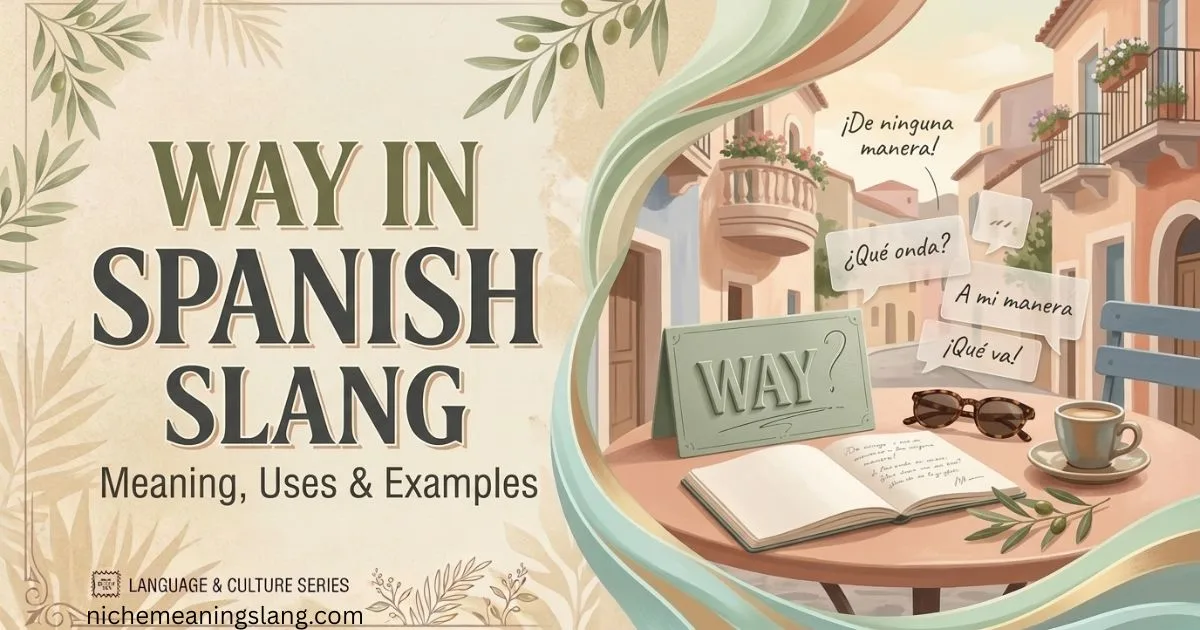
When someone searches for “way in Spanish slang,” they are often trying to identify the Mexican Spanish word güey (also written wey). It is an extremely informal expression used to address someone or refer to another person.
The most common English equivalents include:
- Dude: A casual way to address a friend.
- Bro: An informal term for a friend or companion.
- Man: A familiar way to address someone.
- Guy: A way to refer to a person.
- Fool or idiot: A negative meaning that depends on the context.
For example, “¿Qué onda, güey?” means “What’s up, dude?” In a different situation, “No seas güey” can mean “Don’t be an idiot.” The same word can sound friendly, teasing, or insulting depending on the speaker’s tone and relationship with the listener.
The important point is that “way” is generally a phonetic guess at what someone heard, rather than the usual Spanish spelling of this slang word. If you want to write the expression correctly, güey is a useful spelling to learn.
How Do You Spell Way in Spanish Slang?
The expression appears in several spellings, especially in online conversations. They usually refer to the same Mexican slang word, although formal spelling and informal typing are not identical.
| Spelling | Explanation | Example |
| Güey | A widely recognized Spanish spelling | “¿Qué haces, güey?” |
| Wey | A common informal spelling in texts and social media | “Hola, wey.” |
| Guey | A simplified spelling without the diacritic | “Ese guey llegó tarde.” |
| Way | An English-style attempt to represent the sound | Someone writes “way” after hearing it spoken |
The two dots above the ü are called a diaeresis. In Spanish, they indicate that the u should be pronounced in this spelling. The expression is generally pronounced as one syllable, approximately like “gway.”
If you are learning Mexican Spanish, start with güey in your vocabulary notes. You will often encounter wey in casual digital writing.
How Is Güey Used in Mexican Spanish?
Güey is flexible. It can address someone directly, refer to an unnamed person, or add emphasis to a sentence. It is especially associated with informal Mexican Spanish.
1. Using Güey to Mean “Dude”
Friends may use güey when greeting one another or talking casually.
Example:
“¿Qué onda, güey?”
English meaning: “What’s up, dude?”
Here, the expression is familiar and conversational. Depending on the relationship, it may feel similar to saying “dude” or “bro” in English.
2. Using Güey to Mean “Guy”
The word can also refer to another person without using their name.
Example:
“¿Quién es ese güey?”
English meaning: “Who is that guy?”
In this sentence, the speaker is referring to a person. Whether the expression sounds neutral, dismissive, or rude depends on the situation and delivery.
3. Using Güey as an Insult
Güey can take on a negative meaning when a speaker is criticizing someone or suggesting that they have acted foolishly.
Example:
“No seas güey.”
English meaning: “Don’t be an idiot.”
This is more confrontational than greeting a friend with “¿Qué onda, güey?” The words may be the same, but the intended meaning changes with the context.
4. Using Güey for Emphasis
In casual speech, people may repeat güey as a conversational filler, much as English speakers sometimes repeat “man,” “dude,” or “you know.”
Example:
“Güey, no puedo creerlo.”
English meaning: “Dude, I can’t believe it.”
This usage is informal and may sound unnatural if repeated too frequently by a Spanish learner.
Examples of Way, Güey, and Wey in Everyday Conversation
These examples show how the word can appear in different situations. The English translations focus on the intended meaning rather than translating each word literally.
| Spanish expression | English translation | Typical tone |
| ¿Qué onda, güey? | What’s up, dude? | Friendly, informal |
| Hola, wey. | Hey, bro. | Casual |
| Oye, güey, escucha. | Hey, man, listen. | Familiar |
| ¿Quién es ese güey? | Who is that guy? | Depends on tone |
| No seas güey. | Don’t be an idiot. | Critical or teasing |
| Ay, güey. | Oh, man! / Whoa! | Surprise or frustration |
| ¿Qué haces, güey? | What are you doing, dude? | Casual |
| Está bien, güey. | It’s fine, man. | Informal |
| No manches, güey. | No way, dude! / You’re kidding! | Surprise or disbelief |
| Ese güey es mi amigo. | That guy is my friend. | Informal |
These translations are approximate. Mexican Spanish varies across regions and speakers, and the same phrase can communicate different feelings depending on the conversation.
Is Güey a Bad Word in Spanish?
Güey is not always an insult, but it is definitely informal. Among close friends, it may be used casually without causing offense. When said angrily or directed at someone in a disrespectful way, it can mean “fool” or “idiot.”
Consider these two situations:
Friendly conversation
“¡Qué onda, güey!”
Meaning: “What’s up, dude!”
Argument
“No seas güey. ¿Por qué hiciste eso?”
Meaning: “Don’t be an idiot. Why did you do that?”
The first expression may sound friendly, while the second can sound critical or insulting. Context, voice, and the relationship between speakers are essential.
If you are unsure whether someone is comfortable with the word, it is safer not to use it toward them. Avoid it in formal conversations, job interviews, professional emails, and situations where respectful language is expected.
Why Do People Write Wey Instead of Güey?
The spelling wey is widespread in informal Mexican digital communication. It is short, easy to type, and represents the way many speakers pronounce the word.
You might see it in text messages, memes, comments, and conversations between friends. For example:
- “Qué onda wey” — What’s up, dude?
- “No manches wey” — No way, man!
- “Vamos, wey” — Let’s go, bro.
The spelling güey remains useful for learners because it is a recognized Spanish spelling. Informal writing is often flexible, however, and not everyone follows the same spelling conventions in texts.
If you encounter “way” in an English-language discussion about Spanish, it may be someone attempting to spell the sound they heard. The intended word is often güey, but the surrounding conversation is needed to confirm it.
Is Güey Used Throughout the Spanish-Speaking World?
Güey is particularly associated with Mexican Spanish. Other Spanish-speaking countries have their own informal expressions for “dude,” “bro,” or “friend,” and they are not always interchangeable.
For example, you may hear these expressions in different places:
| Slang term | Common association | Approximate meaning |
| Güey / wey | Mexico | Dude, bro, guy |
| Parce | Colombia | Buddy, friend |
| Boludo | Argentina and Uruguay | Dude or fool, depending on context |
| Weón / hueón | Chile | Dude or fool, depending on context |
| Tío | Spain, in informal speech | Guy or mate |
| Mae | Costa Rica | Dude or friend |
These are broad regional associations, not strict rules. Meanings, pronunciation, and levels of politeness can differ between communities.
If you hear something that sounds like “way” in a Mexican film or conversation, güey is a strong possibility. If the speaker is from another Spanish-speaking country, the expression may be different.
How to Respond When Someone Calls You Güey
Your response depends on whether the person is greeting you, joking with you, or criticizing you.
If a friend says “¿Qué onda, güey?”
You can respond naturally with a simple greeting, such as:
- “Todo bien.” — Everything’s good.
- “Bien, ¿y tú?” — Good, and you?
- “¿Qué pasó?” — What’s up? / What happened?
If someone says “No seas güey”
They may be teasing you or suggesting you made a foolish decision. If the tone is friendly, you can laugh it off. If it feels disrespectful, you do not need to repeat the slang word in response.
If you do not understand the word
You can ask what the person means or simply continue the conversation without using the expression yourself. Learning slang is easier when you observe how native speakers use it rather than trying to copy every phrase immediately.
Conclusion
If you hear “way” in Spanish slang, the speaker may be saying güey or wey, a popular expression associated with Mexican Spanish. It can mean “dude,” “bro,” “man,” or “guy,” but it can also be insulting when used to criticize someone.
The key is to understand the context. Learn the spelling güey, recognize wey in casual messages, and pay attention to the speaker’s tone before using the expression yourself. With a little practice, you will be better prepared to recognize this familiar Mexican slang word in conversations, movies, and social media.
FAQs
1. What does “way” mean in Spanish slang?
“Way” usually refers to güey or wey, a Mexican Spanish slang expression meaning “dude,” “bro,” “man,” or “guy.” In negative contexts, it can also mean “fool” or “idiot.”
2. Is “way” the correct spelling in Spanish?
Usually not if you mean Mexican slang. The recognized spelling is güey, while wey is a common informal version. “Way” is often an English speaker’s attempt to represent the pronunciation.
3. What does wey mean in a text message?
In Mexican Spanish texting, wey commonly means “dude,” “bro,” or “man.” It can also refer to a person or be used insultingly, depending on context.
4. How do you pronounce güey?
Güey is generally pronounced as one syllable, approximately “gway.” The initial consonant may sound weak in fast speech, which can make the word sound like “way” to an English speaker.
5. Is güey rude?
It can be rude, but it is not always an insult. Friends may use it casually, while an angry or dismissive delivery can make it offensive. It is best avoided in formal situations.
6. What is the difference between güey and wey?
They generally represent the same Mexican slang expression. Güey is a recognized Spanish spelling, while wey is widely used in informal writing and digital communication.
7. Does güey mean friend?
Not exactly. It can be used to address a friend, much like “dude” or “bro,” but it can also mean “guy” or “fool.” The word does not automatically mean that two people are friends.
8. Is güey used in Spain?
Güey is especially associated with Mexican Spanish, so it is not the most typical informal term across all Spanish-speaking countries. Other regions use their own expressions, such as “tío” in Spain.
Related Slang Words

Ryan Mitchell is a language enthusiast and writer who explores slang, modern expressions, and everyday language. At nichemeaningslang, he helps readers understand slang meanings, usage, and context in a simple and easy-to-follow way.