Feen Meaning What This Slang Word Really Means in 2026
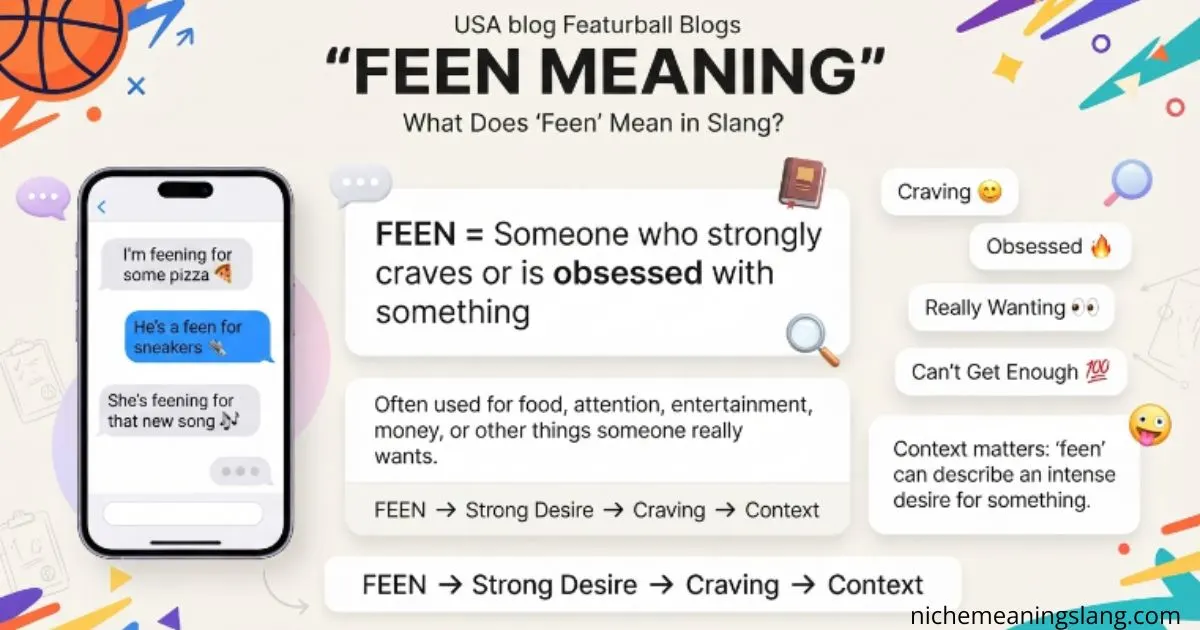
“Feen” usually means someone who strongly craves, wants, or feels obsessed with something. If you saw it in a text, meme, TikTok comment, gaming chat, or rap lyric, the meaning is generally connected to intense desire. In my experience researching modern slang, the confusing part is that “feen” can sound playful in one conversation but much stronger in another. It is closely associated with “fiend,” “feening,” craving, obsession, addiction, and informal internet language. Wiktionary records “feen” as slang for wanting something obsessively, while standard dictionaries establish the broader meanings of “fiend.”
The safest way to understand the feen meaning is to look at the surrounding words and tone. Someone saying, “I’m feening for pizza,” probably means they really want pizza. But describing someone as a “feen” can sometimes suggest excessive desire or addiction, especially when the subject involves substances. That distinction matters because slang changes meaning through context, community, music, memes, and everyday conversation. The guide below breaks down the modern usage so you can understand what someone means without accidentally reading more into the word than they intended.
What Does Feen Mean in Text?
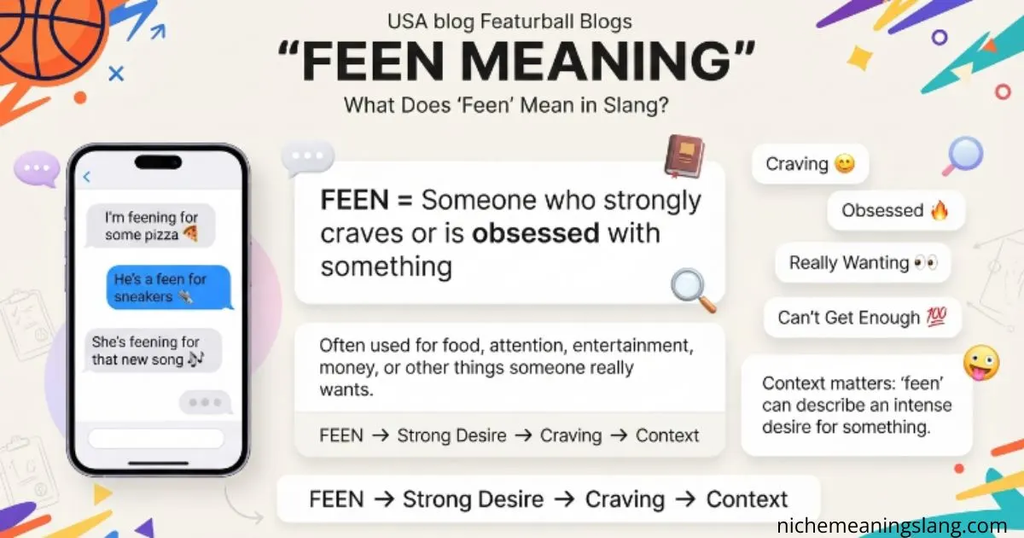
In text messages, “feen” generally describes strong desire, craving, or obsession. A person may be called a feen when they repeatedly want something, while “feening” describes the act of craving it. Common related terms include fiend, obsessed, hooked, craving, and wanting badly.
For example, “Bro is a sneaker feen” suggests that the person is extremely into sneakers or constantly wants new pairs. Likewise, “I’m feening for tacos” means the speaker really wants tacos. The tone is usually casual, playful, exaggerated, or teasing rather than a formal statement about addiction.
Where Is Feen Commonly Used?
“Feen” appears mainly in informal communication, including text messages, group chats, social media comments, memes, gaming conversations, music discussions, and rap-related language. These settings favor shortened spellings, phonetic slang, casual expressions, and exaggerated descriptions of desire.
You are much less likely to see “feen” in professional writing, academic work, business communication, or formal documents. In those situations, clearer words such as “craving,” “enthusiastic,” “obsessed,” or “interested” are safer. Slang depends heavily on audience, so a word that sounds funny among friends can sound confusing elsewhere.
Examples of Feen in Conversation
Imagine your friend has ordered pizza three nights in a row. You might joke, “You’re a pizza feen.” Here, the word communicates excessive enthusiasm rather than making a serious claim about addiction. This playful usage is common with food, games, sneakers, music, entertainment, and hobbies.
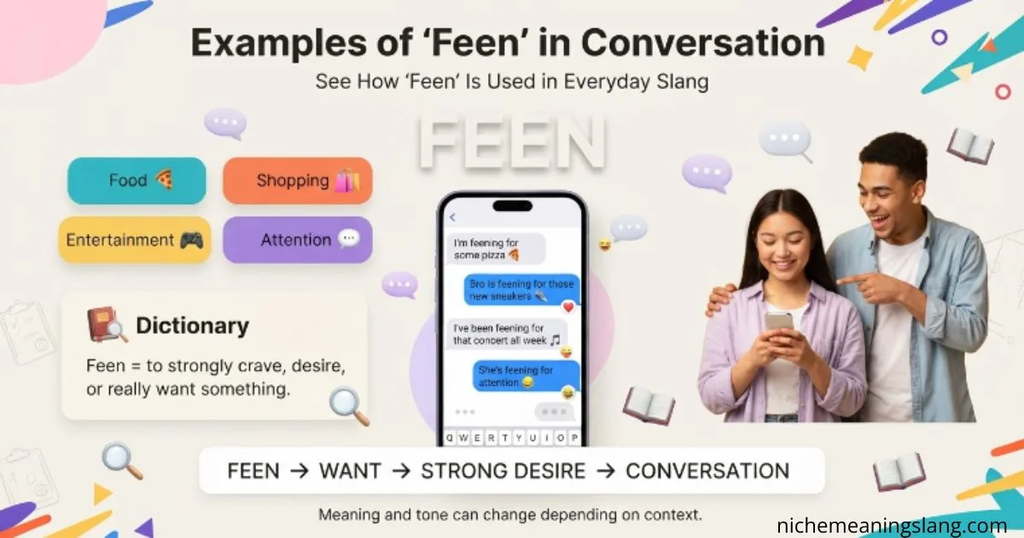
Another example is, “I’m feening for coffee right now.” The speaker is saying they strongly want coffee. You could also see, “She’s a makeup feen,” meaning she is extremely interested in makeup. The important clue is the object of the craving: ordinary subjects usually make the expression humorous, while sensitive subjects can make it much more serious.
When to Use and When Not to Use Feen
Use “feen” primarily in casual conversations where the other person understands slang. Friends, social media, memes, gaming chats, and informal discussions are natural environments. It can communicate craving, enthusiasm, obsession, or playful exaggeration without requiring a long explanation.
Avoid it in professional emails, academic assignments, formal presentations, or serious discussions where precision matters. You should also be careful when using it around addiction-related subjects. Because “feen” developed from “fiend,” a word that can describe an addict, some listeners may interpret it more seriously than you intended.
When to Use
A casual example would be, “You’re a gaming feen 😂,” after your friend has played the same game for hours. “I’m feening for some fries” works similarly. In both examples, the slang creates a playful tone and emphasizes how badly someone wants something without necessarily suggesting a literal addiction.
When Not to Use
Professional writing is the clearest place to avoid “feen.” Instead of writing, “I’m a coffee feen” in a business email, say, “I really enjoy coffee.” Be especially careful with substance-related conversations because the word may carry an addiction-related implication rather than simply meaning someone is enthusiastic.
Similar Slang Words or Alternatives
Depending on the sentence, alternatives include fiend, obsessed, hooked, craving, addict, craver, and wanting badly. They are not perfect synonyms, however. “Obsessed” can describe intense interest, while “addict” has a much stronger meaning. “Hooked” is often more positive or neutral.
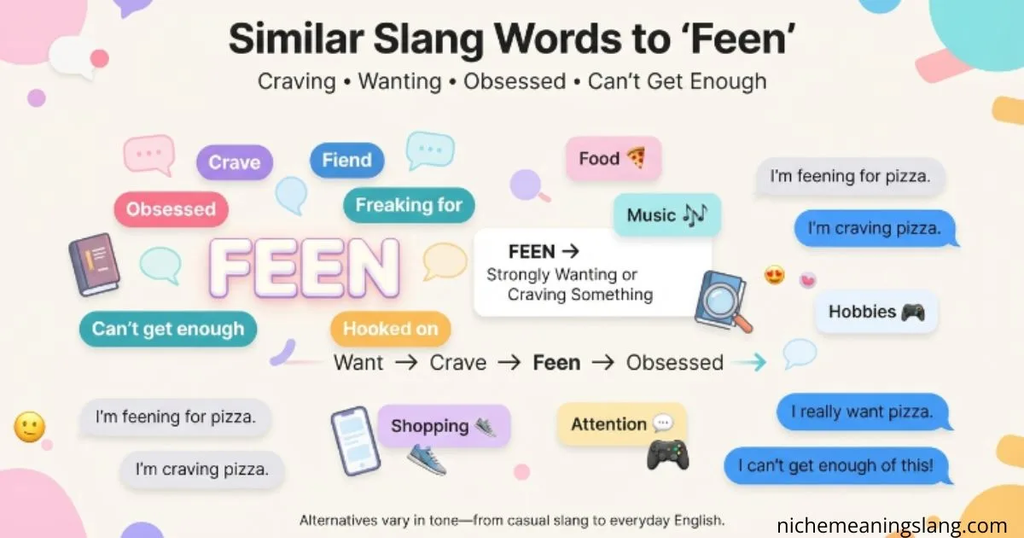
The standard word “fiend” has broader dictionary meanings than slang “feen.” Merriam-Webster includes senses involving extreme devotion, fanaticism, and addiction, while Cambridge also recognizes someone who likes something very much. That explains why modern slang can stretch from harmless enthusiasm to more serious craving.
| Word | Typical meaning | Tone |
| Feen | Strongly wants or craves something | Casual |
| Fiend | Extremely devoted, interested, or addicted | Broader |
| Feening | Craving or strongly wanting | Informal |
| Obsessed | Extremely interested or focused | Neutral/casual |
| Hooked | Very interested or unable to stop | Casual |
| Craving | Strongly wanting something | Neutral |
| Addict | Person dependent on something | Stronger/serious |
How to Use Slang Naturally Without Sounding Awkward
The easiest way to use “feen” naturally is to match the language already being used around you. If a conversation is relaxed and full of slang, “feen” may sound perfectly natural. If everyone is speaking formally, suddenly adding internet slang can feel forced. Context, audience, tone, and relationship all matter.
Think of slang as seasoning rather than the entire meal. A simple sentence such as “I’m feening for tacos” sounds natural because the expression fits the situation. But filling every sentence with slang can make your writing difficult to understand. The goal is communication first, style second.
Common Slang Mistakes
One common mistake is assuming “feen” always means addiction. Modern casual usage can simply mean wanting something badly or being extremely interested in it. At the same time, ignoring its stronger historical association can create problems when the subject involves drugs or other sensitive topics.
Another mistake is confusing “feen” with standard English “fiend.” “Fiend” is the established dictionary spelling, while “feen” is a slang form documented as a variant connected to “fiend.” If you are writing an essay, report, application, or professional message, standard vocabulary is the better choice.
Conclusion
The simplest feen meaning is to strongly crave, want, or obsess over something, especially in casual slang. You might call someone a “food feen,” say you are “feening for pizza,” or use the word jokingly in a text or social-media conversation. Its connection to “fiend” also explains why the word can carry a stronger addiction-related meaning in certain contexts.
The key is context. Among friends, “feen” can be funny and exaggerated; in formal writing or sensitive conversations, clearer standard language is usually better. Once you understand the difference between feen, feening, fiend, craving, obsessed, and hooked, the slang becomes much easier to interpret naturally.
FAQs
What does “feen” mean in slang?
“Feen” usually means to crave, strongly desire, or be extremely interested in something. In casual conversations it can be playful, such as calling someone a “pizza feen.” Context determines whether the expression sounds humorous, mildly negative, or connected to addiction.
Is “feen” the same as “fiend”?
They are closely related but not identical. “Fiend” is the standard English word, while “feen” is documented as a slang form connected to “fiend.” Standard dictionaries give “fiend” several meanings, including an extremely devoted person and an addict.
Is “feen” offensive?
Not automatically. In casual conversations it can be harmless and playful, especially when describing food, hobbies, games, or entertainment. However, it can sound insensitive when referring to someone’s real addiction or substance use, so the surrounding context and relationship matter.
Where did “feen” come from?
The slang sense is connected to “fiend.” Wiktionary identifies the slang verb as deriving from “fiend,” with the meaning of wanting something obsessively or having a strong desire for it. The broader word “fiend” itself has much older English roots.
What does “feening” mean?
“Feening” means strongly craving or wanting something. For example, “I’m feening for pizza” means “I really want pizza.” It is the informal verb form associated with “feen” and is commonly found in casual speech and online writing.
Is “feen” formal English?
No. “Feen” is best treated as informal slang. For formal writing, use standard alternatives such as “craving,” “desiring,” “enthusiastic about,” or “very interested in.” The standard spelling “fiend” has established dictionary usage.
Is “feen” used in rap and hip-hop?
Yes. The term appears in rap-related slang and music contexts. Rap Dictionary describes “feen” as slang for someone addicted to or craving something and connects it with forms such as “feening,” “feenin’,” and “fiending.”
Can “feen” mean a person?
Context matters. In American slang, the craving/obsession sense is the most relevant meaning for this search intent. However, “feen” also has unrelated regional meanings; Wiktionary records an Irish slang noun meaning a young man, guy, or bloke.
Related Slang Words

Ryan Mitchell is a language enthusiast and writer who explores slang, modern expressions, and everyday language. At nichemeaningslang, he helps readers understand slang meanings, usage, and context in a simple and easy-to-follow way.