Venezuela Slang: 60+ Words, Meanings & Examples
Venezuela slang includes colorful Spanish words and expressions such as chamo (dude), pana (friend), chévere (cool), and vaina (thing or situation). These informal expressions are common in Venezuelan conversations, text messages, music, and social media. Learning them can help you understand local humor, connect with Venezuelan friends, and recognize the differences between Venezuelan Spanish and other Latin American varieties.
Whether you’re learning Spanish, traveling to Venezuela, or watching Venezuelan creators online, knowing the right expressions makes everyday conversations easier. This guide explores more than 60 Venezuelan slang words and phrases, complete with English meanings, practical examples, greetings, and cultural tips to help you understand when and how to use them.
What Is Venezuela Slang?
Venezuela slang refers to informal words, phrases, and expressions used by Venezuelans in everyday communication. Much of it comes from Venezuelan Spanish, a variety of Spanish influenced by the country’s regional cultures, Caribbean connections, history, and contact with other communities.
Words like chamo, pana, and chévere are recognizable examples. Others, such as arrecho and vaina, can carry several meanings depending on the situation, tone, and region. Venezuelan slang is especially expressive, often using humor, exaggeration, and familiar terms to communicate emotions or strengthen friendships.
Although some expressions are understood across Latin America, others are more closely associated with Venezuela or particular Venezuelan regions. Their meaning can also change as people use them in music, online conversations, and communities abroad.
60+ Popular Venezuela Slang Words and Meanings
The following Venezuelan slang words cover greetings, friendships, everyday activities, emotions, food, and common expressions. Translations are approximate because informal language does not always have an exact English equivalent.
1. Common Venezuelan Slang Words
| Slang word | English meaning | Example |
| Chamo / Chama | Guy, girl, young person, or dude | ¡Chamo, ven acá! — Dude, come here! |
| Pana | Friend, buddy, or pal | Él es mi pana. — He’s my friend. |
| Chévere | Cool, great, or awesome | La película está chévere. — The movie is great. |
| Vaina | Thing, stuff, matter, or situation | ¿Qué es esa vaina? — What’s that thing? |
| Vale | Okay, all right, or sure | Vale, nos vemos mañana. — Okay, see you tomorrow. |
| Epa | Hey, hello, or an attention-getter | ¡Epa, pana! — Hey, buddy! |
| Épale | Hey there; an informal greeting | ¡Épale, chamo! — Hey, dude! |
| Fino | Good, nice, or all good | Todo fino. — Everything’s good. |
| Burda | A lot, very, or extremely | Está burda de bueno. — It’s really good. |
| De pana | Honestly, genuinely, or seriously | De pana, me gustó. — Honestly, I liked it. |
| Na’guará | An exclamation of surprise or amazement, especially associated with Lara | ¡Na’guará, qué grande! — Wow, that’s huge! |
| Ladilla | Something annoying or tedious | Qué ladilla esperar. — Waiting is such a pain. |
These words are useful starting points because they appear in casual conversations and help learners recognize the tone of Venezuelan Spanish. Vaina is particularly flexible, while burda often intensifies the meaning of an adjective or statement.
2. Venezuelan Slang for Friends and People
| Slang word | English meaning | Example |
| Chamo | Dude, guy, or young person | Ese chamo es simpático. — That guy is friendly. |
| Chama | Girl or young woman; sometimes an informal form of address | La chama llegó temprano. — The girl arrived early. |
| Pana mío | My buddy or close friend | Él es pana mío. — He’s my buddy. |
| Panita | Little buddy or affectionate term for a friend | Gracias, panita. — Thanks, buddy. |
| Marico / Marica | A familiar address among some friends; can also be insulting | ¡Marico, mira eso! — Dude, look at that! |
| Jevo / Jeva | Boyfriend, girlfriend, or romantic partner in some usage | Mi jeva viene hoy. — My girlfriend is coming today. |
| Chamo chévere | A friendly or cool guy, depending on context | Es un chamo chévere. — He’s a cool guy. |
| Carajito / Carajita | Kid or young person; informal and sometimes dismissive | El carajito está jugando. — The kid is playing. |
Cultural note: Marico and marica require particular care. Some Venezuelans use them casually with close friends, but the terms can also be offensive or homophobic. Their familiarity does not make them appropriate in every setting, so Spanish learners should generally avoid using them until they understand the relationship and context.
3. Venezuelan Slang Greetings and Everyday Phrases
| Expression | Meaning in English | Example or response |
| ¿Qué más? | What’s up? / How’s it going? | ¿Qué más, pana? — What’s up, buddy? |
| ¿Qué hubo? | What’s up? / What happened? | ¿Qué hubo, chamo? — What’s up, dude? |
| ¿Todo fino? | Everything good? | Sí, todo fino. — Yes, all good. |
| Todo bien | Everything is fine | Todo bien, gracias. — All good, thanks. |
| Dale | Okay, go ahead, or let’s do it | Dale, nos vemos. — Okay, see you. |
| De una | Absolutely, right away, or let’s do it | ¿Vamos? ¡De una! — Shall we go? Absolutely! |
| Nos vemos | See you | Nos vemos mañana. — See you tomorrow. |
| Chao | Bye | Chao, pana. — Bye, buddy. |
| Cuídate | Take care | Cuídate mucho. — Take good care. |
| ¿Qué cuentas? | What’s new? | ¿Qué cuentas, chamo? — What’s new, dude? |
These expressions are useful for informal conversations with friends, acquaintances, and people you know socially. Greetings such as epa and ¿qué más? can make a conversation sound more natural, but tone and familiarity still matter.
4. Venezuelan Slang for Emotions and Reactions
| Slang word or phrase | Meaning | Example |
| Arrecho / Arrecha | Angry, difficult, impressive, or intense, depending on context | Ese partido estuvo arrecho. — That match was intense. |
| Qué fino | How nice! / That’s great! | ¡Qué fino que viniste! — It’s great that you came! |
| Qué ladilla | How annoying! / What a pain! | ¡Qué ladilla el tráfico! — The traffic is such a pain! |
| Qué vaina | What a situation! / What a mess! | ¡Qué vaina con la lluvia! — What a mess with the rain! |
| Qué nota | How cool! / What a great thing! | ¡Qué nota ese concierto! — That concert is awesome! |
| Mosca | Be alert or watch out | ¡Mosca con el carro! — Watch out for the car! |
| Echar broma | To joke around or tease | Estamos echando broma. — We’re joking around. |
| Chalequear | To tease, mock, or make fun of someone | No me chalequees. — Don’t make fun of me. |
| Qué molleja | An exclamation associated particularly with Zulia | ¡Qué molleja de calor! — What incredible heat! |
| De lo más bien | Very well or perfectly fine | Todo salió de lo más bien. — Everything went really well. |
One of the most context-dependent words is arrecho. It may express anger, describe a difficult situation, or communicate admiration for something impressive. The meaning cannot be determined reliably from the word alone.
5. Venezuelan Slang for Work, Money, and Daily Life
| Word or phrase | English meaning | Example |
| Chamba | Job or work | Conseguí una chamba. — I found a job. |
| Chambear | To work | Tengo que chambear. — I have to work. |
| Real | Money, especially in informal speech | No tengo real. — I don’t have any money. |
| Lucas | Informal term for money; exact value depends on context | Me costó cien lucas. — It cost me a hundred [units of money]. |
| Guiso | A shady deal, scam, or corrupt arrangement in some contexts | Eso parece un guiso. — That looks like a shady deal. |
| Ladillado / Ladillada | Bored, fed up, or annoyed | Estoy ladillado. — I’m fed up. |
| Resolver | To find a way to manage or solve a problem | Yo resuelvo eso. — I’ll figure that out. |
| Echar los perros | To flirt with or pursue someone romantically | Le está echando los perros. — He’s flirting with them. |
| Dar la cola | To give someone a ride | ¿Me das la cola? — Can you give me a lift? |
| Hacer una vaca | To pool money together | Hagamos una vaca. — Let’s pool our money. |
Some expressions are shared with other Spanish-speaking countries, and their precise usage can differ. Lucas, for example, is used for money in several Latin American communities, so it is not exclusive to Venezuela.
6. Venezuelan Food and Cultural Words
| Word | Meaning | Example |
| Arepa | A round cornmeal cake or bread, often filled with different ingredients | Vamos a comer arepas. — Let’s eat arepas. |
| Cachapa | A sweet corn pancake traditionally associated with Venezuelan cuisine | Quiero una cachapa. — I want a cachapa. |
| Caraotas | Beans, often black beans in Venezuelan meals | Hay caraotas para almorzar. — There are beans for lunch. |
| Cambur | Banana | Voy a comprar cambures. — I’m going to buy bananas. |
| Cotufa | Popcorn | Vamos a hacer cotufas. — Let’s make popcorn. |
| Papelón | Unrefined cane sugar, often used in drinks and cooking | Agua de papelón es dulce. — Papelón water is sweet. |
| Hallaca | A traditional Venezuelan dish commonly associated with Christmas | Comemos hallacas en diciembre. — We eat hallacas in December. |
| Chinchorro | A hammock in Venezuelan usage | Voy a descansar en el chinchorro. — I’m going to rest in the hammock. |
These words are cultural vocabulary rather than slang in every situation. Including them helps learners understand Venezuelan conversations about food, family gatherings, and everyday life.
Venezuelan Slang Phrases for Everyday Conversations
Learning individual words is useful, but hearing them in complete sentences makes their meanings easier to remember.
Casual Conversation With a Friend
Spanish:
A: ¡Epa, chamo! ¿Qué más?
B: Todo fino, pana. ¿Y tú?
A: Todo bien. ¿Vamos a comer algo?
B: ¡De una!
English translation:
A: Hey, dude! What’s up?
B: All good, buddy. How about you?
A: Everything’s good. Shall we go get something to eat?
B: Absolutely!
Talking About Something Cool
Spanish:
A: ¿Viste el concierto de anoche?
B: Sí, estuvo chévere.
A: ¡De pana! La música estuvo burda de buena.
English translation:
A: Did you see last night’s concert?
B: Yes, it was great.
A: Seriously! The music was really good.
Expressing Frustration
Spanish:
A: El autobús todavía no llega.
B: ¡Qué ladilla! Llevamos una hora esperando.
A: Sí, qué vaina.
English translation:
A: The bus still hasn’t arrived.
B: How annoying! We’ve been waiting for an hour.
A: Yes, what a pain.
These examples illustrate common informal patterns. Speakers may shorten words, change their tone, or use regional expressions that are unfamiliar to Spanish learners.
Funny Venezuelan Slang Words and Expressions
Venezuelan Spanish can sound especially expressive because speakers often use exaggeration, playful teasing, and emphatic reactions.
- ¡Na’guará! — An expression of amazement, surprise, or frustration, particularly associated with Lara State.
- ¡Qué molleja! — An expressive exclamation strongly associated with the Zulia region.
- ¡Qué vaina! — A flexible reaction to an annoying, surprising, or complicated situation.
- Echar broma — To joke around with friends.
- Chalequear — To tease or poke fun at someone.
- Burda de bueno — Really good or extremely good.
- Estar fino — To be doing well or to describe something as good.
- Qué nota — A way to say something is cool, enjoyable, or impressive.
- Mosca — A short warning to pay attention or be careful.
- Dar la cola — To offer someone a ride, rather than literally giving them a body part.
Humor often depends on delivery. A phrase that sounds dramatic when translated into English may be ordinary in a Venezuelan conversation. Regional background and relationships also influence how an expression is understood.
Venezuelan Slang Words You Should Use Carefully
Not all informal expressions are friendly. Some can sound vulgar, insulting, or overly familiar when used with the wrong person.
| Expression | Why to be careful |
| Marico / marica | Can be a familiar term between friends, but can also be a homophobic slur or insult. |
| Arrecho / arrecha | Can have vulgar meanings and may communicate anger or admiration depending on context. |
| Verga | A vulgar word that also appears as an emphatic exclamation. |
| Coño | A profanity or strong exclamation; intensity varies by country and situation. |
| Carajo | A curse word or expression of frustration and surprise. |
| Pendejo / pendeja | Can mean foolish or stupid and may be insulting. |
| Ladilla | Informal and somewhat vulgar in some contexts; commonly used to describe something annoying. |
| Guiso | May imply corruption, dishonesty, or a shady arrangement. |
A good rule is to understand these terms before trying to use them. Friends may use profanity affectionately, but the same words can sound disrespectful at work, with strangers, or in formal situations.
What Makes Venezuelan Spanish Different From Other Latin American Slang?
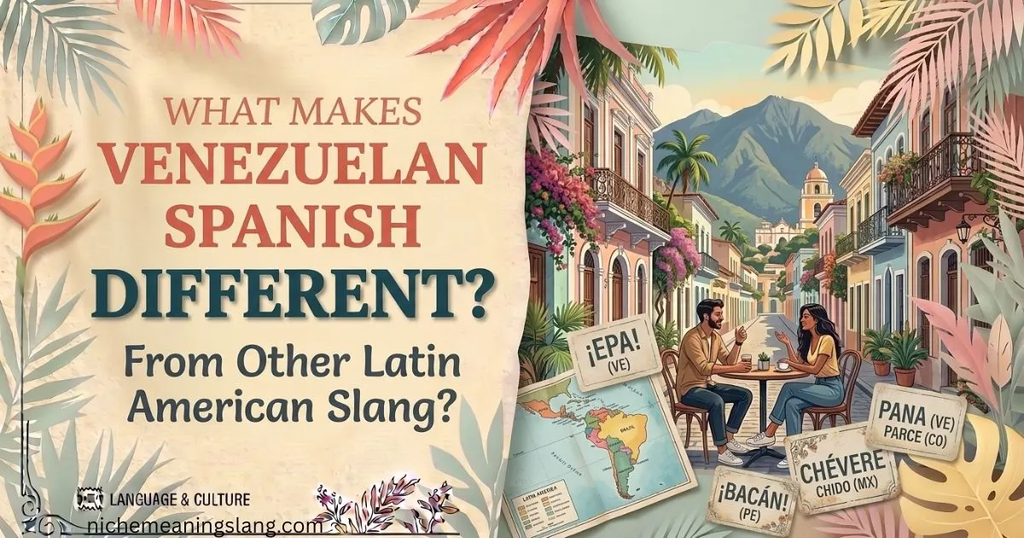
Venezuelan Spanish shares many words with neighboring countries, especially Colombia and other Caribbean communities. However, its familiar expressions, local pronunciation, regional vocabulary, and conversational style give it a distinctive character.
For example, chamo is strongly associated with Venezuela as an informal way to address a person. Pana means friend or buddy, while chévere expresses approval or enthusiasm and is understood in several other Latin American countries as well.
Regional differences also matter within Venezuela. Expressions such as na’guará and qué molleja have particularly strong associations with certain areas. A speaker from Caracas may not use exactly the same vocabulary or pronunciation as someone from Maracaibo or Lara.
Migration and social media have also spread Venezuelan expressions beyond the country’s borders. As a result, hearing pana or chévere does not necessarily mean that a speaker currently lives in Venezuela.
How to Learn and Use Venezuela Slang Naturally
If you’re learning Venezuelan Spanish, start with everyday expressions rather than memorizing a long list of unfamiliar words.
- Learn greetings first. Practice epa, ¿qué más?, todo fino, and nos vemos.
- Use friendly vocabulary. Words such as pana and chévere are useful in many informal situations.
- Learn complete sentences. Memorizing a phrase in context is often more effective than memorizing a translation alone.
- Pay attention to regional differences. An expression common in one state may be less familiar in another.
- Listen to native speakers. Venezuelan interviews, podcasts, videos, and conversations can help you recognize pronunciation and tone.
- Be careful with profanity. Understand words such as marico and verga before considering whether they are appropriate to use.
- Ask when uncertain. A polite question is better than using an expression in a way that might offend someone.
The goal is not to force slang into every sentence. Use it naturally when the situation and your relationship with the other speaker make it appropriate.
Conclusion
Venezuela slang adds personality, warmth, and humor to everyday Spanish. From chamo and pana to chévere, vaina, and burda, these expressions help explain how Venezuelans greet friends, describe experiences, react to surprises, and share jokes.
The most important thing is to understand the context. Some words are friendly and widely useful, while others are regional, vulgar, or potentially offensive. By learning the meanings alongside real examples, you can better understand Venezuelan conversations and appreciate the country’s distinctive Spanish vocabulary.
FAQs
What is the most common slang word in Venezuela?
Chamo and pana are among the best-known Venezuelan slang words. Chamo can mean dude, guy, or young person, while pana means friend, buddy, or pal.
What does chamo mean in Venezuela?
Chamo generally refers to a guy, boy, young person, or someone being addressed informally. Its feminine form is chama. In conversation, it can work much like “dude” or “hey.”
What does pana mean in Venezuelan slang?
Pana means friend, buddy, or pal. For example, Él es mi pana means “He’s my friend.” It is a common informal expression associated with Venezuelan Spanish.
What does chévere mean?
Chévere means cool, great, nice, or awesome. For example, La fiesta estuvo chévere means “The party was great.”
What does vaina mean in Venezuela?
Vaina is a flexible informal word that can mean thing, stuff, matter, problem, or situation. Its meaning depends on the sentence and the speaker’s tone.
What does arrecho mean in Venezuela?
Arrecho can describe someone who is angry, something difficult, or something impressive. The intended meaning depends heavily on context, and the word can have vulgar connotations.
What does marico mean in Venezuelan slang?
Among some close friends, marico can function like “dude” or “bro.” However, it can also be offensive or homophobic, so it should not be assumed to be harmless in every conversation.
How do Venezuelans say hello?
Informal greetings include epa, épale, and ¿qué más? A person might say ¡Epa, pana! ¿Qué más? to mean “Hey, buddy! What’s up?”
What does mosca mean in Venezuelan slang?
Mosca can mean “watch out,” “be alert,” or “pay attention.” For example, Mosca con el carro means “Watch out for the car.”
What does burda mean in Venezuelan Spanish?
Burda is commonly used as an intensifier meaning “a lot,” “very,” or “extremely.” Burda de bueno means “really good.”
Is Venezuelan slang the same as Colombian slang?
No. Venezuelan and Colombian Spanish share some expressions, but each country also has distinctive vocabulary, pronunciation, and regional usage. The meaning of an individual word can overlap or differ between communities.
Is Venezuelan slang appropriate in formal situations?
Some expressions are fine in casual conversation but may sound too informal in professional or formal settings. Greetings such as epa and words such as pana are best used when the relationship and situation are suitable.

Ryan Mitchell is a language enthusiast and writer who explores slang, modern expressions, and everyday language. At nichemeaningslang, he helps readers understand slang meanings, usage, and context in a simple and easy-to-follow way.