
Ice Meaning Slang What It Means in Text & Social Media
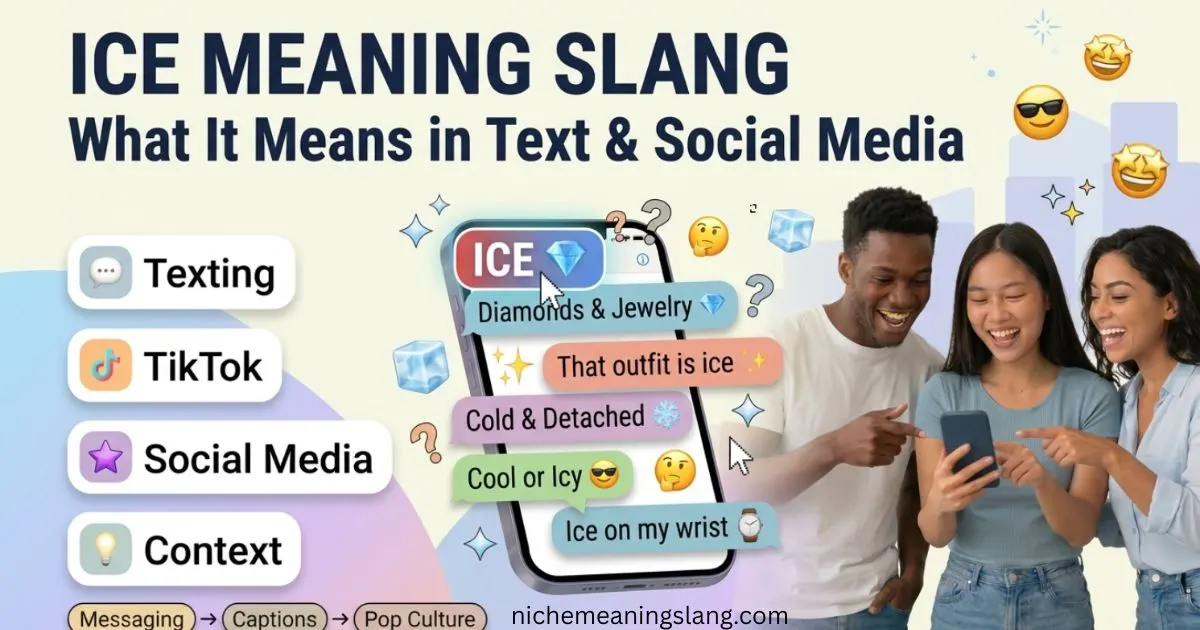
“Ice” in slang most commonly refers to diamonds, expensive jewelry, or flashy accessories, but its meaning can change with context. In texting, rap, TikTok, and everyday conversation, it may also describe wealth, style, confidence, emotional coldness, or, in drug-related conversations, methamphetamine. Merriam-Webster and other major dictionaries recognize jewelry and crystal meth as established slang meanings.
If you have ever read “that chain is ice” and wondered whether someone meant frozen water, diamonds, or something more serious, you are not alone. After researching modern slang usage, music culture, texting language, and community examples, the clearest answer is simple: context decides the meaning. This guide breaks down the major uses, related phrases, and real-world clues so you can understand “ice” without guessing.
Origins of Ice in Slang
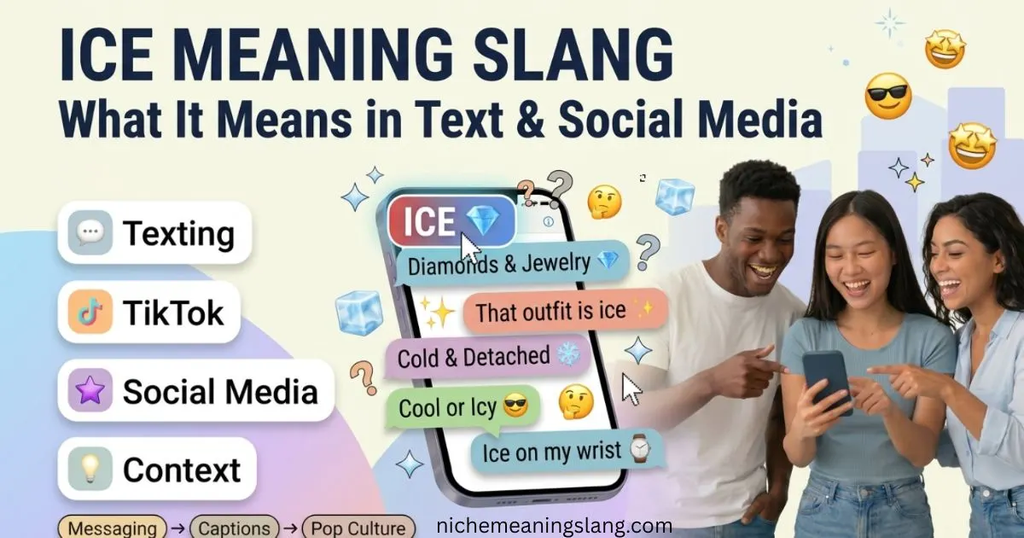
The slang connection between ice and diamonds comes from their visual similarity: diamonds are clear, bright, and sparkling like pieces of ice. That association became especially prominent in jewelry and hip-hop culture, where diamonds represented wealth, success, luxury, and status. Modern slang guides consistently connect “ice” with chains, watches, rings, and other flashy jewelry.
The word did not suddenly acquire one modern internet definition. Instead, several figurative meanings developed around ideas of coldness, shine, value, and control. That explains why “ice” can describe both a diamond-encrusted watch and someone who remains calm under pressure. The surrounding sentence usually tells you which meaning is intended.
Primary Meaning of Ice in Slang
The most recognizable slang meaning of ice is diamonds or expensive jewelry. A person might call a diamond chain, luxury watch, ring, bracelet, or necklace “ice,” especially when the piece is visibly flashy. In this context, the word carries associations with bling, wealth, luxury, status, and personal style.
For example, if someone says, “That watch is straight ice,” they are probably complimenting its diamonds or expensive appearance rather than talking about temperature. Similarly, “He has ice on his wrist” usually points to a diamond watch or bracelet. Reddit discussions about rap lyrics independently reflect this jewelry interpretation.
| Phrase | Likely meaning | Tone |
| “That chain is ice” | Diamond jewelry | Positive |
| “He has ice on his wrist” | Expensive watch/jewelry | Admiring |
| “She’s iced out” | Wearing lots of jewelry | Flashy |
| “That outfit is icy” | Stylish/cool appearance | Complimentary |
Secondary Meanings of Ice in Slang
Beyond jewelry, ice can describe wealth, style, confidence, emotional distance, or composure. Someone with “ice” may be presented as cool, controlled, or difficult to rattle. These figurative uses connect the word to coldness while giving it a more social or emotional meaning than the literal frozen-water definition.
There is also a sensitive drug-related meaning. Major dictionaries identify ice as slang for crystal methamphetamine, so a sentence about police, drugs, addiction, or illegal substances can mean something completely different from a conversation about jewelry.
| Context | Meaning |
| Jewelry | Diamonds or expensive accessories |
| Fashion | Stylish, flashy, impressive |
| Personality | Cold, distant, or emotionally controlled |
| Sports/gaming | Calm under pressure |
| Music | Luxury, diamonds, wealth, status |
| Drug context | Crystal methamphetamine |
Ice in Music and Hip-Hop Culture
Hip-hop and rap played an important role in spreading ice as a word for diamonds and luxury jewelry. In music culture, references to ice often connect a sparkling chain, watch, or ring with wealth, success, confidence, and status. That cultural association helped the expression move from lyrics into everyday conversation and social media.
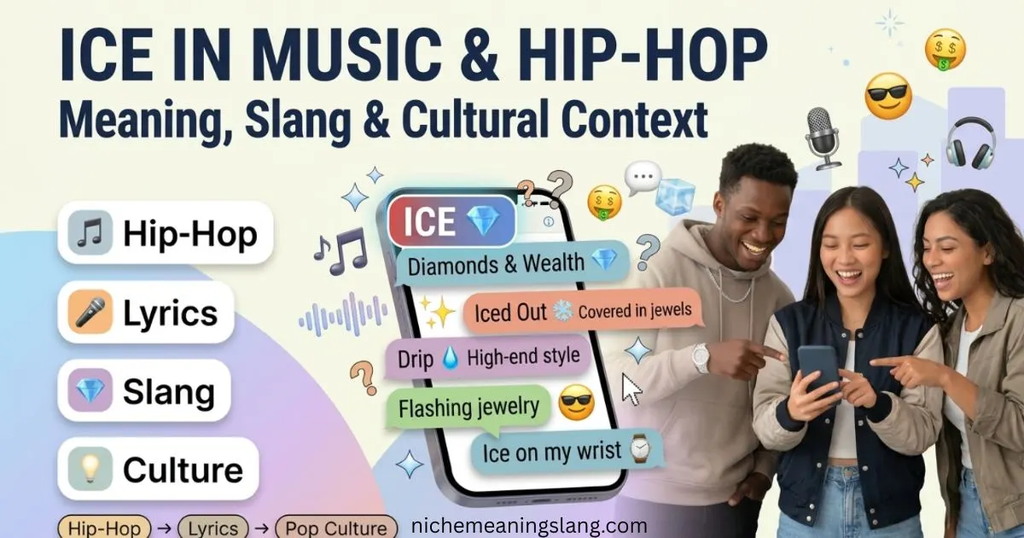
You may hear related expressions such as iced out, “ice on my wrist,” or descriptions of someone being covered in ice. The underlying idea is usually visual: diamonds sparkle like frozen crystals. Community discussions about rap lyrics show that listeners commonly interpret these references as diamond jewelry rather than literal ice.
Ice in Social Media and Online Slang
On TikTok, Instagram, Snapchat, and similar platforms, ice can appear in captions, comments, fashion posts, music discussions, and conversations about luxury. A picture showing a new chain might receive a comment such as “That’s pure ice,” while a sports clip might use “ice” to praise someone for staying calm during pressure.
The visual context is often your biggest clue. A jewelry photo plus 💎 or ✨ strongly points toward diamonds or luxury. A sports highlight may suggest composure. A discussion involving addiction, police, or drugs can indicate the methamphetamine meaning. When the word feels ambiguous, read the surrounding caption rather than interpreting “ice” by itself.
Literal vs. Slang Usage of Ice
The literal meaning of ice is simply frozen water, so context is essential. “Put some ice in my drink” has no slang implication. By contrast, “Look at the ice on his wrist” uses the word figuratively for jewelry. The same spelling can therefore belong to completely different semantic categories.
A useful shortcut is to look at the nouns and verbs surrounding the word. Chain, watch, ring, wrist, diamonds, and bling point toward jewelry. Cold, distant, calm, pressure, or attitude suggest a figurative meaning. Meth, crystal, police, addiction, or drugs can indicate the drug-related sense. Context is the real decoder.
| Example | Meaning |
| “The lake is covered in ice.” | Literal frozen water |
| “That chain is ice.” | Diamond jewelry |
| “He stayed ice under pressure.” | Calm/composed |
| “She has ice in her attitude.” | Emotionally cold |
| “They found ice during the investigation.” | Potential drug reference |
Related Slang and Variations
Several expressions sit close to the ice meaning slang cluster. Iced out generally describes someone or something covered with substantial diamond jewelry, while bling emphasizes flashy jewelry. Drip is broader and usually describes clothing, accessories, or an overall fashionable look rather than the jewelry alone.
Other expressions use the coldness metaphor differently. “Ice in your veins” describes someone who remains calm or fearless in a high-pressure situation. “Icy” can describe a cool, distant, stylish, or emotionally detached person. These expressions overlap semantically, but the exact meaning still depends on the sentence and social setting.
Comparison With Similar Slang Terms
“Ice” is often grouped with drip, flex, bling, fire, and icy, but those words do different jobs. Ice usually highlights diamonds or luxury jewelry; drip focuses on fashion; flex describes showing off; bling means flashy jewelry; and fire generally means something excellent or impressive.
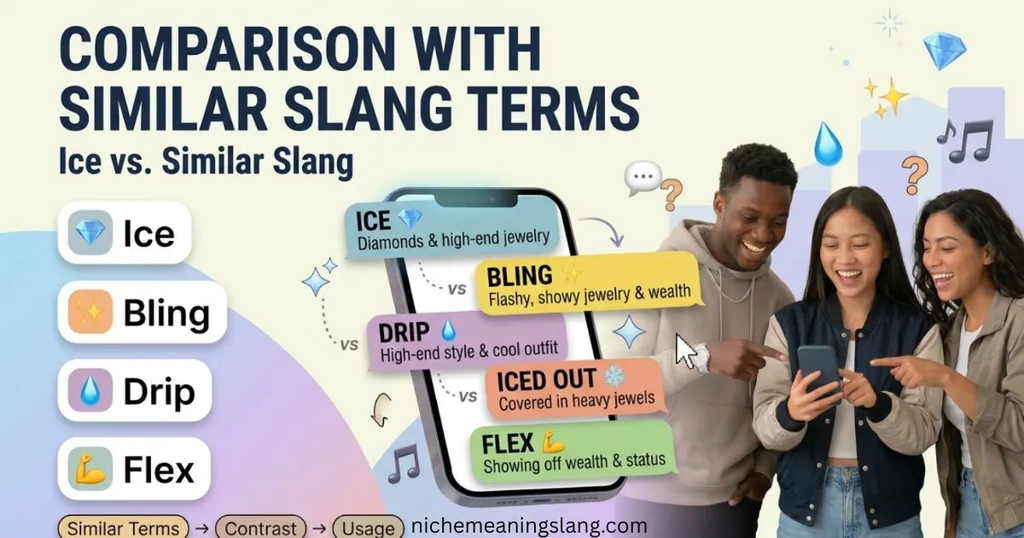
Understanding these distinctions helps when reading captions or lyrics. If someone says, “His chain is ice, his outfit has drip, and he’s flexing,” each term adds a different layer. The jewelry is impressive, the clothes are stylish, and the person is deliberately displaying those things.
Ice vs Drip
Ice usually points specifically toward diamonds, jewelry, or luxury accessories, while drip is broader and describes fashionable clothing, accessories, or a complete look. Someone can have ice on their wrist while their entire outfit has drip. The terms overlap, but they are not interchangeable.
Ice vs Flex
Ice is normally the valuable or flashy item itself, especially jewelry. Flex is the act of displaying wealth, possessions, skills, or status to impress others. A diamond watch can be ice, while showing that watch off on social media can be a flex.
Conclusion
The ice meaning slang users encounter most often is connected with diamonds, jewelry, luxury, and style. In other situations, “ice” can describe emotional coldness, composure, or confidence. It can also have a serious drug-related meaning, so interpreting the word requires attention to context rather than relying on one definition.
If you see “ice” in a text, caption, lyric, or comment, look at what surrounds it. A chain, watch, wrist, or diamond points toward jewelry; words about pressure or attitude may indicate composure or coldness; drug-related language can signal the methamphetamine meaning. That small context check usually solves the mystery quickly.
FAQs
1. What does ice mean in slang?
In slang, ice usually means diamonds or expensive jewelry, especially chains, watches, rings, and other flashy accessories. Depending on context, it can also describe wealth, style, emotional coldness, composure, or crystal methamphetamine.
2. What does ice mean in texting?
In texting, “ice” is usually understood from context. A conversation about a watch or chain likely means diamonds or jewelry, while a conversation about someone’s attitude may suggest emotional coldness or composure.
3. Is ice a compliment?
Often, yes. When “ice” refers to jewelry, fashion, or appearance, it is usually complimentary. Saying “That chain is ice” generally means the jewelry looks expensive, impressive, or stylish.
4. Does ice stand for something?
Usually, no. In its common slang uses, “ice” is a regular word that developed additional figurative meanings rather than a standard acronym. Capitalized ICE, however, can refer to U.S. Immigration and Customs Enforcement, which is a completely different usage.
5. Where did ice slang come from?
The jewelry meaning is strongly associated with the visual similarity between sparkling diamonds and ice and became prominent through jewelry and hip-hop culture. Modern slang sources connect the term with diamonds, luxury, wealth, and status.
6. Can ice have a negative meaning?
Yes. “Ice” can describe someone as emotionally cold or distant, and dictionaries also recognize ice as slang for crystal methamphetamine. That is why the surrounding conversation matters before deciding what someone means.
Related Slang Words

Ryan Mitchell is a language enthusiast and writer who explores slang, modern expressions, and everyday language. At nichemeaningslang, he helps readers understand slang meanings, usage, and context in a simple and easy-to-follow way.

One Comment