Australian Insults Aussie Slang Words, Meanings & Examples
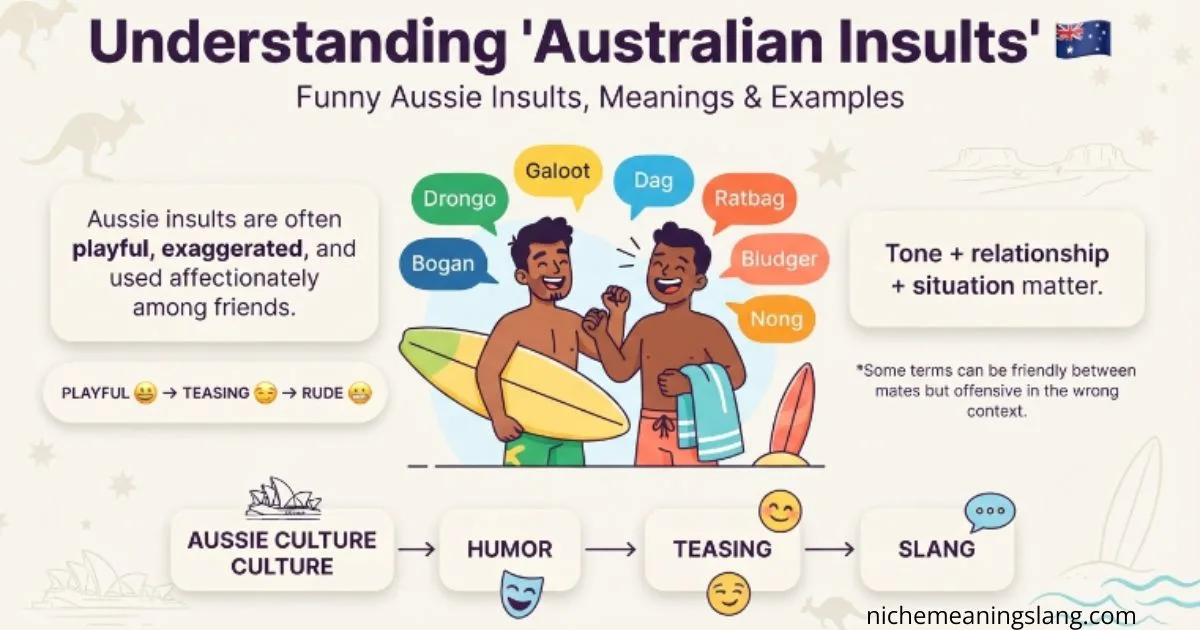
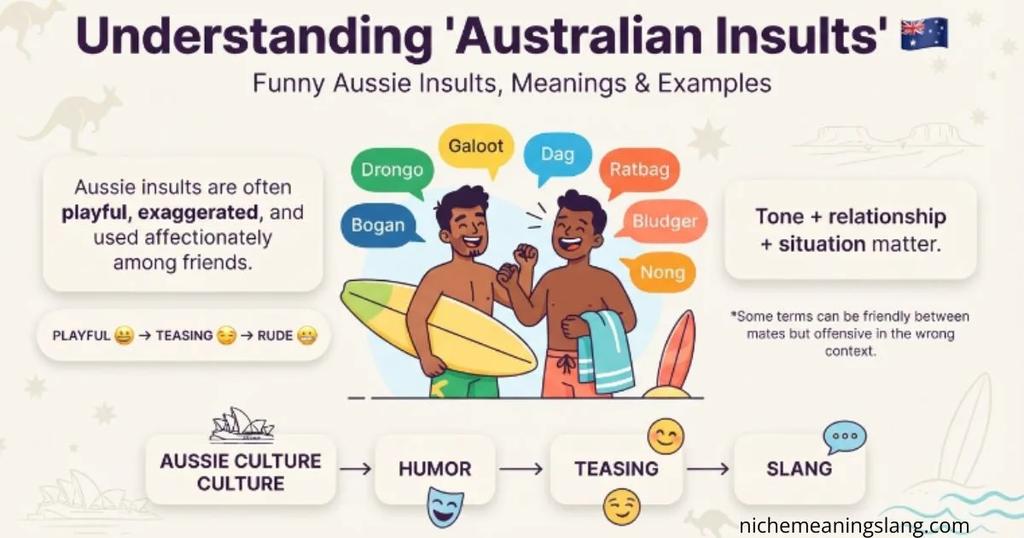
Australian insults are often playful words such as drongo, galah, dill, bogan, and ratbag, but whether they sound funny or genuinely rude depends heavily on tone, relationship, and context. After researching Australian slang across dictionaries, modern guides, and real-world usage, one pattern stands out: Aussies often use teasing as a form of social bonding.
For an American hearing these expressions for the first time, that can be confusing. A word that sounds surprisingly harsh may be harmless banter between mates, while another seemingly ordinary term can carry a much sharper edge. This guide explains the meanings, severity, cultural background, and everyday usage of common Australian insults so you can understand what was actually meant.
What Are Australian Slang Insults
Australian slang insults are informal expressions used to tease, criticize, mock, or jokingly describe another person. Common examples include drongo, galah, dill, dag, ratbag, and boofhead. Their meaning is usually connected to behavior, personality, foolishness, or appearance rather than a literal definition.
Unlike a straightforward American insult, an Aussie expression can change meaning dramatically according to delivery. A friend saying “you drongo” with a grin may simply be joking, while the same words delivered angrily can become a genuine put-down. Australian slang therefore requires attention to both vocabulary and social context.
Why Australian Insults Are Different From Everywhere Else
A major feature of Australian communication is the relaxed use of humor, teasing, and self-deprecation. Among friends, calling someone a drongo, galah, dill, or goose can be a playful way of showing familiarity rather than creating distance.
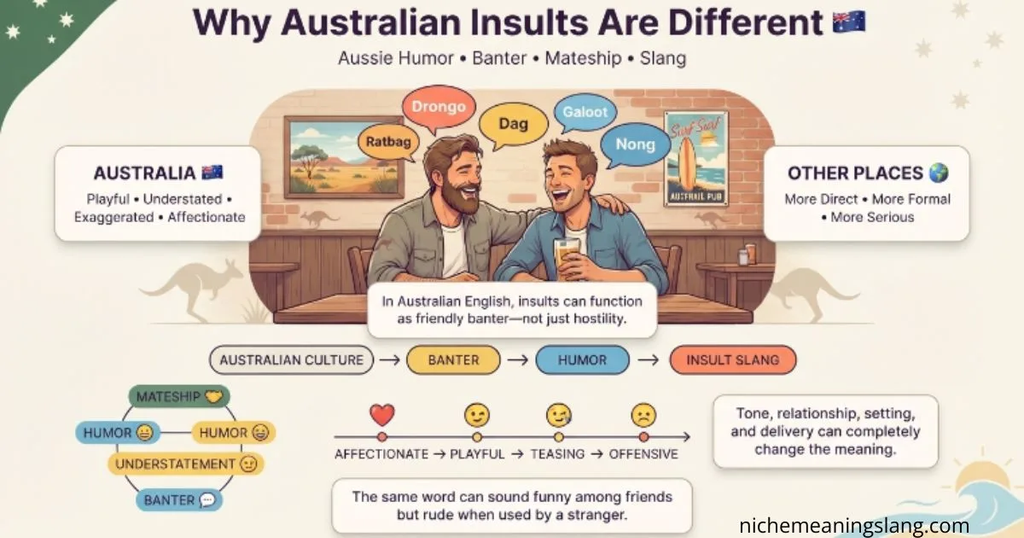
This style is closely connected with ideas such as mateship and larrikin humor. The goal is often to keep the conversation informal and funny. That does not mean every Australian insult is harmless, though. Stronger terms can communicate genuine anger, arrogance, contempt, or social criticism.
Quick Reference Table of Common Aussie Insults
| Aussie term | General meaning | Typical tone |
| Drongo | Foolish or clumsy person | Mild |
| Galah | Silly or loud person | Mild |
| Dill | Foolish person | Mild |
| Dag | Dorky or unfashionable person | Playful |
| Ratbag | Mischievous troublemaker | Playful |
| Bogan | Rough or unrefined person | Context-dependent |
| Bludger | Lazy person | Mild–medium |
| Wanker | Arrogant or self-important person | Rude |
| Tosser | Irritating or self-important person | Rude |
| Boofhead | Thick-headed or silly person | Playful |
The table illustrates an important rule: Australian insults do not all carry the same social weight. A term such as “dag” may be affectionate, whereas “wanker” is considerably stronger. Even “bogan” can shift between humorous self-description and a negative class-related label depending on the speaker and situation.
The Most Common Australian Insults Explained
Drongo
A drongo is a foolish, clueless, or clumsy person. Among friends, it often sounds more like “you idiot” or “you goofball” than a serious attack. For example, someone who forgets their keys might jokingly hear, “You absolute drongo.”
Galah
A galah is an Australian bird known for its distinctive appearance and noisy behavior. Calling someone a galah suggests they are acting silly, foolish, or loud. It is generally a light insult and can work as friendly teasing when the relationship supports that tone.
Bogan
Bogan describes someone perceived as rough, unsophisticated, or associated with a particular working-class Australian style. Unlike milder terms, it can carry social or class-related implications. Some Australians use it humorously or proudly about themselves, while others may hear it as genuinely judgmental.
Dill
A dill is someone behaving foolishly, carelessly, or naively. It is generally softer than a serious insult and can resemble the American phrase “silly goose.” Calling a close friend a dill after a harmless mistake is usually playful rather than hostile.
Ratbag
A ratbag is a mischievous or troublesome person. The word often has an affectionate quality, particularly when describing a child or friend who has just pulled a harmless prank. It suggests cheekiness more than serious wrongdoing.
Wanker
Wanker is considerably stronger than drongo or dill. It generally describes someone viewed as arrogant, self-important, obnoxious, or unpleasant. Because it can be genuinely offensive, it is better understood before using it directly toward someone, particularly a stranger or coworker.
Sook
A sook is someone who complains, sulks, or becomes overly sensitive about something. Among friends, it can be a humorous way of teasing someone who is making a fuss over a minor problem.
Muppet
A muppet can describe someone who has behaved foolishly or cluelessly. Although the word exists beyond Australia, it fits comfortably into casual Australian banter and is generally less severe than an aggressive personal insult.
Gronk
A gronk is used for someone perceived as foolish, clumsy, obnoxious, or lacking good manners. Modern online conversations have helped keep terms like this visible, particularly in casual group chats and gaming-related communication.
Funny Australian Insults That Sound Hilarious
Australian humor often turns an insult into an exaggerated image. Expressions such as “you bloody galah,” “you absolute drongo,” and comparisons involving useless objects or ridiculous situations can sound more comedic than threatening.
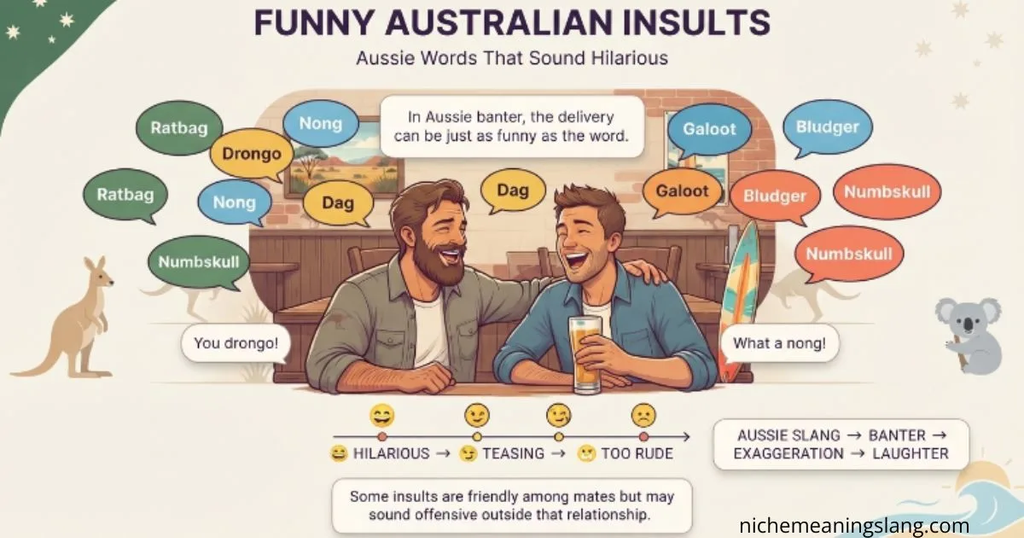
That absurdity is part of the appeal. Instead of simply saying someone is stupid, an Australian expression may use an animal, exaggerated comparison, or colorful image. The result is often memorable because the wording itself becomes part of the joke.
Mild Aussie Insults You Can Use as Friendly Banter
Milder expressions include drongo, dill, galah, dag, goose, ratbag, and boofhead. These are generally easier to understand as playful when spoken between people who already have a friendly relationship.
Still, “mild” does not mean universally safe. A stranger, customer, coworker, or new acquaintance may interpret the same expression differently. Relationship and delivery remain more important than simply memorizing a list of supposedly harmless words.
Strong Australian Insults and Where They Cross a Line
Stronger expressions include wanker, tosser, and some uses of gronk, dropkick, or bogan. These can communicate genuine irritation rather than affection, especially when there is no joking tone or established friendship.
The biggest warning sign is a change in atmosphere. If someone becomes quiet, raises their voice, stops smiling, or responds defensively, the exchange may no longer be friendly banter. In that situation, continuing the roast can make things worse.
The History Behind Australia’s Insult Culture
Australian slang developed through a mixture of British English, local vocabulary, regional speech, working-class traditions, rural language, and distinctive Australian humor. Words were shortened, reshaped, borrowed, and given new social meanings over generations.
Larrikin culture also helped create a style where irreverence and cheekiness could be valued rather than treated as purely negative. Australian slang continues to evolve, however. Linguists note that younger Australians do not necessarily use older insults in exactly the same ways as previous generations.
Australian Insults vs American Insults
| Australian expression | Rough American equivalent |
| Drongo | Idiot / goofball |
| Galah | Goofball |
| Dill | Silly person |
| Bludger | Slacker |
| Bogan | Roughly “redneck,” but not identical |
| Dag | Dork / awkward person |
These comparisons are only approximate. Australian and American English attach different cultural meanings to slang, so replacing an Aussie word with an American equivalent can lose some of its humor or social nuance.
The biggest difference is often delivery. Australian banter can make a fairly blunt word sound affectionate, especially among friends. That does not mean Americans cannot understand it; it simply means the surrounding relationship matters enormously.
Are Australian Slang Insults Still Used Today
Yes, although usage is changing. Traditional expressions remain recognizable, while younger Australians increasingly mix established Australian slang with internet language, gaming terminology, memes, and global social-media vocabulary.
Recent linguistic reporting also highlights a broader generational shift: some older insults are becoming less common while newer expressions emerge and previously dated words can occasionally return in ironic or nostalgic contexts.
Australian Insults in Texting and Online Chats
Text messages remove some of the clues that normally make Australian banter easy to interpret. You cannot hear someone’s voice or see their facial expression, so a word such as drongo, galah, gronk, or bogan can appear harsher on screen than it would sound in person.
Look at the surrounding conversation. Emojis, laughter, previous joking, reciprocal teasing, and phrases such as “mate” can suggest friendly intent. A sudden insult during an argument, however, should generally be interpreted more seriously.
Conclusion
Australian insults are best understood as context-driven slang rather than a simple dictionary of rude words. Expressions such as drongo, galah, dill, dag, and ratbag are often playful among friends, while wanker, tosser, and some uses of bogan or gronk can carry considerably more weight.
If an Australian calls you one of these words, do not panic over the dictionary definition alone. Listen to the tone, consider your relationship, notice the setting, and watch how the conversation continues. Once you understand those signals, Australian slang becomes much easier to read and the difference between an affectionate roast and a genuine insult becomes surprisingly clear.
FAQs
What is a common Australian insult?
Drongo is one of the best-known Australian slang insults. It usually describes someone acting foolish, clueless, or clumsy and can be playful when used between friends.
What is an Australian slang word for idiot?
Common choices include drongo, dill, galah, nong, and boofhead. Their exact tone varies, but these generally fall on the lighter side of Australian insult vocabulary.
What does “bogan” mean in Australian slang?
Bogan generally describes someone perceived as rough, unsophisticated, or associated with particular working-class cultural stereotypes. It can be humorous or self-descriptive, but it can also sound classist depending on context.
Are Australian insults usually serious?
No. Many Australian insults are used as friendly teasing between people who know each other well. However, stronger expressions can communicate genuine irritation or contempt, so tone and relationship matter.
Why do Australians insult their friends?
Playful insults can function as a form of banter, familiarity, and social bonding. In Australian conversational culture, teasing a friend can sometimes signal closeness rather than hostility.
Is it safe for tourists to use Australian insults?
Start cautiously. Mild terms such as galah or dag are easier to understand as playful, but stronger expressions should not be used with strangers until you understand the local context and relationship.
Is Australian slang changing in 2026?
Yes. Traditional slang continues to coexist with internet-driven vocabulary, gaming language, and newer generational expressions. Linguistic research also shows that some older insults decline while others can return through irony or nostalgia.
Related Slang Words

Ryan Mitchell is a language enthusiast and writer who explores slang, modern expressions, and everyday language. At nichemeaningslang, he helps readers understand slang meanings, usage, and context in a simple and easy-to-follow way.

One Comment