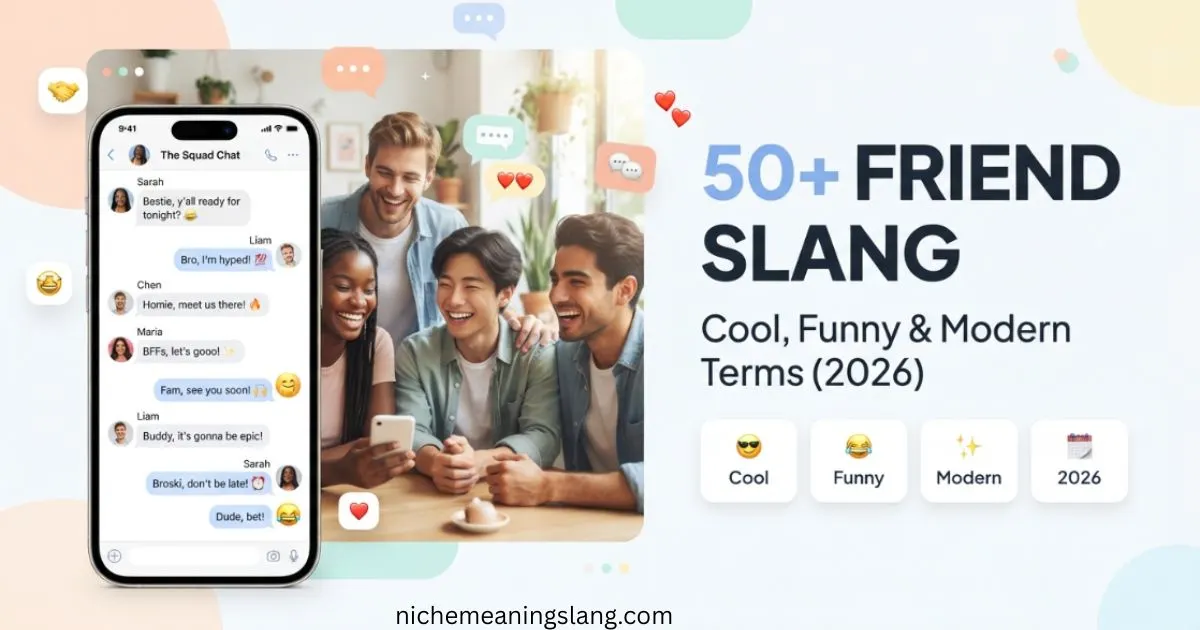
50+Friend Slang Cool, Funny & Modern Terms (2026)
Friend slang means the casual words people use instead of simply saying “friend,” such as bestie, bro, homie, buddy, and fam. After researching modern American usage, texting habits, and current slang communities, I’ve found that the right term depends on closeness, tone, generation, culture, and context.
The tricky part is that bestie, homie, bro, mate, pal, and twin do not all communicate exactly the same feeling. Some signal loyalty, others humor or familiarity, while regional slang can carry cultural meaning. This guide makes those differences easier to understand so you can choose friend slang that sounds natural instead of forced.
Quick Friend Slang Reference
| Slang | Meaning | Best Use | Tone |
| Bestie | Best/very close friend | Close friendships | Warm |
| Bro | Close friend | Casual conversation | Relaxed |
| Homie | Trusted close friend | Inner circle | Friendly |
| Buddy | Friend/companion | General use | Neutral |
| Fam | Friend like family | Close groups | Warm |
| Dawg | Trusted friend | Casual speech | Playful |
| Mate | Friend/companion | Regional/casual | Friendly |
| Pal | Casual friend | Everyday use | Easygoing |
| BFF | Best Friends Forever | Texting/social media | Affectionate |
| Day One | Long-time friend | Deep friendships | Loyal |
| Ride or Die | Extremely loyal friend | Very close friends | Emotional |
| Twin | Friend with similar energy | Gen Z/internet | Playful |
| OG | Long-standing/respected friend | Long relationships | Respectful |
| Squad | Friend group | Groups/social media | Casual |
The core meanings and usage patterns align with the three current competitor datasets.
Friend Slang by Generation
Friend slang changes with age because every generation inherits older expressions while adding words shaped by music, texting, memes, and social platforms. Bestie, bro, homie, fam, twin, buddy, pal, and mate can overlap, but their popularity and emotional tone vary between generations.
For American readers, bro, homie, buddy, bestie, fam, and dude are especially recognizable casual terms. Current social-media language adds twin, bruh, ride or die, and OG, while older speakers may naturally prefer pal, buddy, or mate. Reddit discussions show the same flexibility in everyday friend nicknames.
Gen Z
Gen Z friend slang strongly favors expressive terms such as bestie, twin, bruh, and ride or die. These words work particularly well in texts, comments, memes, and short-form video culture because they communicate emotion quickly. “Bestie” can even be used playfully for someone who is not literally your best friend.
Millennials
Millennial friend slang commonly includes bro, homie, squad, fam, and OG. Many of these expressions grew alongside early social media, music culture, online communities, and texting. The terms can still sound completely natural today because they describe relationships rather than depending entirely on a short-lived trend.
Older Generations
Older speakers are more likely to recognize and use buddy, pal, mate, and chum. These words may not feel as internet-driven as bestie or twin, but they remain understandable and useful. That illustrates an important point: friend slang does not automatically disappear when newer vocabulary becomes popular.
Bestie
Bestie usually means a very close friend or best friend, but modern online usage is broader. Someone might comment “bestie, you look amazing” to a casual acquaintance or stranger. The word therefore communicates warmth and friendliness, but context determines whether it is literal or playful.
Bro
Bro comes from “brother” but is widely used for friends who are not relatives. In modern American conversation, it can be gender-flexible depending on the speaker and social group. Reddit discussions show people using “bro” across friendships, including among women, which demonstrates how usage can outgrow its original implication.
Mate
Mate is especially associated with British and Australian English, where it can mean friend or simply serve as a casual form of address. Americans understand it, but using it in the U.S. can sometimes deliberately signal an international, humorous, or laid-back style rather than ordinary American friend slang.
How to Use Friend Slang Naturally
Using friend slang well is less about memorizing dozens of words and more about matching the word to the relationship. Bestie suggests greater affection than buddy, while ride or die communicates much stronger loyalty than simply saying bro. The emotional weight matters as much as the dictionary meaning.
Think about how you already talk with the person. A longtime friend might naturally be your homie, day one, OG, or ride or die, while someone you casually know could simply be your buddy, pal, or dude. The safest slang is the language that already sounds normal within your relationship.
Reading the Room Before Using Slang
A term that sounds hilarious with your best friend can sound strange when used with someone you barely know. Before saying bestie, homie, fam, or twin, consider the relationship, tone, age, and setting. Good slang feels effortless because it matches the existing social dynamic rather than announcing itself.
Matching Slang to Social Setting
Group chats, casual texts, gaming conversations, and Instagram comments allow much more freedom than emails, interviews, school assignments, or workplace messages. Bro, bestie, fam, and homie can work beautifully among friends but may feel unprofessional when the audience expects formal communication.
Examples of Slang for Friends in Texting
Bro: “Bro, are you coming tonight?”
Bestie: “Bestie, I need advice ASAP.”
Fam: “You good, fam?”
Homie: “My homie just pulled up.”
Twin: “Twin, why are we thinking the exact same thing?”
These examples reflect the casual, relationship-focused way friend slang appears in everyday digital communication.
Is Friend Slang Ever Controversial?
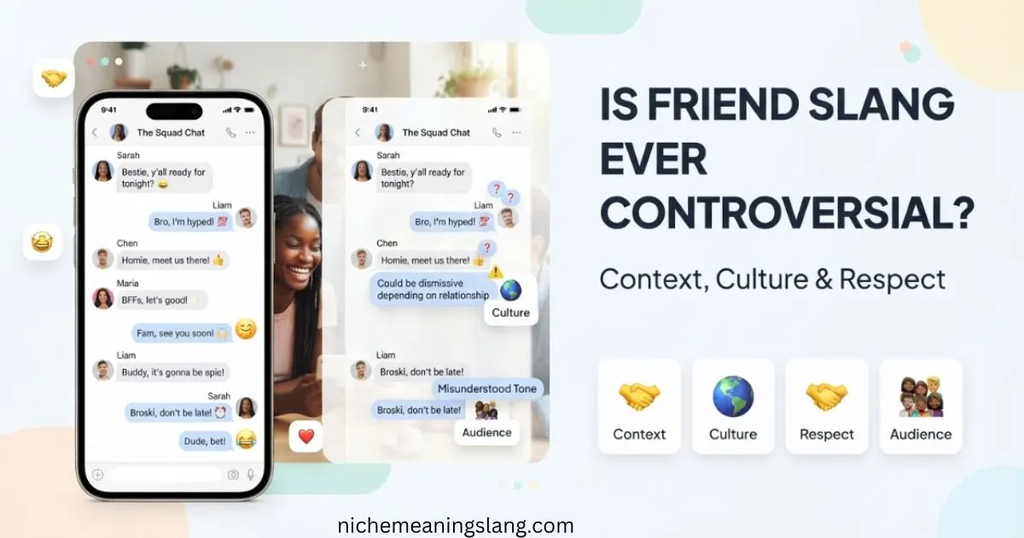
Sometimes. Certain expressions have cultural histories that should not be ignored simply because they appear frequently online. Terms such as homie, dawg, and bro can carry different associations depending on community, speaker, region, and context. Using a word naturally is more important than trying to imitate a culture’s vocabulary.
This is where semantic context becomes important. A dictionary definition cannot always tell you whether a word sounds affectionate, ironic, awkward, outdated, or disrespectful. Tone, relationship, cultural background, and setting can completely change how friend slang is received.
Homie
Homie generally communicates a close, trusted friendship and is strongly associated with American urban and hip-hop-influenced language. Because of that cultural history, it should not be treated as a generic word that anyone can perform for style. Natural usage depends on the speaker and context.
Dawg
Dawg is an informal, playful way to address a trusted friend. It has strong connections to hip-hop and urban speech and can now be heard more broadly. Its casual tone makes it a poor choice for professional communication, but it can sound perfectly natural among friends who already use it.
Bro
Bro is among the most flexible friend terms in American English. It can show affection, excitement, disbelief, frustration, or simple familiarity. “Bro, that was amazing” feels different from “Come on, bro,” proving that tone and sentence context can matter more than the word itself.
Regional and Cultural Slang for Friends
Friend slang changes dramatically by region. Mate is strongly associated with the UK and Australia, while homie, bro, dawg, and fam are more familiar within American usage. Spanish-speaking communities may use amigo, carnal, or cuate, while Caribbean communities have their own vocabulary.
Social Media Buzz Around Friend Slang
Social media has accelerated the life cycle of friend slang. A term can move from a niche community into TikTok comments, Instagram captions, gaming chats, and everyday speech surprisingly quickly. Bestie, twin, bruh, squad, and day one demonstrate how online communication turns relationship language into recognizable social shorthand.
But popularity does not make every word interchangeable. A TikTok caption might call someone a bestie, while a private text might use homie or bro. The platform, audience, relationship, and emotional tone all influence which expression feels natural.
Friend Slang for Instagram and TikTok
Instagram and TikTok favor short, expressive friend terms because captions and comments are highly visual and fast-moving. Bestie, squad, day ones, twin, and ride or die fit naturally into posts celebrating trips, friendships, birthdays, group photos, and shared memories.
Short Friend Slang for Text Messages
Texting rewards words that are quick and emotionally recognizable. Bro, sis, fam, bestie, and homie can replace longer descriptions while preserving the relationship signal. Because texts lack facial expression and vocal tone, these terms can also help make a short message feel warmer or more personal.
How New Friend Slang Spreads Today
New slang often begins with a video, meme, caption, gaming community, or online joke. Repetition makes the expression familiar, friend groups adopt it, and eventually it may cross from digital communication into spoken conversation. This rapid cycle explains why modern friend slang can change faster than older vocabulary.
Common Misconceptions About Friend Slang
One major misconception is that slang automatically means disrespect. In reality, words such as bestie, fam, bro, homie, and buddy often exist precisely because people want language that feels warmer and more personal than formal vocabulary. Slang can signal friendship, belonging, humor, and shared identity.
Another misconception is that all friend slang is Gen Z slang. Words such as pal, buddy, mate, and chum have much older histories, while newer expressions such as bestie and twin have been amplified by digital culture. Friend slang is therefore a layered vocabulary rather than one generation’s language.
Using Outdated Slang
Older slang is not automatically bad, but it can sound dated when used seriously by someone who does not normally speak that way. Chum, pal, and certain older expressions may work perfectly in a joking or nostalgic context while sounding unnatural in a modern group chat.
Using Slang in Formal Writing
Avoid casual friend slang in professional emails, academic assignments, legal documents, official communication, and other situations where clarity and credibility matter. Friend, colleague, classmate, or acquaintance is usually more appropriate than bestie, bro, homie, or fam when the setting requires formal language.
Overusing Slang
Even good slang loses its impact when every person becomes your bestie, ride or die, twin, or homie. Stronger terms should match stronger relationships. If you call everyone your ride or die, the phrase stops communicating genuine loyalty. Natural speech usually has variation because relationships themselves vary.
Real Reactions When Slang Misfires
The classic mistake is using highly casual language where it does not belong. Calling a coworker “homie” during a formal meeting or calling a stranger “bestie” too seriously can create confusion. The lesson is simple: friend slang works best when the relationship and setting support it.
Conclusion
Friend slang gives everyday friendship a more personal voice. Instead of repeatedly saying “friend,” people use bestie, bro, homie, buddy, fam, dawg, mate, pal, twin, OG, day one, and ride or die to communicate different levels of closeness, humor, loyalty, culture, and familiarity.
The best choice is not necessarily the trendiest word. Bestie works for warmth, bro feels broadly casual, homie suggests trusted closeness, buddy is versatile, fam feels family-like, and day one emphasizes shared history. When you match the term to the relationship and setting, friend slang sounds natural instead of forced.
FAQs
What is a slang word for friend?
Common friend slang includes bro, bestie, homie, buddy, pal, fam, mate, and dawg. The best choice depends on your relationship, region, age, and tone.
What is the most popular slang for friends?
Bestie, bro, homie, buddy, and fam are among the most recognizable choices. Current competitor coverage also highlights twin, OG, bruh, and ride or die as modern alternatives.
What is a cool way to say friend?
Try bestie, twin, OG, G, homie, day one, or ride or die. “Cool” is subjective, so the most natural choice depends on whether you want something funny, modern, loyal, or casual.
What is Gen Z slang for friend?
Common Gen Z friend slang includes bestie, twin, bruh, fam, and ride or die. These terms are especially visible in texting, memes, TikTok, Instagram, and other online communities.
What is slang for a best friend?
Popular terms include bestie, BFF, day one, ride or die, my person, and soul friend. They generally communicate a closer relationship than a basic word such as buddy or pal.
What do Americans call their friends in slang?
Americans commonly use bro, buddy, homie, dawg, dude, fam, bestie, and G. Usage varies by age, region, community, and personal style.
What does homie mean?
Homie generally means a close or trusted friend, historically associated with one’s neighborhood or social circle. It also has important connections to American urban and hip-hop culture, so context matters.
Is “bestie” only used for girls?
No. Bestie is not inherently gender-specific. It can refer to a close friend of any gender and is also sometimes used playfully toward people who are not literally someone’s best friend.
What is slang for a group of friends?
Common terms include squad, crew, fam, circle, gang, and day ones. “Squad” tends to describe a recognizable friend group, while “crew” often suggests a tight-knit group.
Related Slang Words

Ryan Mitchell is a language enthusiast and writer who explores slang, modern expressions, and everyday language. At nichemeaningslang, he helps readers understand slang meanings, usage, and context in a simple and easy-to-follow way.