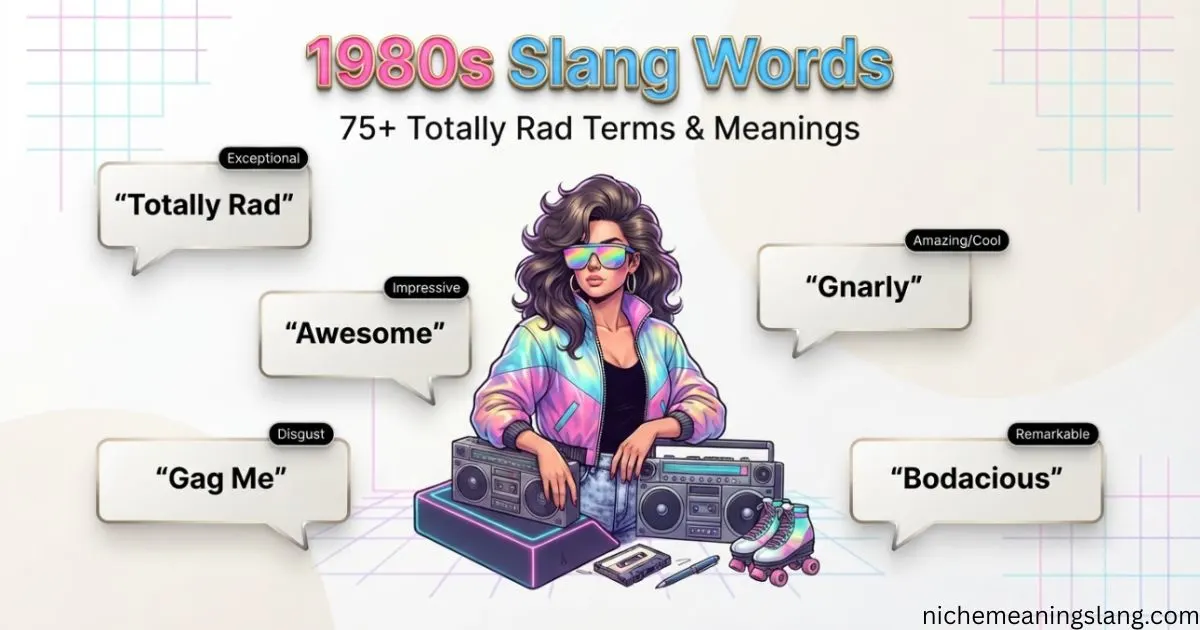
75+1980s Slang Words Totally Rad Terms & Meanings
1980s slang words were bold, playful, exaggerated, and deeply tied to American youth culture, from Valley Girl speak and surfer slang to hip-hop vocabulary, MTV, teen movies, and mall culture. If phrases like “totally tubular,” “gnarly,” or “gag me with a spoon” ever made you wonder what people actually meant, this guide brings the decade back into focus.
I’ve compared modern slang references with historical context to separate genuinely associated 1980s expressions from words that merely became popular around the same time. You’ll find 80s slang meanings, examples, cultural origins, retro phrases, teenage vocabulary, and terms that survived into modern American English.
1980s Slang Words and Phrases
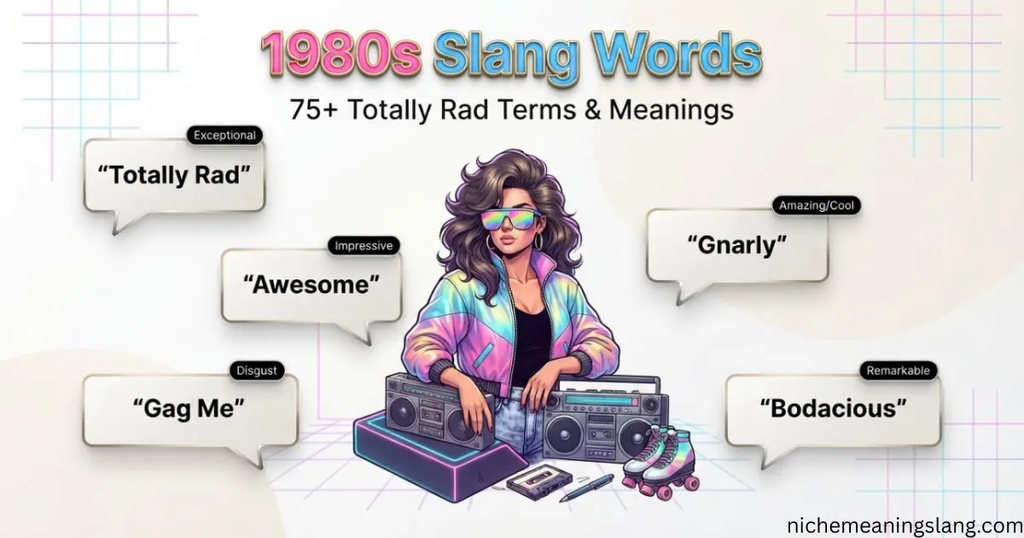
The most recognizable 1980s slang words include rad, radical, tubular, gnarly, bogus, grody, righteous, totally, awesome, and bitchin’. Other memorable expressions included gag me with a spoon, take a chill pill, no duh, psych, veg out, and wannabe.
Not every expression originated during the 1980s. Some were older words that became strongly associated with the decade through movies, music, advertising, surfing, television, and youth culture. That distinction matters: “bodacious,” for example, predates the decade, while its 1980s cultural footprint made it feel unmistakably retro.
| 1980s slang word | Meaning | Typical feeling |
| Rad | Very cool or impressive | Approval |
| Tubular | Excellent, awesome | Enthusiasm |
| Gnarly | Extreme, impressive, difficult | Excitement |
| Bogus | Fake, unfair, disappointing | Disapproval |
| Grody | Gross or disgusting | Disgust |
| Bitchin’ | Cool or excellent | Approval |
| Choice | High-quality or desirable | Approval |
| Stoked | Very excited | Excitement |
| Psyche! | Just kidding / fooled you | Humor |
| Veg out | Relax and do nothing | Relaxation |
| Wannabe | Someone wanting to imitate another | Criticism |
These meanings are consistent with the vocabulary emphasized across the leading guides.
1980s Slang Words: Why 80s Slang Hits Different
1980s slang developed during a cultural collision involving MTV, teen movies, surfing, skateboarding, Valley Girl culture, hip-hop, and rapidly expanding mass media. The result was expressive language that often exaggerated emotions rather than simply describing them.
The decade also made slang highly visible. A teenager could hear an expression at school, encounter it in a movie, see it on MTV, and repeat it with friends the same day. Babbel notes that Val-speak and Southern California speech influenced broader American communication, including the now-common filler “like.”
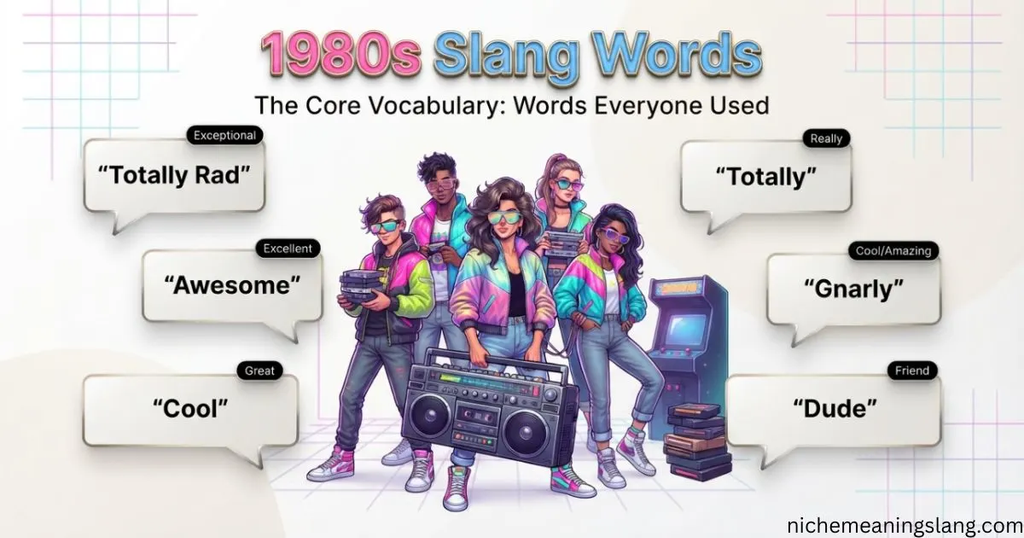
1980s Slang Words: The Core Vocabulary: Words Everyone Used
Rad meant extremely cool or impressive, while tubular borrowed imagery from surfing and referred to an excellent experience. Gnarly was especially flexible: it could describe something difficult or dangerous, but also something impressively extreme. Bogus meant fake, unfair, disappointing, or simply not cool.
Other core expressions included grody for something disgusting, righteous for something excellent, totally as an intensifier, and psyche! after a joke or deception. These terms show how 1980s slang frequently relied on exaggerated emotion, playful delivery, and strong social tone.
Rad
Rad is short for radical and became a familiar expression of approval. In 1980s youth language, calling something rad meant it was exceptionally cool, exciting, or impressive. Its strongest associations came through surfing, skateboarding, youth culture, and California-inflected speech, helping it become one of the era’s most recognizable terms.
Tubular
Tubular came from surfing language, referring to the tube-shaped section of a wave. During the 1980s it became a general compliment meaning excellent or extremely cool. “That skateboard trick was tubular” captures the exaggerated approval that made this expression so recognizable in American pop culture.
Gnarly
Gnarly had a more complicated range of meanings. It could describe something difficult, dangerous, twisted, or intense, yet it could also express admiration for something spectacular. That positive-negative flexibility is part of what made 1980s slang distinctive and explains why context remains essential when interpreting the word.
Bogus
Bogus meant fake, unfair, false, disappointing, or generally unacceptable. If a friend received an unfair punishment, calling the situation bogus communicated immediate disapproval. Unlike some more theatrical 1980s phrases, bogus survived beyond the decade and remains understandable in contemporary American English.
Grody
Grody meant extremely gross, unpleasant, or disgusting. It became strongly associated with Valley Girl speech and could be intensified into expressions such as “grody to the max.” The word illustrates how 1980s slang often transformed ordinary reactions into deliberately dramatic performances.
1980s Slang Words: The Approval Scale: From “Awesome” to “Fer Sure”
Approval had an unusually large vocabulary in 1980s youth speech. Awesome, radical, righteous, bitchin’, choice, excellent, and fer sure could all communicate enthusiasm, although their cultural associations and intensity differed. Instead of simply saying “yes” or “good,” speakers often selected a word that performed their attitude.
No duh pushed in the opposite direction, signaling that something was obvious, while no way! communicated disbelief or disagreement. Way could intensify an adjective, as in “way cool.” Together, these expressions created a conversational style built around exaggerated approval, rejection, surprise, and certainty.
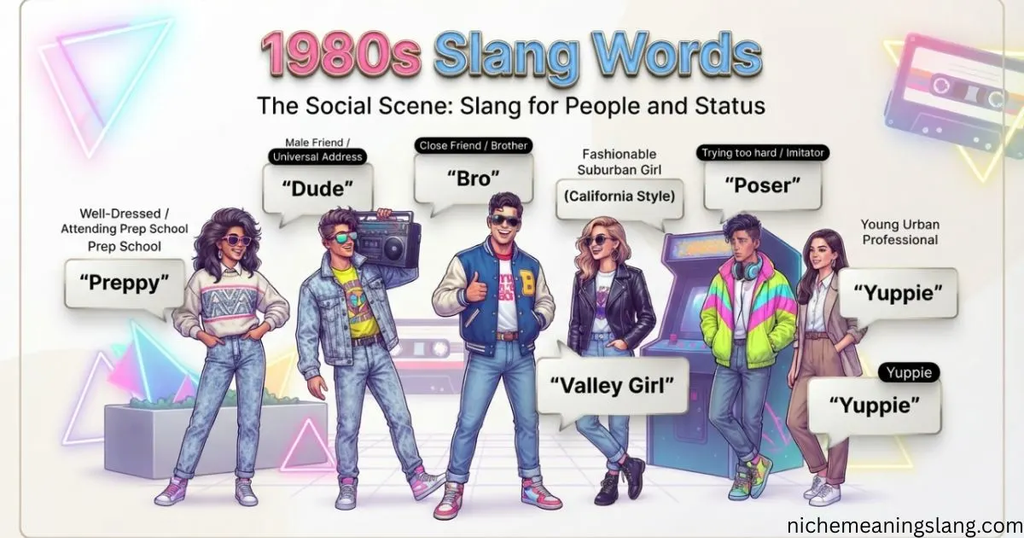
1980s Slang Words: The Social Scene: Slang for People and Status
1980s slang also described people according to personality, social group, appearance, and perceived status. Terms such as airhead, dweeb, poser, burnout, preppy, wannabe, homeboy, and homegirl carried social information beyond their dictionary meanings. The words could signal belonging, admiration, teasing, or criticism.
Some of these labels were tied to recognizable youth subcultures. A preppy suggested a polished, affluent collegiate style; a burnout suggested someone disengaged or rebellious; and a poser described someone pretending to belong to a culture or scene. Their meanings depended strongly on social context.
Airhead
An airhead was someone perceived as scatterbrained, ditzy, or unintelligent. The word could be insulting, although some speakers used it playfully among friends. It illustrates a broader category of 1980s slang in which personality labels became quick shorthand for social judgments.
Dweeb
A dweeb referred to a socially awkward or nerdy person. It was generally milder than some harsher insults and became associated with the decade’s fascination with school cliques and popularity. Today, it is usually understood as deliberately retro, humorous, or nostalgic rather than ordinary contemporary youth slang.
Poser
A poser was someone pretending to be something they were not. The term had particular resonance in skateboarding, punk, and other scenes where authenticity mattered. Calling someone a poser questioned whether that person genuinely belonged to the culture they were trying to imitate.
1980s Slang Words: The Breakout Words: Slang That Got Weird
Some of the most memorable 1980s slang words were intentionally theatrical. Gag me with a spoon expressed intense disgust, while barf me out pushed the same reaction even further. Take a chill pill told someone to relax, and bag your face was a much harsher insult.
The expressions could sound strange to modern ears because their humor depended on exaggerated delivery. In the 1980s, slang often worked almost like performance: the speaker did not simply communicate information but demonstrated an attitude, identity, or emotional reaction. That theatrical quality helped these phrases become culturally memorable.
Gag me with a spoon
Gag me with a spoon meant something was disgusting or intolerable. It became strongly associated with Valley Girl speech and was popularized nationally through the cultural reach of Southern California youth language and Frank Zappa’s 1982 “Valley Girl.” The phrase was intentionally dramatic rather than literal.
Take a chill pill
Take a chill pill meant calm down or relax. It captured the decade’s fascination with appearing cool, detached, and unbothered. Today, the expression usually sounds humorous or deliberately retro, but its original conversational function was simply telling someone that they were overreacting.
1980s Slang Words: How to Actually Use 80s Slang (Without Sounding Like a Tourist)
Using 1980s slang naturally requires context. One or two expressions can create a convincing nostalgic tone, while filling every sentence with rad, tubular, totally, and gnarly quickly becomes parody. Slang was originally part of living social communities, not a costume vocabulary.
Regional flavor matters as well. Valley Girl speech, California surf language, East Coast expressions, and emerging hip-hop vocabulary were not identical. A historically accurate writer should therefore consider who is speaking, where they live, what community they belong to, and which cultural references surround the dialogue.
1980s Slang Words: The Words That Actually Survived
Several 1980s expressions successfully crossed into modern English. Awesome, dude, chill, totally, like, fresh, and dope remain recognizable, although their meanings and frequency can differ from their historical usage. Their survival demonstrates that slang can become ordinary vocabulary when enough generations adopt it.
Other expressions survived mainly as nostalgia. Tubular, radical, gag me with a spoon, and take a chill pill can still appear in movies, memes, themed parties, retro advertising, and ironic conversations. Babbel notes that some expressions faded while others became mainstream or returned with a knowing, humorous tone.
1980s Slang Words: Why Revisiting This Stuff Actually Matters
1980s slang is more than a collection of funny old phrases. It provides a linguistic snapshot of youth culture, regional identity, entertainment, social groups, and changing American attitudes. A phrase can reveal whether a scene feels Californian, suburban, rebellious, preppy, athletic, musical, or deliberately nostalgic.
That is why these words remain useful for writers, teachers, historians, filmmakers, pop-culture fans, and anyone researching the decade. Language records emotion differently from formal history. Radical, bogus, grody, and gag me with a spoon do not simply describe the 1980s; they help recreate how the decade sounded.
Conclusion
1980s slang words were more than colorful vocabulary. They captured the decade’s mix of California surf culture, Valley Girl speech, MTV, teen movies, skateboarding, hip-hop, advertising, and generational identity. Expressions such as rad, tubular, gnarly, bogus, grody, totally, and gag me with a spoon became memorable because they carried attitude as much as meaning.
Some faded, some became ordinary English, and others returned through nostalgia and social media. That is what makes 1980s slang so useful today: it is simultaneously a vocabulary list, a cultural time capsule, and a window into how Americans communicated during one of the most recognizable decades in modern pop culture.
FAQs
What were the most popular 1980s slang words?
Commonly recognized examples include rad, radical, tubular, gnarly, bogus, grody, awesome, totally, bitchin’, choice, stoked, and wannabe. Popularity varied by region, age, and cultural group.
What did “rad” mean in the 1980s?
“Rad” was short for radical and meant extremely cool, impressive, or exciting. It was particularly associated with surf, skate, and California youth culture.
What did “tubular” mean in 80s slang?
“Tubular” meant excellent, fantastic, or very cool. The term came from surfing language describing the tube of a wave before becoming broader youth slang.
What did “gnarly” mean in the 1980s?
“Gnarly” could mean difficult, dangerous, extreme, impressive, or even disgusting. Its meaning depended strongly on context, making it one of the more flexible 1980s slang words.
What did “bogus” mean in the 80s?
“Bogus” meant fake, unfair, false, disappointing, or unacceptable. The expression could describe an object, event, decision, or situation.
What did “gag me with a spoon” mean?
It was an exaggerated way to express disgust. The phrase became strongly associated with Valley Girl speech and Southern California youth culture.
What did “psych!” mean?
“Psych!” was used after deliberately misleading someone to reveal that the preceding statement was a joke or trick. It functioned as a playful “got you.”
Are 1980s slang words still used today?
Yes. Words such as awesome, dude, chill, totally, and like remain part of everyday English, while terms such as radical and tubular are more often used nostalgically or humorously.
Related Slang Words

Ryan Mitchell is a language enthusiast and writer who explores slang, modern expressions, and everyday language. At nichemeaningslang, he helps readers understand slang meanings, usage, and context in a simple and easy-to-follow way.