Trade Slang What Does “Trade” Mean in Gay Slang?
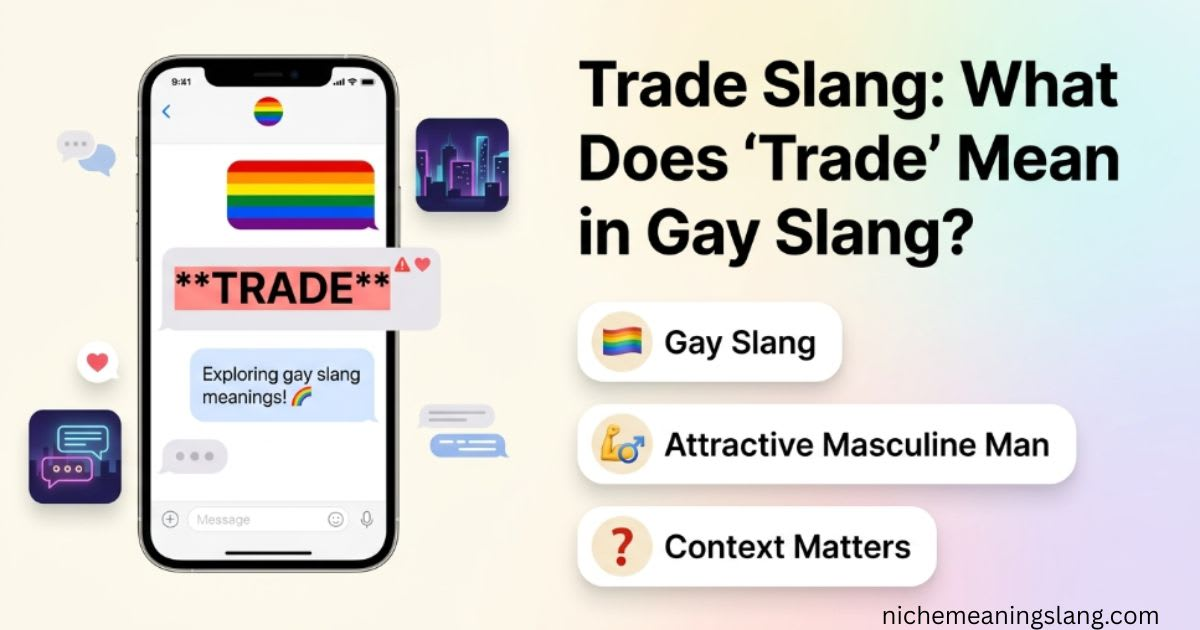
If you’re wondering what trade slang means, it usually describes a masculine, straight-presenting, discreet, or conventionally attractive man in queer or gay contexts, and sometimes refers to a casual sexual partner or hookup. The meaning can shift with context, masculinity, attraction, queer culture, and social media.
The confusing part is that “trade” has a long history, so a word that looks simple can carry layers of sexual slang, ballroom culture, Polari, masculinity, secrecy, and identity. After researching how the term is used historically and online, the safest way to understand it is to look at the surrounding conversation rather than assume it defines someone’s sexuality.
Trade slang What is “trade?”
In trade slang, “trade” is a queer term traditionally connected with a male sexual partner, particularly someone perceived as masculine, straight-presenting, discreet, or not openly queer. Modern usage is broader: it can describe an attractive guy, a hookup, a masculine aesthetic, or someone giving a particular “trade” vibe.
For example, saying “he’s trade” can be flirtatious praise rather than a precise statement about identity. Someone might also say “serving trade” when a person’s outfit, attitude, or appearance strongly suggests rugged or understated masculinity. Modern slang pages show these meanings appearing across queer internet culture and social platforms.
Trade slang Where it comes from
The history behind trade slang is older than TikTok, memes, or dating apps. Out traces the word through Polari, a historical slang associated with British queer communities and other marginalized subcultures, where “trade” could refer to a casual sexual partner.
Over time, the term developed additional associations with secrecy, masculinity, working-class identity, sex work, and transactional encounters. Historical explanations differ on exactly how particular meanings developed, so it is better to describe trade as an evolving queer term than claim there was one simple origin story.
Trade slang Historical usage
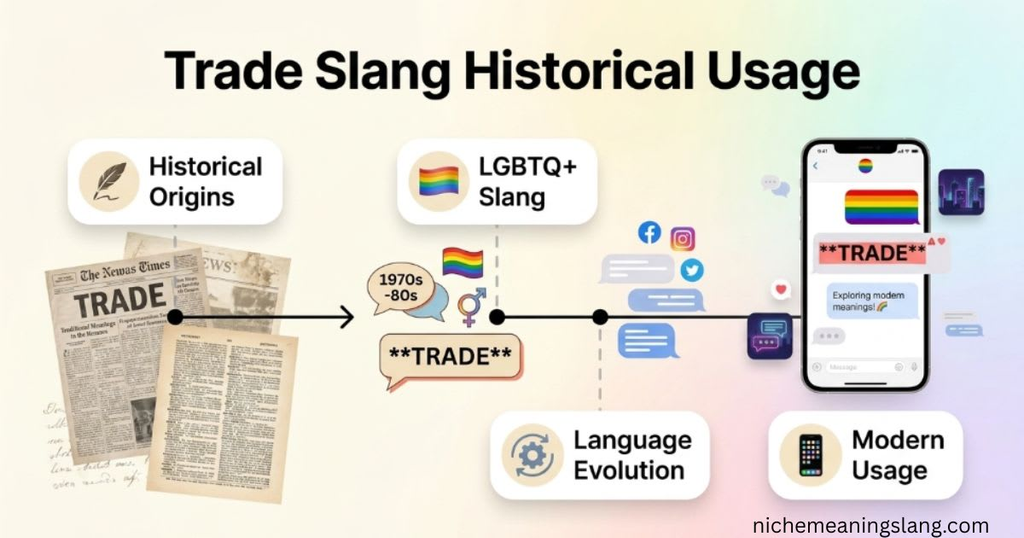
Historically, trade slang could refer to a casual sexual partner, including men who were perceived as heterosexual or who did not openly identify as gay. In some contexts, the relationship involved money, gifts, favors, or other forms of exchange, giving the word its transactional undertone.
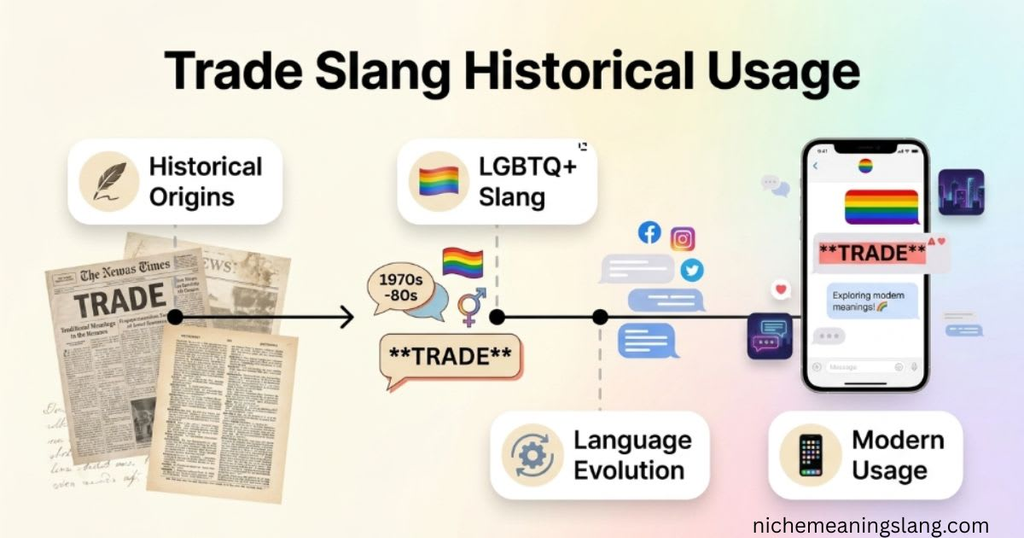
The historical meaning also became connected to working-class masculinity and the idea of a rugged man whose public presentation did not necessarily reveal his private sexual behavior. That history matters because today’s playful use can still carry echoes of secrecy, class, masculinity, and power.
Trade slang Rough trade
Rough trade is an older expression related to trade slang that emphasizes an especially rugged or traditionally masculine image. Historical descriptions associate it with physically demanding work, toughness, roughness, and working-class stereotypes. The expression can therefore carry considerably more historical baggage than simply calling someone “trade.”
Today, “rough trade” may appear in discussions of queer history, old-school slang, masculinity, nightlife, and erotic culture, but it can sound dated or loaded. If you’re simply describing someone’s appearance, a neutral phrase such as “rugged” or “masculine-presenting” may communicate the idea without importing the historical baggage.
Trade slang How people use it today
Modern trade slang is much more flexible. Someone can be called “trade” because he looks masculine or straight-presenting, because he’s considered especially attractive, because he is a hookup or partner, or simply because his outfit gives off a recognizable masc aesthetic.
You’ll see expressions such as “giving trade,” “serving trade,” “pulling trade,” and “trade energy.” A social-media comment might use the word as a compliment, joke, thirst-post reaction, or cultural reference. The meaning therefore depends heavily on the community, relationship, tone, and surrounding words.
Example sentences
“Trade slang” becomes easier to understand when you see it naturally: “He’s giving trade in that work jacket” focuses on masculine presentation, while “I pulled some trade last night” refers more directly to a hookup or partner. These examples show why context matters more than treating trade as one fixed definition.
Trade slang What’s the difference between being DL and being trade?
DL, short for “down low,” generally describes a man who presents as straight publicly while having sexual relationships with men privately. “Trade” can overlap with that idea, but it doesn’t necessarily mean someone is secretly gay or identifies as straight.
The distinction is important because trade slang can describe an appearance or community perception, whereas DL is more closely connected to someone’s public/private sexual behavior. A person can be labeled “trade” because of his masculine appearance without actually being DL, closeted, or straight-identifying.
Trade slang How are DL and trade different from being bisexual?
Bisexuality is a sexual-orientation identity that a person may use for themselves. Trade slang, by contrast, is generally a label other people apply to someone based on perceived masculinity, attractiveness, sexual behavior, or presentation. It should not automatically be treated as an identity claim.
That distinction protects against one of the biggest misunderstandings around queer slang: assuming appearance reveals sexuality. A masculine man can be gay, bisexual, straight, questioning, or none of those labels. Calling someone “trade” describes a cultural perception or slang category, not a reliable diagnosis of who they are.
Trade slang When not to use it
There are situations where trade slang can create unnecessary problems. Avoid labeling someone “trade” when doing so could reveal or speculate about their sexuality, especially in public, at work, or around people who may not understand the cultural context. Privacy should come before a clever slang label.
The term can also become uncomfortable when it turns masculinity, race, class, or sexual privacy into a stereotype. If someone dislikes the label, the easiest answer is to drop it. Slang works best when everyone understands the cultural meaning and the person being described is not being reduced to a stereotype.
Trade slang in one quick comparison
| Phrase | Typical meaning | Main context |
| Trade | Masculine/straight-presenting attractive man, or casual partner/hookup | Queer slang |
| Serving trade | Giving a masculine, rugged, straight-coded aesthetic | Social media / queer culture |
| Trade energy | A recognizable masc or rugged vibe | Internet slang |
| Pulling trade | Attracting or hooking up with someone described as trade | Queer conversation |
| DL | Publicly straight-presenting while having sex with men privately | Sexual/social identity context |
| Rough trade | Older expression for an especially rugged or rough masculine type | Historical queer slang |
| Bisexual | A sexual-orientation identity | Identity terminology |
The biggest semantic distinction is simple: trade describes a slang category or perception; bisexual describes an identity. DL describes a particular relationship between public presentation and private sexual behavior. These terms can overlap in conversation, but they are not interchangeable.
Conclusion
Trade slang is a layered queer expression rather than a single fixed definition. Historically, it referred to sexual partners and developed associations with secrecy, masculinity, class, and transactional encounters; today, it can also describe an attractive masculine or straight-presenting guy, a hookup, or simply a recognizable aesthetic.
The safest way to understand trade slang is to read the context. “Trade,” “DL,” “rough trade,” “serving trade,” and “bisexual” may appear in the same conversation, but they describe different concepts. When privacy and identity are involved, remember that slang can describe a vibe but it cannot tell you who someone is.
FAQs
What does trade mean in gay slang?
In gay or queer slang, trade commonly describes a masculine, straight-presenting, discreet, or conventionally attractive man. Depending on context, it can also refer to a casual sexual partner, hookup, or masculine aesthetic.
What does someone mean by “trade”?
It depends on the conversation. “He’s trade” may describe someone’s masculine or straight-coded appearance, while “I pulled trade” can refer to attracting or hooking up with someone fitting that description.
What is a trade in drag?
In drag and queer culture, “trade” can describe a masculine, attractive person who fits the community’s idea of a rugged or straight-presenting man. The phrase “trade of the season” became especially recognizable through drag culture and RuPaul’s Drag Race.
What does “serving trade” mean?
“Serving trade” generally means someone is presenting a particularly masculine, rugged, understated, or straight-coded look. It is usually playful or complimentary, although the tone depends on the people and context involved.
Is trade the same as DL?
No. DL usually refers to a man who publicly presents as straight while privately having sex with men. Trade can overlap with that idea but can also simply describe masculine appearance, attraction, a hookup, or a cultural aesthetic.
Is trade the same as bisexual?
No. Bisexuality is a sexual-orientation identity. “Trade” is generally a slang label based on perceived appearance, behavior, attraction, or cultural presentation. Someone described as trade does not automatically identify as bisexual, gay, or straight.
Related Slang Words

Ryan Mitchell is a language enthusiast and writer who explores slang, modern expressions, and everyday language. At nichemeaningslang, he helps readers understand slang meanings, usage, and context in a simple and easy-to-follow way.