50+Ghetto Words Slang Terms, Meanings & Context Guide
Ghetto words is a broad internet label for slang associated with urban, street, hip-hop, or African American communities, but it is not a precise linguistic category. In everyday American English, people may use the label for expressions such as lit, cap, homie, flex, no cap, fam, drip, and shade. The meaning depends heavily on community, context, generation, and tone.
If you have ever heard “that’s ghetto” in a text, TikTok caption, rap lyric, or casual conversation and wondered whether it means cheap, clever, rough, stylish, or offensive, the confusion is understandable. This guide separates recognizable slang from stereotypes, explains historical context, and shows how to interpret these expressions without flattening an entire language community into one label.
Ghetto Slang Meaning in Simple Words
In everyday American usage, “ghetto slang” is usually a loose label for informal expressions associated with urban culture, street language, hip-hop, or particular communities. Terms such as homie, lit, flex, cap, fam, and drip have traveled far beyond any single neighborhood and now appear across mainstream social media.
The important point is that “ghetto words” is not a formal linguistic classification. African American English, regional slang, hip-hop vocabulary, internet language, and neighborhood expressions overlap, but they are not identical. A careful explanation should identify the actual word and community history instead of assuming every urban expression belongs to one category.
What Does Ghetto Mean in a Text?
In texting, “ghetto” commonly describes something that looks makeshift, inexpensive, rough, unconventional, or improvised. Someone might jokingly describe a phone stand made from stacked books as “ghetto,” meaning the solution is crude but functional. The tone can be playful, teasing, critical, or dismissive.
The same message can change meaning depending on the relationship between speakers. “This setup is ghetto, but it works” may express humor about a DIY solution, while “you look ghetto” targets a person and can sound classist or racially charged. Texting removes facial expression and vocal tone, making context especially important.
Ghetto Meaning on TikTok
On TikTok, slang spreads rapidly through short videos, captions, comments, memes, sounds, and creator communities. A phrase that starts as regional or community-specific can become recognizable nationally after repeated exposure. This is why users may encounter terms such as lit, no cap, flex, shade, drip, and rizz without knowing their original cultural pathways.
However, popularity does not erase origin. A word becoming mainstream does not mean it suddenly originated on TikTok. When interpreting slang, look at the speaker, community, historical usage, and immediate context. Social media can accelerate language change, but it does not create every expression it popularizes.
That’s Ghetto Meaning
“That’s ghetto” can describe something perceived as rough, makeshift, cheap-looking, unconventional, or put together without conventional equipment. A friend might say it about a temporary repair involving tape and household materials. In that setting, the phrase may communicate amused recognition rather than serious criticism.
The phrase becomes more sensitive when directed toward a person, neighborhood, family, or community. In those situations, “ghetto” can imply negative judgments about class, race, appearance, or social background. That is why the object being described matters just as much as the dictionary-style definition.
Ghetto Setup Meaning
A “ghetto setup” generally refers to an improvised arrangement assembled from whatever materials are available. Imagine a gaming desk supported by storage boxes, a makeshift phone stand, or a temporary workspace created without proper furniture. The expression emphasizes resourcefulness, unconventional construction, or visible compromise.
There is an interesting tension here: the phrase can criticize the appearance of a solution while also acknowledging that it works. That is why makeshift, improvised, DIY, temporary, budget, and resourceful are useful semantic alternatives when the goal is clarity rather than slang.
The Historical Meaning of Ghetto
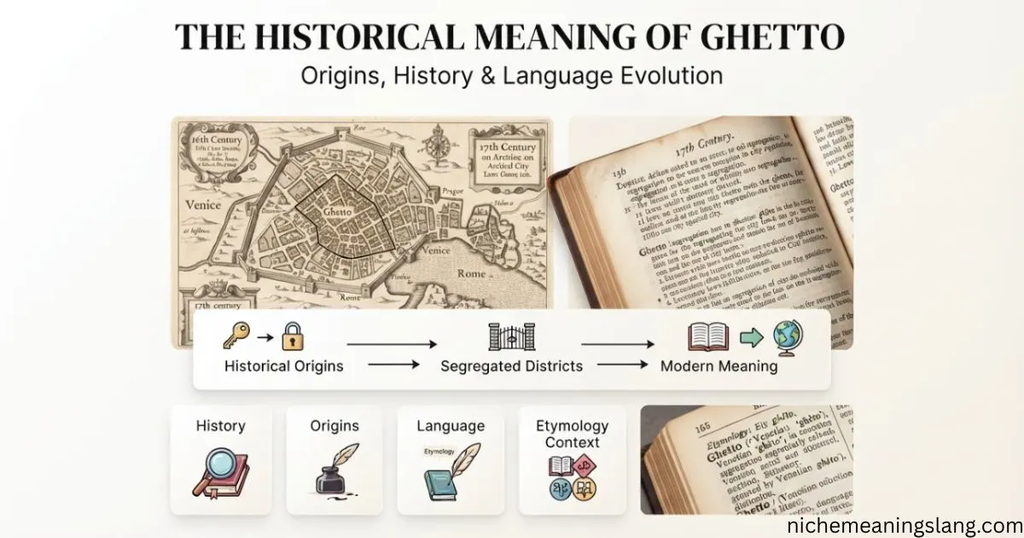
The historical meaning of ghetto is much older and more specific than modern slang. The word originally referred to segregated districts in Europe, particularly areas where Jewish communities were restricted or concentrated. In American history, its meaning later became strongly associated with segregated and economically disadvantaged urban neighborhoods.
That history matters because the casual adjective developed from a word connected to real communities and social conditions. The Library of Congress documents how African Americans migrating north and west encountered housing segregation and were often concentrated into specific urban neighborhoods. Modern slang therefore carries historical associations that “cheap” or “improvised” does not.
Context Changes the Meaning
Context can transform the interpretation of almost any slang expression. “That repair is ghetto” may be an informal joke about duct tape, while “that neighborhood is ghetto” can communicate a much broader judgment about residents, safety, class, or race. The same word therefore cannot be interpreted independently from its target.
Consider four variables: who is speaking, who is being addressed, what is being described, and why the phrase was chosen. These clues help separate playful self-description from criticism. Slang dictionaries provide possible meanings, but real conversation determines which meaning actually applies.
Common Everyday Expressions
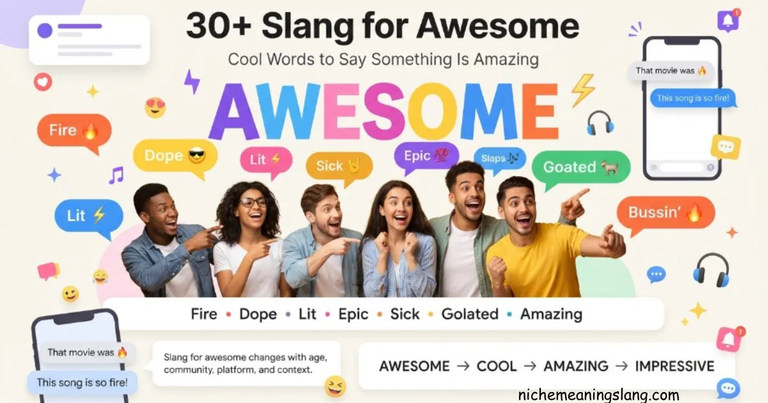
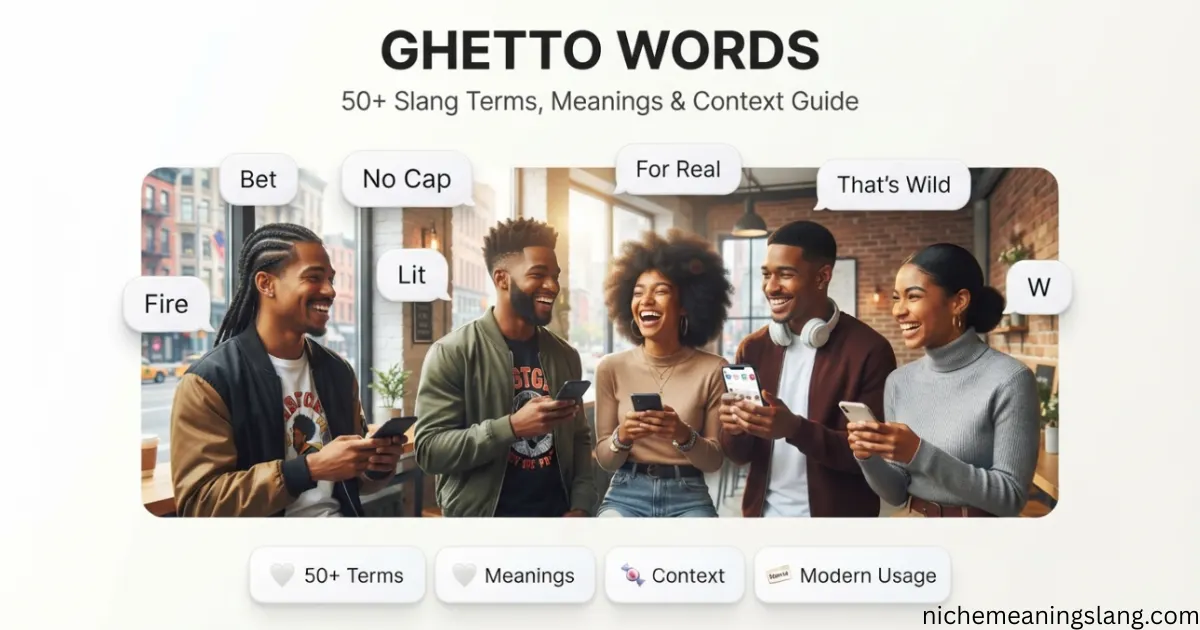
Several expressions frequently placed under the broad “ghetto slang” label are now widely recognizable American slang. Lit can describe something exciting; cap refers to a lie or falsehood; no cap emphasizes honesty; and bet can signal agreement. Their current usage extends far beyond one neighborhood or demographic group.
Calling these words “ghetto words” can therefore be misleading. A better semantic approach is to describe each expression individually and identify its linguistic or cultural associations. That produces a more accurate explanation and avoids implying that a broad population speaks one uniform form of slang.
Slang About Money
Money-related slang includes expressions such as bread, bands, broke, and come up. Their meanings revolve around cash, financial status, or gaining money. Some expressions originate in particular musical or community contexts before spreading into wider American vocabulary through songs, entertainment, and social media.
For readers searching for ghetto words, this category is useful because financial slang is common in rap lyrics and online conversation. Still, these terms are not interchangeable. Broke describes having little money, while bread can mean money generally and a come up describes a financial improvement or gain.
Slang About Style
Style-related expressions include drip, fresh, fit, and ghetto fabulous. Drip generally refers to fashionable clothing or appearance, while fit is commonly used as a shortened form of outfit. Fresh can describe a clean, stylish, or newly put-together look.
“Ghetto fabulous” is different because it has its own cultural history and tone. It can describe an intentionally flashy or glamorous aesthetic that embraces bold presentation. Depending on speaker and context, the phrase may be playful or celebratory rather than simply negative.
Slang About Friends
Friendship slang includes homie, fam, squad, dawg, and G. These terms can signal familiarity, loyalty, friendship, or group identity. “Homie,” for example, is widely understood in American informal speech, while “fam” can extend the meaning of family to close friends.
The important semantic relationship is belonging. Many friendship terms communicate social closeness rather than literal family relationships. Their tone also depends on the speaker. A word that sounds natural between close friends can feel forced when copied by someone unfamiliar with the community or setting where it developed.
Slang Commonly Seen Online
Online slang changes quickly because TikTok, Instagram, YouTube, X, Reddit, gaming communities, and memes allow expressions to travel almost instantly. Words such as lowkey, highkey, rizz, slaps, cap, no cap, and flex can move between platforms while taking on slightly different shades of meaning.
That speed creates a common problem for people learning slang: an expression may look universal online even when it remains strongly associated with a particular community or generation. Before copying a phrase, check how actual speakers use it rather than relying on a viral caption alone.
Lit
“Lit” is a widely recognized informal expression meaning exciting, energetic, excellent, or highly enjoyable, depending on context. It is strongly associated with contemporary American slang and has appeared extensively in music, social media, parties, entertainment, and youth-oriented conversation.
A simple example is “That concert was lit,” meaning the concert was extremely energetic or fun. Although some websites categorize it as “ghetto slang,” its actual distribution is much broader. Treating it as a general slang term is more linguistically precise than assigning it exclusively to one social group.
Flex
“Flex” means to show off, especially by displaying money, clothing, possessions, achievements, or social status. Someone might say, “He’s flexing his new car,” describing a deliberate attempt to impress other people.
The word is especially common in music, fashion, sports, and social media. Its tone can be approving, teasing, or critical. A person can “flex” seriously, jokingly, ironically, or simply by posting something impressive. Context tells you whether the word describes confidence, bragging, or playful self-promotion.
Cap
“Cap” means a lie, false claim, or exaggeration in contemporary American slang. If someone says, “That’s cap,” they are essentially saying, “I don’t believe you” or “That isn’t true.” The expression is especially common in texting, comments, memes, music, and casual conversation.
Its companion phrase, “no cap,” means the speaker is emphasizing honesty or seriousness. Because these terms are now mainstream internet slang, calling them exclusively “ghetto words” misses their much broader distribution. Their cultural history is still relevant, but their present-day audience is extensive.
No Cap
“No cap” means “I’m being honest” or “I’m not exaggerating.” Someone might say, “No cap, that was the best burger I’ve had all year.” The phrase functions as an emphasis marker, telling the listener that the speaker considers the statement genuine.
Tone matters. In a casual group chat, “no cap” can sound completely natural. In a formal report, business email, or academic paper, standard language such as “honestly,” “truly,” or “without exaggeration” is more appropriate. Slang is most effective when it fits the register.
Homie
“Homie” is an informal term for a close friend, trusted companion, or someone from the same social circle. It carries a sense of familiarity and solidarity and can be used casually between friends.
Although frequently categorized online as hood or ghetto slang, “homie” has crossed into broader American informal speech through music, movies, sports, television, and social media. Its meaning is relatively straightforward, but using it naturally still depends on relationship, age, region, and personal speaking style.
More Neutral Alternatives to Ghetto
If the intended meaning is “improvised,” use makeshift, DIY, temporary, improvised, resourceful, or unconventional. If the intended meaning is “cheap,” use inexpensive or budget-friendly. If something looks unfinished, unpolished or rough around the edges may be clearer.
For neighborhoods or communities, precision matters even more. Words such as underserved, historically segregated, low-income, or economically disadvantaged can communicate specific facts without turning “ghetto” into a blanket judgment. The best alternative depends on what you actually mean.
What Does Hood Mean in Slang?
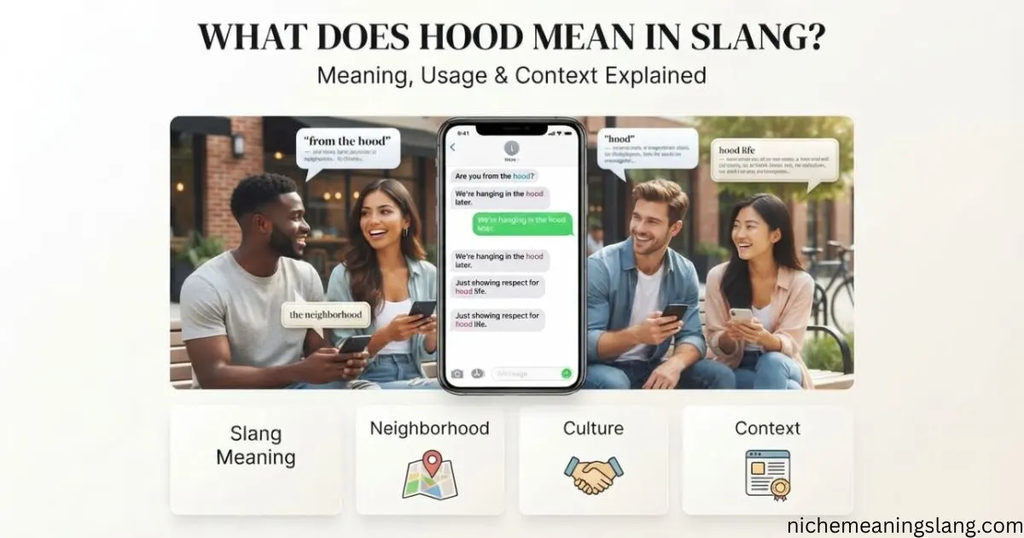
“Hood” is commonly understood as a shortened form of “neighborhood,” particularly in American slang. Depending on context, it can refer to a person’s neighborhood, roots, social environment, or community identity. Unlike “ghetto,” it can carry a sense of familiarity, belonging, or even pride.
That distinction explains why “hood” and “ghetto” should not automatically be treated as synonyms. One can identify where someone comes from without making a judgment about quality. When translating slang, preserving that difference is essential because seemingly similar words can carry very different social meanings.
Conclusion
The search term ghetto words covers a much wider collection of American slang than the phrase itself suggests. Words such as lit, cap, no cap, flex, homie, fam, drip, and shade appear across music, entertainment, texting, and social media, but they do not all have the same origin or belong to one formal linguistic category.
The most useful way to understand this vocabulary is through context, history, community, tone, and actual usage. If you mean “makeshift,” say makeshift; if you mean “stylish,” say stylish; and if you are decoding slang from a song or post, identify the specific expression rather than assuming every urban phrase is a “ghetto word.”
FAQs
What does ghetto slang mean?
It is a broad informal label for slang associated with urban, street, hip-hop, or particular community language. It is not a precise linguistic category.
What are some common ghetto words?
Frequently cited examples include lit, cap, no cap, flex, homie, fam, drip, fresh, shade, and bet, although these expressions have broader usage and should not automatically be classified as “ghetto.”
Is ghetto slang the same as urban slang?
Not exactly. “Urban slang” is a broader label, while “ghetto” can carry additional historical, socioeconomic, and racial associations.
Why is ghetto slang popular?
Music, television, movies, social media, memes, and online communities can spread expressions far beyond their original regional or cultural settings.
Is it okay to use ghetto slang?
Specific slang words may be perfectly ordinary in informal conversation, but the label “ghetto” itself can be sensitive. The safest approach is to understand a word’s actual meaning, origin, and context before using it.
Can ghetto slang meanings change over time?
Yes. Slang changes as generations, music, technology, regional communities, and social platforms influence how expressions are used.
What is another word for ghetto?
If you mean an improvised object, use “makeshift” or “improvised.” If you mean low cost, use “budget-friendly” or “inexpensive.” For a neighborhood, choose a precise socioeconomic or geographic description instead.
Related Slang Words

Ryan Mitchell is a language enthusiast and writer who explores slang, modern expressions, and everyday language. At nichemeaningslang, he helps readers understand slang meanings, usage, and context in a simple and easy-to-follow way.