20+Slang Word for Gun Terms, Meanings & Context
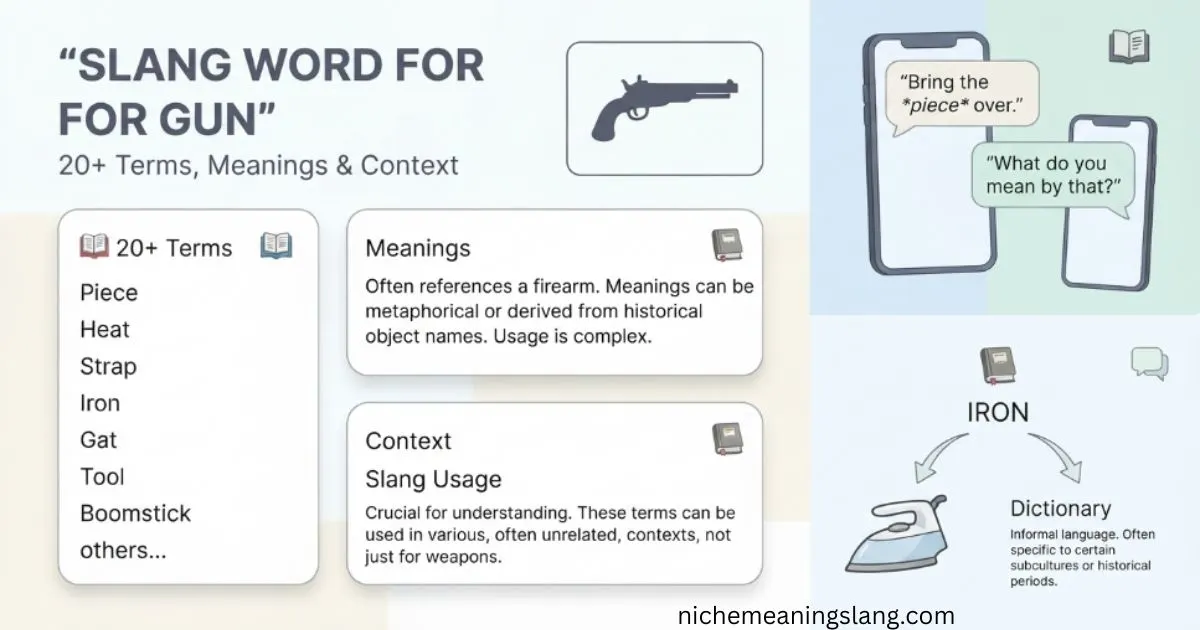
A slang word for gun is an informal expression used instead of the standard words gun or firearm. Common examples include gat, piece, strap, heater, iron, burner, and Roscoe. The exact meaning can change with the speaker, era, region, and setting, so context matters more than memorizing a fixed list.
If you encountered one of these words in a movie, song, novel, video game, or social-media post, you are probably looking for language comprehension rather than a technical definition. That distinction matters. American slang can be historical, fictional, regional, generational, or heavily shaped by popular culture. This guide focuses on understanding those meanings clearly and recognizing when a word has a completely different everyday definition.
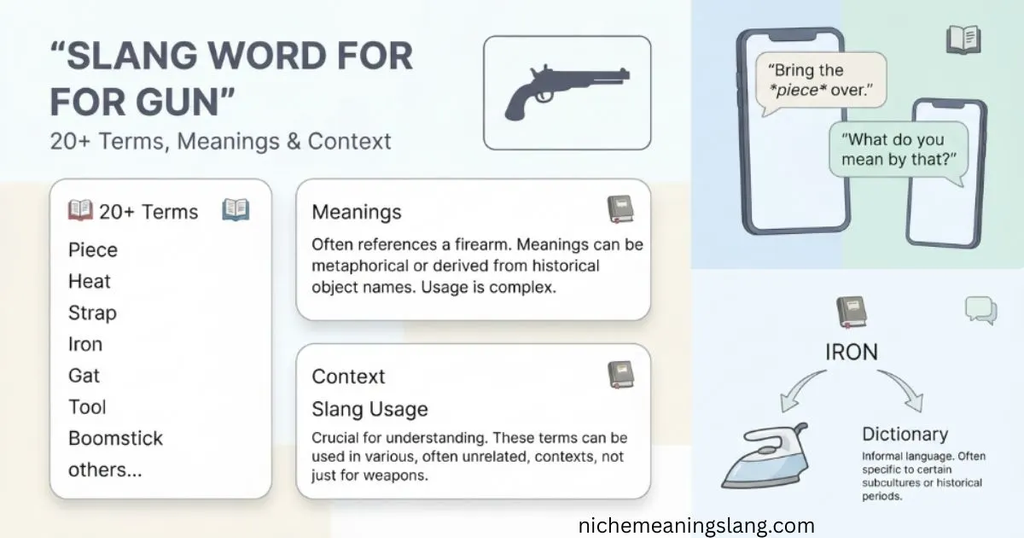
Piece
Piece is a long-established informal expression for a gun and frequently appears in American crime fiction, movies, television, and popular culture. Because “piece” has dozens of ordinary meanings, the surrounding sentence is essential. In literary dialogue, context can signal whether the writer means an object generally or gun-related slang.
Gat
Gat is a recognizable American slang word for a gun, especially familiar through music, movies, television, and fictional crime dialogue. It has an older history than many internet expressions, yet remains recognizable today. A reader encountering “gat” in lyrics or a screenplay can usually identify it from context.
Strap
Strap can refer to a gun in contemporary informal slang, particularly in music and online culture. However, it also literally means a strip used for carrying, securing, or fastening something. That makes context essential: the same word can describe ordinary clothing, equipment, accessories, or slang depending on the sentence.
Heater
Heater is an older American slang term for a gun. The word’s ordinary meaning is completely different, referring to something that produces heat. Because of that overlap, modern readers may encounter the slang sense primarily in older movies, crime fiction, historical dialogue, or cultural references.
Iron
Iron has been used as historical or informal slang for a gun, particularly in older American crime stories, Westerns, and detective fiction. Its ordinary meaning remains the metal or an appliance used for clothing. The era and surrounding dialogue therefore provide important clues about which meaning applies.
Burner
Burner can occur as gun-related slang in some informal or fictional contexts, but the word has several other meanings. “Burner” may describe a temporary phone, a heating element, or something designed for a particular short-term purpose. It should never automatically be interpreted as referring to a firearm.
Roscoe
Roscoe is an older American slang term associated with a gun and is especially recognizable from detective stories, gangster fiction, and classic entertainment. It sounds dated to many modern speakers. Its survival illustrates how popular culture can preserve slang long after everyday usage changes.
Slang vs. Standard Words
A gun is a neutral everyday word, while firearm is more formal and common in legal, news, academic, and official contexts. Terms such as gat, piece, strap, heater, and iron are informal or culturally specific. Choosing the neutral term is generally clearer when precision matters.
This distinction is especially useful for English learners. A word can be perfectly understandable in a movie while sounding unnatural in a classroom or workplace. Slang carries information about tone, identity, era, and setting, so recognizing it is often more useful than trying to reproduce it.
Why Context Matters When Understanding Slang
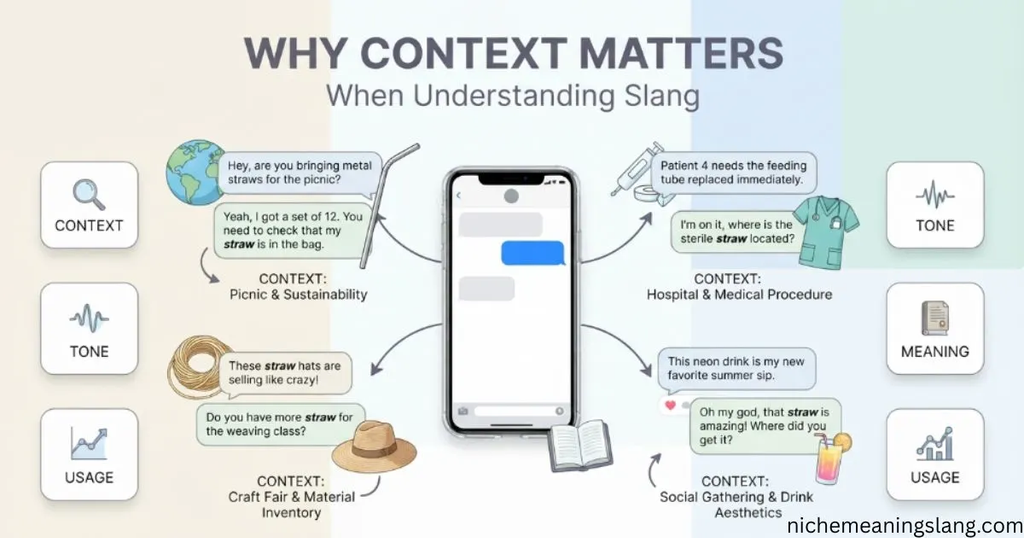
Context is the key to interpreting a slang word for gun. Ask who is speaking, what the surrounding sentence says, whether the source is a song or movie, and whether the word has an ordinary meaning. Piece, strap, iron, heater, and burner all demonstrate why isolated definitions can mislead.
Imagine reading a crime novel and seeing “piece.” The surrounding paragraph may clearly establish that the author is using gun-related slang. Read the same word in an art review, however, and the meaning changes completely. Good slang interpretation follows the whole sentence rather than one keyword.
Movies and Television
Movies and television frequently use gun-related slang to establish character, period, location, or genre. Crime dramas may favor expressions such as piece or gat, while historical films can preserve terms that sound dated today. Entertainment therefore helps slang survive even when everyday usage declines.
A viewer can also overestimate how common a term is because the same expression appears repeatedly in scripted dialogue. Screenwriters deliberately select language that creates atmosphere. Hearing a word in several movies does not necessarily mean that ordinary Americans use it frequently in everyday conversation.
Music
Music, especially American hip-hop and rap, has helped expose audiences to many forms of informal language. Terms such as gat and strap can appear in lyrics, but lyrics should not automatically be treated as ordinary conversation.
Music uses rhythm, metaphor, storytelling, persona, and cultural references. A listener trying to understand a slang word should consider the entire lyric and its context instead of assuming every expression represents literal everyday speech.
Books
Books are particularly valuable for understanding older slang because fiction preserves expressions that may have faded from everyday speech. Detective novels, crime stories, Westerns, and historical fiction can contain terms such as iron, heater, or Roscoe.
The publication date is an important clue. A slang expression encountered in a twentieth-century novel may sound unusual to a modern reader precisely because language has changed. Literary context can therefore reveal not just meaning, but also period and character background.
Gaming
Video games frequently use informal weapon vocabulary, particularly in action and shooter genres. However, game dialogue is fictional and often designed to establish character, speed, or atmosphere.
That means gaming language should not automatically be treated as a dictionary of contemporary American speech. A term may be common inside a particular fictional universe while being rare in ordinary conversation. Genre context is therefore essential when interpreting gaming slang.
Social Media
Social media accelerates the spread of slang between regions and generations. A term that began in music, television, or a local community can quickly become recognizable internationally through TikTok, Instagram, Reddit, X, or messaging platforms.
Recognition does not necessarily equal everyday use. Someone may understand gat or strap because they have encountered the word online while never using it personally. Digital familiarity and real-world frequency are two different things.
Urban Dictionary vs. Everyday Usage
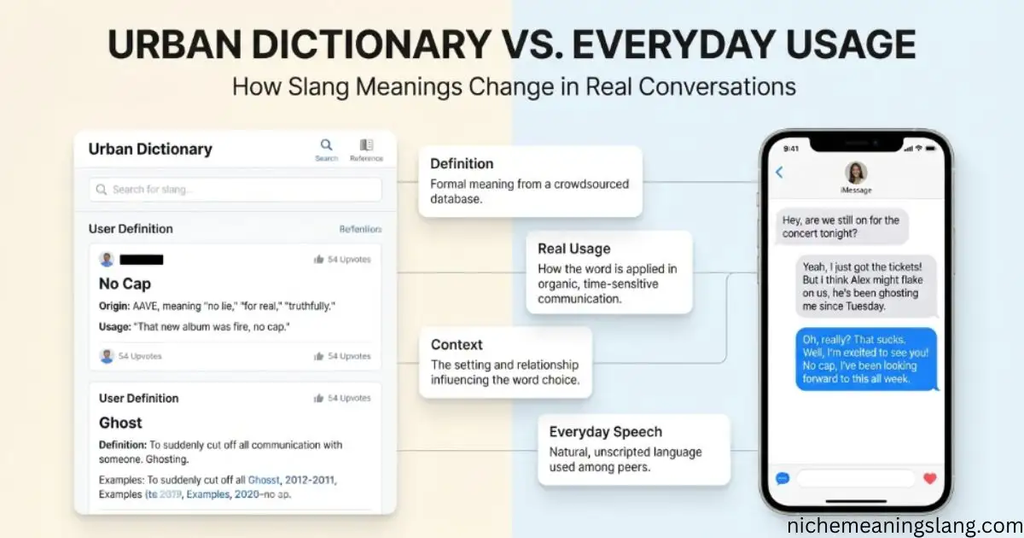
Urban Dictionary can be useful when researching internet slang because entries often document community-specific meanings and unusual expressions. However, user-submitted definitions are not automatically authoritative, current, or representative of mainstream American English.
For reliable interpretation, compare a crowdsourced definition with context, reputable dictionaries, published usage, and the source where you encountered the word. A slang entry may describe a niche meaning that is unfamiliar outside a particular online community.
Why Slang Meanings Change
Slang changes because language moves with generations, music, movies, regional communities, and technology. Roscoe and heater can feel historical, while strap may sound more contemporary to some audiences. A word can remain recognizable long after its everyday frequency falls.
This creates an interesting language pattern: entertainment can preserve old slang. Someone may understand an older term without ever hearing it in ordinary conversation. That is why recognition, historical usage, and current usage should be treated as separate concepts.
Common Mistakes People Make
The biggest mistake is assuming that every slang word has one universal meaning. Another is treating movie dialogue as a transcript of ordinary American speech. Words such as strap, iron, heater, and burner all have ordinary meanings unrelated to firearms.
A third mistake is assuming that online slang is universal. Social platforms bring different communities together, but a word can remain strongly regional or generational. Understanding the source, speaker, and surrounding sentence is more reliable than relying on a single slang list.
What is a slang word for gun?
A slang word for gun is an informal expression used in place of gun or firearm. Common examples documented by the researched pages include gat, piece, strap, heater, iron, burner, and Roscoe. Their meanings and popularity vary by era, region, culture, and context.
Conclusion
A slang word for gun is not necessarily a universal synonym for “gun.” Terms such as gat, piece, strap, heater, iron, burner, and Roscoe belong to different periods and cultural contexts. Some remain recognizable, while others survive mainly through movies, music, books, gaming, and historical fiction.
For readers, the most useful skill is context recognition. The same word can have an entirely ordinary meaning in one sentence and a slang meaning in another. For formal writing, gun or firearm is usually clearer; slang is most useful to understand dialogue, lyrics, fiction, and popular culture.
FAQs
What is another word for gun in slang?
Common examples include gat, piece, strap, heater, iron, burner, and Roscoe. Usage varies by period, region, speaker, and context.
What does “gat” mean?
Gat is an informal American slang term for a gun, particularly recognizable from music, movies, and fictional crime dialogue.
Is “piece” a slang word?
Yes. Piece can refer to a gun in informal contexts, although it has many ordinary meanings unrelated to weapons.
Is “strap” always slang for a gun?
No. Strap has numerous literal meanings. Its gun-related meaning depends entirely on context.
What does “heater” mean in slang?
Heater has been used as older American slang for a gun, although its ordinary meaning relates to something that produces heat.
What is the difference between gun slang and formal terminology?
Gun slang is informal and culturally dependent. Gun is neutral everyday English, while firearm is more formal and common in legal, academic, news, and official contexts.
Why is context important with slang?
Many slang words have multiple meanings. The speaker, sentence, era, region, and source such as a song, movie, book, or social post can determine the intended meaning.
Related Slang Words

Ryan Mitchell is a language enthusiast and writer who explores slang, modern expressions, and everyday language. At nichemeaningslang, he helps readers understand slang meanings, usage, and context in a simple and easy-to-follow way.