What Does Feen Mean? Slang, Texting & Examples Explained
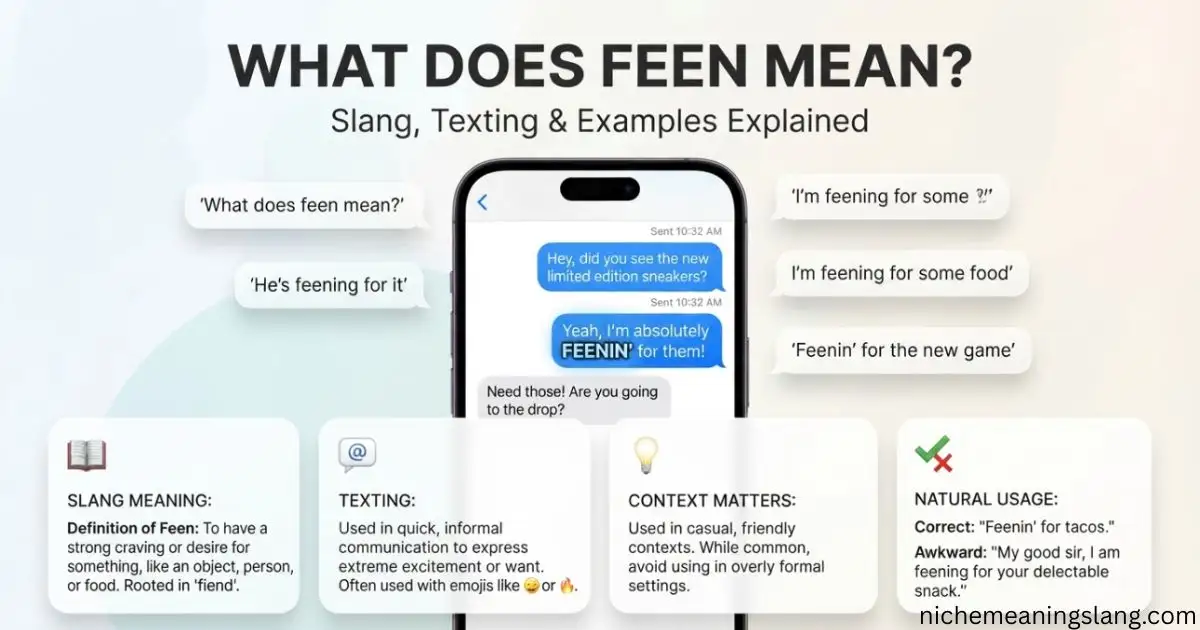
What does feen mean? In modern American slang, feen usually means to strongly crave, want, or obsess over something. If someone texts, “I’m feening for pizza,” they mean they really want pizza. The word is informal and can describe food, attention, entertainment, shopping, relationships, or almost anything someone wants badly. It is closely connected to fiend and feening, but context changes the tone. In everyday texting, feen is often playful exaggeration rather than a literal statement about addiction.
The word can still feel confusing because it appears in TikTok comments, group chats, rap lyrics, captions, and casual conversation in slightly different forms. You may see feen, feening, fiend, or even related spellings such as fein. There is also a completely separate Irish-dialect meaning of feen: “man” or “guy.” Understanding the sentence, platform, and speaker makes the intended meaning much easier to recognize.
What Does Feen Mean?
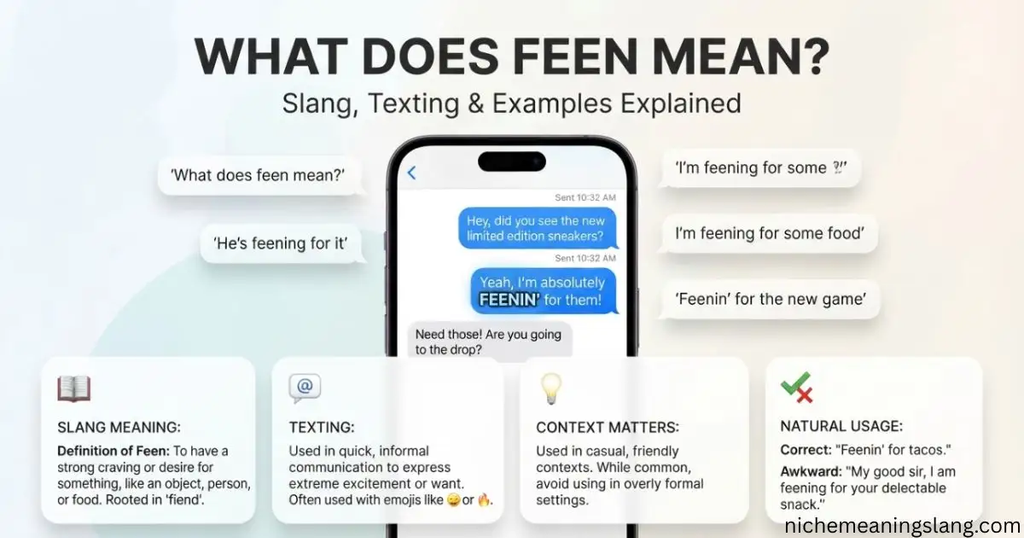
In everyday U.S. slang, feen describes intense wanting or craving. Someone might be a “coffee feen,” a “sneaker feen,” or say they are “feening for the weekend.” The word adds emotional intensity to ordinary desire, making a simple want sound dramatic, obsessive, or humorous depending on context.
For example, “I want tacos” is straightforward, while “I’m feening for tacos” sounds more urgent and expressive. That exaggeration is part of the word’s personality. In casual conversation, crave, obsessed, hooked, and want badly are close semantic neighbors, but feen carries a distinctly informal slang tone.
Funny
When feen appears in a joke, it usually exaggerates an ordinary craving. A friend saying, “You’re a feen for those fries” may simply be teasing someone who keeps ordering the same food. The tone is humorous, casual, and relatable rather than a serious accusation about addiction or dependency.
Playful
A playful use can describe almost any strong enthusiasm. Someone might say, “I’m feening for the new sneakers,” “She’s feening for that show,” or “We’re all feening for summer.” Here, the speaker is emphasizing excitement or impatience, often using slang to make an everyday desire sound more dramatic.
Serious
The word can become heavier when the subject involves an actual substance or harmful dependency. In that setting, calling someone a feen may suggest addiction or desperation and can feel judgmental. The same spelling can therefore move from harmless humor to sensitive language depending on what the person is craving.
What Does Feen Mean in Slang?
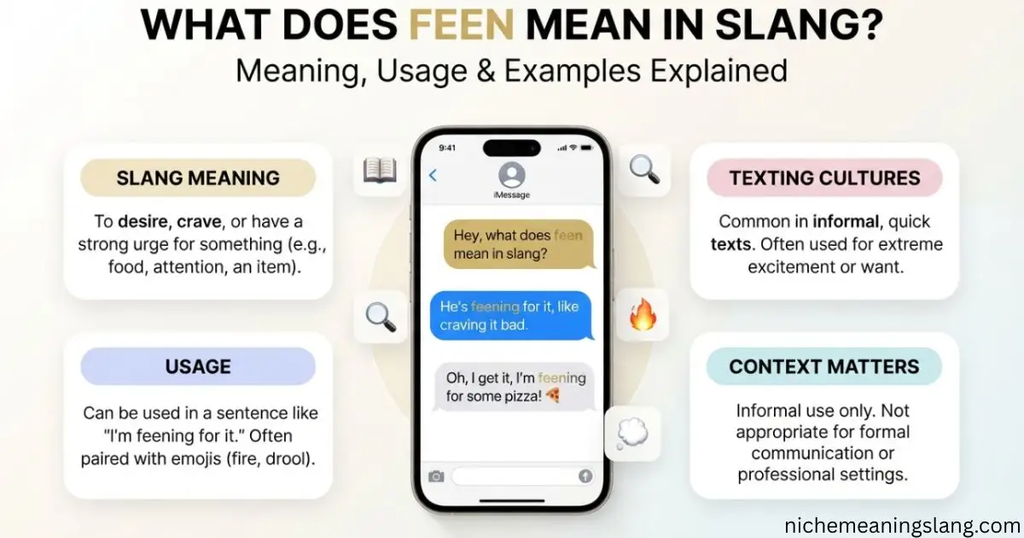
In slang, feen generally means to crave or desire something intensely. It can describe a person who is unusually enthusiastic about something or the act of strongly wanting it. Modern online usage frequently applies it to food, games, clothes, entertainment, attention, relationships, and other everyday interests.
The word is best understood as an informal expression of intensity. It does not automatically mean addiction. Saying “I’m feening for pizza” normally means “I really want pizza,” not “I have a clinical dependency on pizza.” That distinction is important when interpreting texts, memes, captions, and casual conversations.
Feen Meaning in Simple Words
In simple English, feen means really wanting something. Think of phrases such as “craving it,” “dying for it,” “hooked on it,” or “wanting it badly.” The exact intensity depends on context, but the word usually communicates that an ordinary desire has become strong enough to mention.
Is Feen Short for Fiend?
In modern slang, feen is closely connected to fiend, and dictionaries record feen as a slang form of the verb fiend, meaning to desire greatly. Fiend is the established English spelling, while feen represents an informal slang spelling and pronunciation used in casual language.
That relationship explains why you may see fiend, fiending, feen, and feening used around the same semantic idea. The standard word has a much older history, while the slang spelling feels more conversational and informal. In professional writing, fiend, crave, or desire is generally clearer.
The Fiend to Feen Evolution
The history is older than TikTok or Gen Z. Fiend comes from Old English and originally referred to an enemy or evil spirit, but its informal meaning later expanded to describe someone excessively interested in something or addicted to a habit. Dictionary.com also records feen as a slang verb meaning “to desire greatly.”
The modern spelling fits the broader way slang changes through speech, music, regional dialects, and online communication. Contemporary sources connect feen/feening with hip-hop and R&B usage, but it is more accurate to describe those cultures as important channels of popularization rather than claiming they invented the entire word.
Feen in Hip Hop and AAVE Culture
Feen and feening have appeared in music and hip-hop contexts for decades, where the language of craving can describe a person, substance, experience, or intense desire. That musical usage helped expose the expression to wider audiences before social media accelerated its spread through captions, memes, comments, and short-form video.
A useful distinction is between origin and popularization. The underlying word fiend is centuries old, while the slang spelling and modern cultural associations developed through later speech communities. Treating the history as one simple invention story misses how slang actually evolves across dialects, music, and everyday conversation.
What Does Feen Mean In Text Messages?
In texts, feen usually means that someone really wants or craves something. “I’m feening for fries,” “I’m feening for a nap,” and “He’s feening for a reply” all express strong desire. The object can be completely ordinary, and the slang often makes the statement feel humorous or exaggerated.
The surrounding words help establish the tone. Food, shopping, gaming, and entertainment often create playful readings, while references to drugs or genuine dependency can make the same expression much more serious. In a private message, “I’m feening for you” can also sound romantic or suggestive, so relationship context matters.
Examples Of Feening In Everyday Conversation
Natural examples make the meaning easier to recognize. “I’m feening for pizza after work” means the speaker really wants pizza. “She’s feening for that new phone” suggests strong desire. “We’ve been feening for the weekend” expresses impatience. In each case, feening describes an active craving happening now.
Positive, Negative, Or Playful Meaning?
Calling someone a feen is not automatically negative. Between friends, it can be affectionate teasing: “You’re such a coffee feen.” In another situation, it might criticize someone for seeming desperate or obsessed. When the word relates to real substance use, it can feel much harsher, so tone and subject matter matter.
| Context | Example | Likely Tone |
| Food | “I’m feening for tacos.” | Playful |
| Coffee | “She’s a coffee feen.” | Lighthearted |
| Gaming | “He’s feening for that win.” | Casual |
| Shopping | “I’m feening for those shoes.” | Excited |
| Attention | “He’s feening for a reply.” | Teasing |
| Romance | “I’m feening for you.” | Flirty/suggestive |
| Substance | “He’s feening for another hit.” | Potentially serious |
| Irish dialect | “That feen over there.” | Man/guy |
How To Tell What Someone Means By Feen
Start with three clues: what they are talking about, who is saying it, and the surrounding tone. “Feening for pizza” is almost certainly casual craving. “That feen over there” may reflect the separate Irish dialect meaning “man.” A romantic message can imply desire, while addiction-related context requires much more care.
How People Use Feen in Texting and Social Media
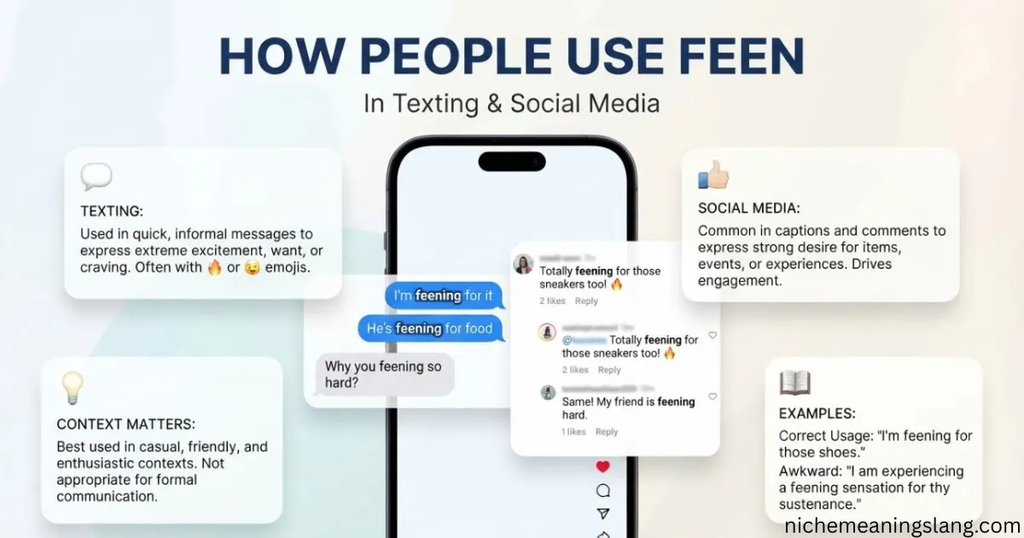
The word works particularly well online because slang lets people exaggerate ordinary feelings quickly. TikTok comments, Instagram captions, group chats, DMs, and memes often use feen or feening to make a craving sound dramatic. “Me feening at 2 a.m.” can turn a simple snack craving into a relatable joke.
This also explains why the spelling can look intentional rather than incorrect. Online language frequently reshapes pronunciation into informal spelling. Feen visually signals casual speech, while fiend looks more conventional. The meaning usually becomes obvious from the surrounding sentence.
Feen vs. Fiend vs. Feening
| Word | Main Role | Meaning | Example |
| Feen | Slang noun/verb | Strong craving or intense desire | “He’s a coffee feen.” |
| Feening | Informal verb form | Actively craving | “I’m feening for pizza.” |
| Fiend | Standard noun/verb | Person intensely interested; slang verb for strongly desiring | “She’s a chocolate fiend.” |
| Fiending | Informal verb form | Strongly craving/desiring | “He’s fiending for another game.” |
| Craving | Standard English | Strong desire | “I’m craving tacos.” |
| Obsessed | Standard/common | Extremely interested or preoccupied | “She’s obsessed with sneakers.” |
The easiest way to remember the relationship is this: fiend is the established English word; feen is a slang spelling connected with the craving sense; feening describes the active craving. The words overlap, but they do not have identical formality or usage.
Is Feen a Gen Z Slang Word?
Feen is not best understood as a word invented by Gen Z. Its roots and cultural usage predate today’s social-media vocabulary. What has changed is visibility: younger internet users encounter and spread the term through TikTok, memes, music, captions, gaming communities, and group chats.
That makes feen a good example of how slang survives through cultural recycling. A term can exist for decades, become strongly associated with music or particular speech communities, and later gain fresh visibility online. “Current” usage does not necessarily mean “newly invented.”
Is Feen the Same as “Fine”?
No. Feen and fine have completely different meanings in this slang context. If someone writes, “I’m feening for pizza,” they are saying they strongly want pizza. They are not saying pizza is fine or acceptable.
Spelling can be especially confusing when messages are typed quickly. Context solves most cases. A sentence about craving, obsession, or wanting something points toward feen/feening, while a sentence about quality or acceptability points toward fine.
Does Feen Mean “Man” or “Guy”?
Yes, but this is a separate Irish-dialect meaning, not the modern American craving slang. Collins defines feen as an informal Irish-dialect word for “man.” Wiktionary similarly records the Irish/Munster slang sense as “young man, guy, bloke.”
So context is essential. In an American text saying “I’m feening for tacos,” the craving meaning is clear. In an Irish expression such as “that feen over there,” the speaker may simply mean “that guy.” These meanings should not be treated as one definition.
Is Feen a Bad Word?
Feen is not inherently a bad word or slur. In casual conversation, it is often playful and harmless. However, it can sound insulting if used to characterize someone as desperate, obsessed, or addicted. The risk increases when the conversation involves real substance use or dependency.
It is also not ideal for formal writing. In a school assignment, professional email, resume, or business document, use clearer language such as crave, strongly want, desire, enthusiastic about, or the standard word fiend, depending on your intended meaning.
Conclusion
What does feen mean? In modern American slang, it usually means to strongly crave, want, or obsess over something. “I’m feening for pizza” simply means “I really want pizza,” while “she’s a coffee feen” describes someone who strongly loves or craves coffee.
The word is closely connected with fiend and feening, but context determines whether the tone is funny, playful, romantic, judgmental, or serious. Remember one important exception: in Irish dialect, feen can mean “man” or “guy.” Once you recognize the context, the meaning is usually easy to decode.
FAQs
The FAQ targets recurring questions appearing in the competitor pages and the strongest search-intent variations. The three competitors repeatedly surface questions about text meaning, feening, fiend, offensiveness, romantic usage, Gen Z, rap, and whether it is a real word.
What does feen mean in slang?
Feen usually means to crave, strongly want, or obsess over something. In casual U.S. slang, it can describe anything from food and entertainment to attention, shopping, gaming, or a person.
What does feen mean in a text?
In a text, feen usually means someone really wants or craves something. “I’m feening for tacos” means “I really want tacos.” The tone is often playful or exaggerated.
Is feen short for fiend?
Yes, in slang usage, feen is closely connected with fiend. Dictionary.com specifically records feen as a slang form of the verb fiend, meaning “to desire greatly.”
What does feening mean?
Feening means actively craving or strongly wanting something. For example, “I’m feening for coffee” means the speaker really wants coffee at that moment.
Is feen a real word?
Feen is a recognized slang/dialect form, but it is not the standard spelling for the modern craving sense. Fiend is the established English word, while feen is informal. There is also a separate Irish-dialect definition meaning “man.”
Is feen a bad word?
Not by itself. Feen is generally casual slang, but it can sound insensitive when used about someone experiencing genuine addiction or dependency. Context and tone determine whether it sounds playful or insulting.
What does “I’m feening for you” mean?
It generally means “I strongly want you” or “I really desire you.” In a romantic conversation, it can sound flirtatious or sexually suggestive, depending on the relationship and surrounding messages.
What does feen mean in rap?
In rap and hip-hop contexts, feen/feening generally expresses intense desire or craving. The object could be a person, substance, experience, or another strong desire, so the surrounding lyrics determine the precise meaning.
Does feen mean man?
It can, but that is a separate Irish-dialect meaning. Collins defines feen as an informal Irish-dialect word for “man.”
Is feen a Gen Z word?
Not originally. Gen Z has helped spread and normalize the term online, but the slang predates today’s Gen Z internet culture and has appeared in music and informal language for decades.
What is the difference between feen and feening?
Feen can describe the person or work as an informal verb, while feening usually describes the active act of craving something. “He’s a coffee feen” describes the person; “he’s feening for coffee” describes the current craving.
What is the difference between feen and fiend?
Fiend is the standard English spelling; feen is an informal slang spelling associated with the craving sense. Both can describe intense interest or desire, but fiend is more appropriate when standard English is expected.
Related Slang Words

Ryan Mitchell is a language enthusiast and writer who explores slang, modern expressions, and everyday language. At nichemeaningslang, he helps readers understand slang meanings, usage, and context in a simple and easy-to-follow way.